All abilities trek to the summit of Mount Kosciuszko - Australia's highest peak

All abilities trek to the summit of Mount Kosciuszko - Australia's highest peak
All abilities trek to the summit of Mount Kosciuszko - Australia's highest peak - © Jennifer Johnson 2008
Showing posts with label Canada. Show all posts

Saturday, July 12, 2014

PRESS RELEASE: Destination for All World Summit Montréal October 19-22, 2014


SOMMET MONDIAL MONTRÉAL 19-22 OCTOBRE 2014
WORLD SUMMIT MONTRÉAL OCTOBER 19-22, 2014
SECRÉTARIAT DU SOMMET / SUMMIT SECRETARIAT : 1555, rue Peel, Bureau 500, Montréal (Québec) Canada H3A 3L8
T +1 514 287-9898 # 222 F +1 514 287-1248 destinations2014@jpdl.com www.destinationsforall2014.com

PRESS RELEASE

Tourisme & Handicaps to unveil the "Destination for All" seal at the first-ever Destinations for All World Summit

Montréal, June 27th 2014 – Tourisme & Handicaps, the association that administers the "Tourisme & Handicap" seal signalling France's accessible tourist establishments, will be presenting the new "Destination for All" seal at the Destinations for All World Summit in Montréal this October 19 to 22.

A "Destination for All" is a place (town, tourist region) where handicap individuals and their families can be accommodated for days at a time. Beyond accessible hotels, restaurants and attractions, these locales also have accessible businesses for everyday needs (grocery stores, malls, post offices, etc.), pedestrian routes and local transportation services.

Annette Masson, President of Tourisme & Handicaps, will unveil the process for introducing the seal, and the locations that have applied for it. With this project, France is innovating by recognizing its accessible destinations and has inspired Kéroul, which would like to imple-ment a similar label in Québec.
The aim of the Destinations for All World Summit is to exchange best practices for inclusive tourism, collectively develop international standards for accessible tourism for all, and establish a global partnership to create accessible destinations.

The event is organized by Kéroul in collaboration with the World Tourism Organization (UNWTO), the European Network for Accessible Tourism (ENAT), Tourisme & Handicaps, Tourisme Québec, JPdL International and others.

In response to the call for speakers, close to 150 abstracts from 34 countries were submit-ted and reviewed by the Summit's program committee. In addition to Ms. Masson, confirmed speakers include:
 Daniela Bas, Director, Division for Social Policy and Development, United Nations
 Marina Diotallevi, Head of the UNWTO's Ethics and Social Responsibility Programme
 Ivor Ambrose, Managing Director, European Network for Accessible Tourism
 Jay Cardinali, Worldwide Accessibility Manager, Walt Disney Parks and Resorts
 Ann Frye, Expert on international transportation for handicapped and elderly persons, and Co-Chair of the International Activities Subcommittee of the US Transportation Research Board's Accessible Transportation and Mobility Committee
 Scott Rains, Independent tourism and travel accessibility consultant
 Martin Heng, Accessible Travel Manager, Lonely Planet
 Magnus Berglund, Scandic Hotels
 Marcus Weisen, European Centre for Cultural Accessibility

Accessibility is a matter of the law, demographics and markets. Be prepared to make way for the future: a world for all!

The World Summit Destinations for all 2014 is organized by Kéroul, a key consultant for Tourisme Québec regarding accessibility, Kéroul is a non-profit organization which, through information and lobbying, promotes and develops accessible tourism and culture and by JPdL, a leading team of conference and event professionals for over 30 years.

For more information about the World Summit Destinations for All and its supporting or-ganizations, visit: www.destinationsforall2014.com 

Source: Michel Trudel, Kéroul
Information : Marie-Hélène Paradis
mhparadis@keroul.qc.ca
514 252-3104 #3575
514 531-6797

Sunday, November 3, 2013

The First World Summit Destination for All will be held in Montreal in October 2014: Prof Simon Darcy Appointed to the Scientific Committee

Prof Simon Darcy from the Cosmopolitan Civil Societies Research Centre at the University of Technology Sydney, has been appointed to the scientific committee for the First World Summit On Destinations for All. Prof Darcy is the co-author/editor of the first two books on accessible tourism that explores how the intersection of disability and tourism requires complex processes to provide an equality of experience for people with disability at tourism destinations. He will coordinate a stream at the world summit on developing inclusive approaches to outdoor recreation activities. Providing inclusive outdoor experiences involves the mixed economy of disability organisations, equipment suppliers, commercial outdoor and tourism operators, together with destination and National parks managers working together to create an equality of experience for the group. One example of equipment that has provided opportunities for a variety of outdoor experiences for people with disabilities is the Joëlette. As Photo 1 shows, Simon used this equipment recently to gain access to the archaeological sites in Rome that otherwise would have been inaccessible to wheelchair users.
Photo 1:  Simon Darcy using the Joëlette in Rome
Image
References
A press release about the World Summit now provided for further information.
===========
The First World Summit Destination for All will be held in Montreal in October 2014.
Montreal, October 19, 2013. The first World Summit Destination for All aims to establish an international strategy to develop inclusive tourism. Mr. André Vallerand and Mr. Ivor Ambrose are the co-chairs of this prestigious, one-of-a-kind event.
“The development of universal accessibility of infrastructures, tourism services, and transport services cannot be done without a global partnership: we must share our knowledge and best practices for dissemination, and convince our partners that sustainable development must be inclusive.”
-André Vallerand, Special Advisor to the Secretary General of the World Tourism Organization (UNWTO), President of the World Centre of Excellence for Destinations, and co-chair of the Summit.
“Tourism for all is not only a question of human rights, but it is also a target market that investors should consider. Destinations that can offer accessible experiences for all their visitors will see a favourable return on their investments, as demographic change brings greater numbers of older travellers who tend to stay longer and travel throughout the year.”
-Ivor Ambrose, Managing Director of the European Network for Accessible Tourism (ENAT) and co-chair of the Summit.
“We need not only international standards, but also an independent evaluation mechanism or a certification in order to properly inform the clientele of accessible conditions in an establishment and/or a destination.”
-     André Leclerc, CEO of Keroul and instigator of the World Summit Destinations for All.
Several prestigious international organizations have joined this event, including the World Tourism Organization (UNWTO), the International Social Tourism Organisation (IST) , the European Network for Accessible Tourism (ENAT), the World Centre of Excellence for Destinations (CED), the ONCE Foundation in Spain, and the Tourisme & Handicaps Association in France .
This Summit comes at a crucial turning point in the international economy for the development of inclusive tourism, as discerned by these facts:
□    In October 2011, the European Parliament adopted a Resolution on mobility and inclusion of people with disabilities and the European Disability Strategy 2010 - 2020 in favour of people with disabilities;
□ The international standard ISO 21542 on the accessibility of the built environment for people with disabilities was launched in December 2011;
□ In 2013, the International Civil Aviation Organization (ICAO-ICAO) has published its Manual on Access to Air Transport by Persons with Disabilities;
□ On September 11, 2013, the World Tourism Organization released its revised Recommendations on Accessible Tourism for All;
□ On September 25, 2013, France launched a call for nominations to territories wishing to take advantage of the label "Destination for all" ;
□ The French Republic law for the integration of disabled people established January 1, 2015 as the deadline for the accessibility of facilities open to the public;
□ At the Conference of States Parties to the Convention on the Rights of Persons with Disabilities in July 2013, the co-chair of the UN Committee on Sustainable Development Goals made a clear link between sustainable development and the inclusion of persons with disabilities;
□ The United Nations has initiated discussions with the international community to determine the goals the UN will follow after the end of the Millennium Development Goals in 2015.
Conditions are therefore timely and conducive for establishing a global partnership to develop Tourism for All.
We invite all destination managers, tourism service providers, municipalities, researchers and the entire international community involved in tourism development to reserve the dates of October 19 to 22, 2014 when the World Summit will take place in Montreal, Canada.
The Steering Committee invites the individuals or organizations, practitioners and scientists, wishing to share their experience and point of view, to participate in the Summit.
A description of the themes and issues that will be addressed during the event as well as all the details for submitting a paper or a video for the Summit can be found on our Web site.
The World Summit Destination for All will be held at the Palais des congrès de Montreal, from the 19th to 22nd of October 2014.
For more information, please visit our website www.destinationspourtous2014.com
Contact for Editors: Michel Trudel, Keroul , +1 514-252-3104, mtrudel@keroul.qc.ca
Summit Secretariat c/o JPdL International
1555 Peel St., Suite 500, Montréal (Québec) Canada H3A 3L8
T + 1 514-9898, ext. 222 /  F +1 514 287-1248 / destinations2014@lpdl.com / www.destinationspourtous2014.com 

Saturday, February 18, 2012

Article: French versus Canadian Tourism: Response to the Disabled


This article provides further contributions to cultural understandings of disability and accessible tourism coming from France and Canada. The study used a qualitative approach of in-depth interviewing and drew the sample from predominantly people with disability   and agency directors. The French sample comprised 23 people with disability and 2 agency directors, whereas the Canadian sample included 20 people with disability and 4 agency directors. The findings examined the commonalities and contrasts between the barriers experienced, which were divided into physical, financial, attitudinal and communication. Recommendations are provided to improve the accessibility of both the French and Canadian responses to the group.

Freeman, I., & Selmi, N. (2010). French versus Canadian Tourism: Response to the Disabled. Journal of Travel Research, 49(4), 471-485. doi: 10.1177/0047287509349268


Abstract Copyright © 2012 by SAGE Publications

"Both France and Canada rank as highly developed tourist destinations. This study compares the underexplored area of the needs of tourists who are disabled in France (n = 25) and Canada (n = 24). The authors examine Canada’s and France’s accommodation to both domestic and international tourists who have disabilities, giving the study a unique perspective in comparing and contrasting results to the same questions across similar populations in two countries. The results indicate that neither country’s tourism industry has developed an effective policy to accommodate tourists who have disabilities indicated by significant barriers existing that exclude segments of the disabled population. This article takes the words of those with disabilities to recommend steps necessary to improve the tourism opportunities with this population".

Given previous inclusions on the blog with respect to the Vancouver 2010 Winter Olympic and Paralympic Games, it would be interesting to research whether the initiatives introduced by the Vancouver Organising Committee for the Olympic Games (VANOC) have had a lasting legacy on accessible tourism. A series of physical infrastructure, disability awareness training, information, promotion and marketing strategies were implemented to improve the accessibility of the games experience for athletes, spectators, volunteers and employees alike. Photo 1 shows some of the accessible facility infrastructure built for the Vancouver Games. Disability awareness training was part of the volunteer training that was discussed by the volunteers as part of a research project investigating the volunteer management practices of Vancouver 2010 Winter Olympic and Paralympic Games (Dickson, Edwards and Darcy, 2010).

Photo 1: Accessible Ski Facilities
Source: VANOC 2010 - A Barrier Free Experience Presentation


References

Coward, D. & Konstantinidis, L. (2010) Vancouver 2010 Paralympic Winter games - a barrier free experience. VANOC, Vancouver.


Dickson, T., Edwards, D., Darcy, S., Benson, A., & Blackman, D. (2010, Feb 19). Olympic and Paralympic Legacies: the 2010 Volunteers’ Story. Paper presented at the Third International Sport Business Symposium - Economics and Management of the Olympic Games, Vancouver, British Columbia, Canada.


Freeman, I., & Selmi, N. (2010). French versus Canadian Tourism: Response to the Disabled. Journal of Travel Research, 49(4), 471-485. doi: 10.1177/0047287509349268


Sunday, November 20, 2011

New Published Research from US on Motivations of people with acquired mobility disability to travel


Surprisingly few studies have examined the motivations of people with disability to travel. The Shi, Cole and Chancellor (2012) newly published article applies Crompton’s (1979) push pull model of travel motivations to examine people with acquired mobility disability’s motivation to travel. The qualitative study undertook two focus groups at the 13th Congress of The Society for Accessible Travel and Hospitality in 2009. Transcripts of the focus groups were analysed based on Crompton's model. The results identified nine push factors with five being consistent with Crompton (1979):  escape from a perceived mundane environment; exploration and evaluation of self; relaxation; enhancement of relationship with family and friends; and facilitation of social interaction. However, four other factors are unique to people with acquired mobility disabilities: independence; the desire of being in a natural environment; adventure/risk; and do it today. With respect to Crompton (1979) pull factors, novelty and education were consistent with previous work but not surprisingly the accessibility of the destination was a dominant factor. This study suggests that a broader study examining motivations of people across the spectrum of disabilities and support needs would add a level of sophistication to what is currently known about motivations to travel for this group.

Photo 1 shows two gnarly South African surfers who just happen to have disabilities. They espouse a series of motivations identified in this study - independence, desire of being a natural environment, adventure/risk and do it today. However, they haven’t waited for perfect access to a beach for wheelchair users and have instead used "Quad bikes" to assist their quest for the perfect wave. Go for it boys!

Photo 1: Dries Millard and Glenn Ward Paraplegic body boarders trekked from Saldanha to Cape Town and had many adventures along the way - photo with permission http://www.saldanhatocapetown.co.za/the-event/


Copyright © 2012 Elsevier Ltd All rights reserved.

Understanding leisure travel motivations of travelers with acquired mobility impairments

Lei Shi, Shu Cole, & H. Charles Chancellor
Department of Recreation, Park, and Tourism Studies, Indiana University, HPER 133, 1025 E 7th Street, Bloomington, IN 47405, USA

Abstract
The purpose of the study was to understand what motivated people with mobility impairments to travel frequently. Two focus groups were conducted and results were analyzed in light of Crompton’s (1979) push/pull conceptual framework exploring pleasure travel motivation...(shortened due to copyright restrictions).

Keywords: Mobility impairments; Motivation; Leisure travel

References
Crompton, J. L. (1979). Motivations for pleasure vacation. Annals of Tourism Research, 6(4), 408-424.
Shi, L., Cole, S., & Chancellor, H. C. (2012). Understanding leisure travel motivations of travelers with acquired mobility impairments. Tourism Management, 33(1), 228-231. doi: 10.1016/j.tourman.2011.02.007

Saturday, November 19, 2011

The embodied tourist experiences of people with vision impairment: Management implications beyond the visual gaze


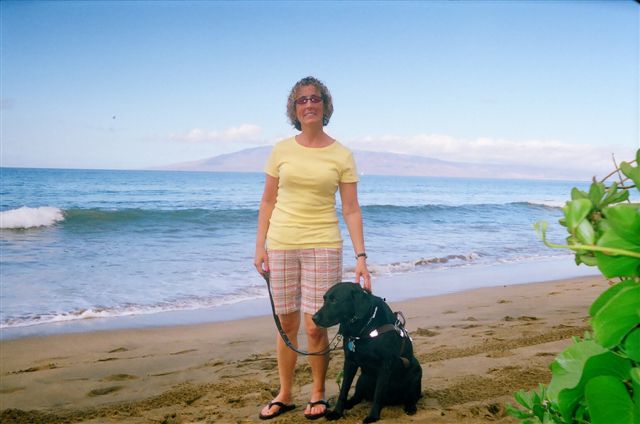
Adding to Richards, Prichard and Morgan's (2010) (re)envisioning of the tourist experience, Poria, Reichel & Brandt (2011) examination of 15 in-depth interviews of blind people’s experiences of air travel, hotels and restaurants, art museums and staff behaviour, comes a new study by Small, Darcy and Packer (2011). Building on Small & Darcy’s (2011) examination of embodiement, the study uses a combination of focus groups and in-depth interviews of 40 people with vision impairment to examine their embodied tourism experiences and what constitutes quality accessible tourism for the group. One of the interesting issues for people with vision impairments or who are Blind, are the extra structural constraints for those who travel with a guide dog. Photo 1 shows Wendy David enjoying the pleasures of Hawaii with her guide dog, which has quarantine implications depending upon the country travelling to, specific air travel requirements and a series of customer service attitudes that have included the exclusion of guide dogs from premises even though it contravenes disability discrimination legislation.  Central to Small, Darcy and Packer (2011) study is the examination of Urry’s concept of the "visual” gaze and how the visual has dominated our understanding of tourism. The abstract is provided.

Photo 1: Wendy David and guide dog enjoying the pleasures of Hawaii -  used with permission © Wendy David


Abstract
This paper reports the findings of a qualitative study that investigated the embodied tourist experiences of 40 people who are vision impaired. The study, informed by the concept of “embodied ontology”, explored the corporeal and socially constructed experience of tourism. The findings highlighted the benefit of holidays for the participants and de-centred the “visual gaze” in the tourist experience. The quality of the tourist experience related to participants’ feelings of inclusion or exclusion in terms of their access to information, experience of wayfinding, travelling with a guide dog, and the knowledge and attitudes of others. It was evident that participants needed to manage their tourist experiences closely and constantly. The paper concludes that the tourism industry and community must understand the multi-sensory nature of the tourist experience if quality accessible experiences are to be available for tourists with vision impairment. Provision of multi-sensory experiences also enhances the experiences of sighted tourists.

Highlights
►People with vision impairment have been omitted in the tourism research literature. ► The “visual gaze” constrains our understanding of the embodied nature of tourism. ► Structural constraints disable tourism environments, services and attitudes. ► The embodied nature of vision impairment requires spatial and sensory understanding. ► Experiences can be enhanced through tactility, aroma, movement and sound.

Keywords: Vision impairment; Blind; Sensory; Embodiment; Disability; Tourist experience; Management; Accessible tourism

References
Poria, Y., Reichel, A., & Brandt, Y. (2011). Blind People’s Tourism Experiences: An Exploratory Study. In D. Olis & S. Darcy (Eds.), Accessible Tourism: Concepts and Issues (pp. 149-159). Bristol, UK: Channel View Publications.
Richards, V., Pritchard, A., & Morgan, N. (2010). (Re)Envisioning tourism and visual impairment. Annals of Tourism Research, 37(4), 1097-1116. doi: DOI: 10.1016/j.annals.2010.04.011
Small, J., & Darcy, S. (2011). Understanding Tourist Experience Through Embodiment: The Contribution of Critical Tourism and Disability Studies. In D. Buhalis & S. Darcy (Eds.), Accessible Tourism: Concepts and Issues (pp. 72-96). Bristol, UK: Channel View Publications.

Wednesday, July 27, 2011

New Research Article based on Korean PwD: Influences of travel constraints on the people with disabilities' intention to travel: An application of Seligman's helplessness theory


Full Reference
Lee, B. K., Agarwal, S., & Kim, H. J. Influences of travel constraints on the people with disabilities' intention to travel: An application of Seligman's helplessness theory. Tourism Management, In Press, Corrected Proof. doi: 10.1016/j.tourman.2011.06.011


Lee, Agarwal & Kim's (2011) new research article based on Korean people with disability draws on leisure constraint theory and Seligman's helplessness theory to test a model for a person with disabilities' intention to travel. The article adds to the body of literature on leisure constraint theory discussed in an earlier blog entry. The research design used a structured self-administered questionnaire that included 30 constraint items, helplessness items, intention to travel and a demographic profile. The data was analysed using corrected item-total correlations for each construct and then subjected to series of principal component analyses prior to verifying the overall research fit of the model and hypothesis tests using Amos 7.0.  


The results suggest that there were no significant influence on travel intention by the three subdimensions of constraints. However, intrinsic and environmental constraints were statistically significant in their association with learned helplessness. Not surprisingly learned helplessness was found to have a negative influence on intention to travel. 

Yet, the question must be asked is whether the framing of the research on the theory of learned helplessness provides a contemporary focus for disability related research given the theory's focus on the  lack of "abilities" of people with disability rather than questioning the hostile nature of tourism environments and service attitudes. The recent research highlighted on the blog with respect to embodiment (Fullager, 2011; Poria, Reichel, & Brandt, 2011; Richards, Pritchard, & Morgan, 2010; Small & Darcy, 2010, 2011) attitudes towards disability (Bizjak, Knezevic, & Cvetreznik, 2011; Daruwalla & Darcy, 2005) previous constraints research (Daniels, Drogin Rodgers, & Wiggins, 2005; Darcy, 1998; Turco, Stumbo, & Garncarz, 1998) and the recent World Report on Disability (World Health Organization & World Bank, 2011) challenges framing research from medical or deficit based psychological perspectives. Research framed from these perspectives places the emphasis on people with disability as "deficient" and neglects the importance of the social construction of the political, social, economic, built environment and attitudes towards disability. What do others think?

Photo 1 depicts the real environmental constraints faced by people with mobility disability in negotiating ecotourism experiences.

Photo 1: Sharon Myers - intrepid wheelchair traveller negotiating environmental constraints in the jungles of  Peru with the interactive assistance of local guides (Courtesy Sharon Myers http://www.onaroll.org/)


References


Monday, March 15, 2010

Vancouver 2010 Winter Paralympic Games Research?


In keeping with the accessible tourism theme of the Olympics, I draw attention to the opening ceremony of the 2010 Vancouver Winter Paralympic Games and all competition coverage that it is provided free online by the International Paralympic Committee’s own broadcaster (Paralympic Sport TV, 2010). Brilliant coverage! The Games sites and Vancouver generally will get a full access testing by the 40 countries competing with their 1350 athletes, officials and countless supporters (Tourism Vancouver, 2010) testing the Accessible Tourism Strategy set up by a consortium of organizations (2010 Legacies Now, 2010). The premise of the strategy incorporates access for the major dimensions of disability access including: mobility; Deaf or hearing impaired; and blind or vision impaired. To this end, the Vancouver Organising Committee (VANOC) for the 2010 Olympic and Paralympic Games has produced an accessibility guide as a compendium to the spectator guide (Vancouver Organising Committee for the 2010 Olympic and Paralympic Winter Games (VANOC), 2010). This guide is also being supplemented by participants and visitors to the Paralympics by some excellent local access guides and blogs such as Whistler for the Disabled (2010) that provides a wealth of information for travelers and white powder lovers. As previously mentioned on the blog, a book is currently in the preparation on Paralympic legacy by David Legg and Keith Gilbert titled The Paralympic Games: Legacy and Regeneration (2010). Yet, a notable omission is that not one of the chapters deals with Winter Paralympic Games. Hopefully, someone in Vancouver will rectify the situation by documenting the planning, operation and legacy of the 2010 Vancouver Olympic and Paralympic Games. What is quite often lost from the “official” history of Olympic and Paralympic Games is the central role that disability advocates play in ensuring an equitable, dignified and independent experience for those that attend as participants, team management, employees, volunteers, spectators and tourists alike. For example, the Sydney 2000 Olympic and Paralympic Games was one where the official record (Olympic Coordination Authority, 2001; Sydney Paralympic Organising Committee, 2001) differed to more critical observations of Games processes (Cashman & Darcy, 2008; Darcy, 2003; Goggin & Newell, 2001; Olympic & Paralympic Disability Advocacy Service, 2000). What was omitted was the critical role of the underlying human rights framework, building codes and standards, and the advocacy of disability organizations and individuals with disabilities had in contesting, collaborating, protesting, litigating and assisting all aspects of planning and operations in the seven years prior to the opening ceremonies. Let’s hope that some Canadian researchers document the Vancouver 2010 Olympic and Paralympic Games disability and access processes.

References
2010 Legacies Now. (2010). Accessible Tourism Strategy: accessibility rating icon guidelines business Available from http://www.2010legaciesnow.com/fileadmin/user_upload/Accessible_Tourism/Brand_Standard-Business.pdf
Cashman, R., & Darcy, S. (Eds.). (2008). Benchmark Games: The Sydney 2000 Paralympic Games. Petersham, NSW Australia: Walla Walla Press in conjunction with the Australian Centre for Olympic Studies.
Darcy, S. (2003). The politics of disability and access: the Sydney 2000 Games experience. Disability & Society, 18(6), 737-757.
Goggin, G., & Newell, C. (2001). Crippling Paralympics? Media, disability and Olympism. Media International Australia, 97(Nov), 71-83.
Legg, D., & Gilbert, K. (Eds.). (2010). The Paralympic Games: Legacy and Regeneration. Champaign, IL USA: Commonground Publishing.
Olympic & Paralympic Disability Advocacy Service. (2000). Final Report to the Department of Family and Community Services. Sydney: Commonwealth Department of Family and Community Services.
Olympic Coordination Authority. (2001). Accessible Operations Post Game Report - Sydney 2000 Olympic and Paralympics Games. Sydney: Olympic Coordination Authority.
Paralympic Sport TV (Producer). (2010, 15 March) Vancouver 2010. Paralympic Sport TV. Live TV feed
Sydney Paralympic Organising Committee. (2001). Paralympic Post Games Report (1 Vol). Sydney: SPOC.
Tourism Vancouver. (2010). 2010 Vancouver Olympic and Paralympic Games. Retrieved 15 March, 2010
Vancouver Organising Committee for the 2010 Olympic and Paralympic Winter Games (VANOC). (2010). Spectator guide: accessibility. Retrieved 14 March, 2010, from http://www.vancouver2010.com/olympic-spectator-guide/accessibility/
Whistler for the Disabled. (2010). The 2010 Whistler Accessibility Blog. Retrieved 14 March, 2010, from http://www.whistlerforthedisabled.com/blog/accessible-whistler-1-888-933-9383/


Total Pageviews

Popular Posts

Labels