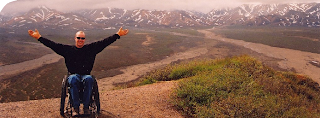
All abilities trek to the summit of Mount Kosciuszko - Australia's highest peak

All abilities trek to the summit of Mount Kosciuszko - Australia's highest peak
All abilities trek to the summit of Mount Kosciuszko - Australia's highest peak - © Jennifer Johnson 2008
Showing posts with label New Zealand. Show all posts

Monday, November 28, 2016

Seminar on Measuring Destination Competitiveness, Sustainability and Accessibility in Tourism

Masters research candidate Ana Rucci, from the National University of La Plata Argentina, showcased her research on accessibility in tourism at a talk for the UTS Business School, University of Technology Sydney on 17 November 2016. Ana's research aims to develop a uniform methodology that could measure accessibility in tourism as a competitiveness factor across different countries.
Destination competitiveness and sustainability (Ritchie and Crouch, 2003) is a robust framework used by academics and industry to identify competitive advantage by nation states. In 2016 the World Tourism Organization recognised the growing importance of accessible tourism as a commitment to their charter on universally accessible tourism products and services, however, what constitutes accessibility for destinations remains largely unexplored.

Case studies from Argentina and Brazil were a particular focus point in the preliminary findings Ana presented, as the recent FIFA World Cup and Olympic and Paralympic Games boosted tourism in the area while incorporating issues involving accessibility for the host nation and cities. By contrasting these examples in relationship to findings from Australia and New Zealand, Ana's research builds on an examination of overarching tourism destination competitiveness from a disability and accessibility perspective.
Photo 1: Ana Rucci & Prof Simon .Darcy at the UTS Business School

Ana's presentation was part of a larger research project that Ana, Dr Natalia Porto (also from the National University of La Plata Argentina), and Professor Simon Darcy from UTS Business School are undertaking on global accessible tourism metrics and policy.

Seminar on Measuring Destination Competitiveness, Sustainability and Accessibility in Tourism


Masters research candidate Ana Rucci, from the National University of La Plata Argentina, showcased her research on accessibility in tourism at a talk for the UTS Business School, University of Technology Sydney on 17 November 2016. Ana's research aims to develop a uniform methodology that could measure accessibility in tourism as a competitiveness factor across different countries.
Destination competitiveness and sustainability (Ritchie and Crouch, 2003) is a robust framework used by academics and industry to identify competitive advantage by nation states. In 2016 the World Tourism Organization recognised the growing importance of accessible tourism as a commitment to their charter on universally accessible tourism products and services, however, what constitutes accessibility for destinations remains largely unexplored.

Case studies from Argentina and Brazil were a particular focus point in the preliminary findings Ana presented, as the recent FIFA World Cup and Olympic and Paralympic Games boosted tourism in the area while incorporating issues involving accessibility for the host nation and cities. By contrasting these examples in relationship to findings from Australia and New Zealand, Ana's research builds on an examination of overarching tourism destination competitiveness from a disability and accessibility perspective.
Photo 1: Ana Rucci & Prof Simon .Darcy at the UTS Business School

Ana's presentation was part of a larger research project that Ana, Dr Natalia Porto (also from the National University of La Plata Argentina), and Professor Simon Darcy from UTS Business School are undertaking on global accessible tourism metrics and policy.

Sunday, August 28, 2016

Asia Pacific Network on Accessible Tourism to get country chapters


Reprinted from http://bit.ly/2boJZ6w

The Asia Pacific Network on Accessible Tourism (APNAT) will soon see the establishment of country chapters, which would help champion barrier-free travel for all people with disabilities in the region.  This move was agreed upon at the recently concluded 5th International Conference on Accessible Tourism.  APNAT itself was formed after recommendations from participants who attended the first South-east Asia Conference on Accessible Tourism in 2012 (SEACAT).   Sia Siew Chin, protem committee chairman of APNAT, said: “Through APNAT, we would like to be able to reach out to governments, people in the tourism industry and service providers to provide for the access needs of everyone in society, in particular people with disabilities.”   Saowalak Thongkuay, regional coordinator for Abilis Foundation Mekong, said: “APNAT gives us a strong and collective voice to negotiate with governments to include accessible tourism into their development agenda.
It is hoped that all links in the tourism chain will become accessible.  Speaking at the conference,  Annagrazia Laura, president of European Network for Accessible Tourism (ENAT), stressed that providing barrier-free environment means that from arrival to departure, visitors must be guaranteed an unbroken and seamless chain of accessibility.  “If just one link in the chain is broken, such as inaccessible monuments and tourist attractions, the holiday experience will be spoilt” said Laura.
Joseph Kwan, chair, International Commission on Technology & Accessibility, Rehabilitation International also attended the conference.  “Once governments realise that people with disabilities and the senior market are a sizable population with disposable incomes to spend and can contribute significantly to foreign exchange earnings, employment generation and social inclusion, they will be more willing to act, to create barrier-free travel for all” said Kwan.   Kwan stressed the importance of governments to do audits on the current status of tourism accessibility in order to develop policies and plans regarding accessibility and human rights.
Follow on Twitter: @EUaccesstourism
Photo 1: Hong Kong MTR system accessibility © Fiona Darcy 2010

Wednesday, December 7, 2011

Research is only good if it brings about improved access and accessible experiences - Lessons from Dunedin, New Zealand


This blog is dedicated to showcasing research evidence for accessible tourism. However, the overall aim is for the research to inform industry and government to improve accessible tourism experiences for people with disabilities. To this end we must all seek to influence the tourism policy agenda through presenting research based evidence and advocating for changes to practice where there has been a noted deficiency from the perspective of people with disabilities, suppliers or government regulators/coordinators.


I am currently at a research conference in Dunedin in New Zealand where any travel experience for a power wheelchair using quadriplegic with high support needs has its travel trip chain logistics that need to be organised before the rigours of an academic conference can be considered. Information planning, accommodation, air transport, ground transport, equipment hire, attendant services and medical supplies are just some of the considerations with organising an accessible trip. Luckily I had an insider's perspective at the destination to assist me with my travel planning through the University of Otago's Donna-Rose McKay who is the Manager of Disability Information & Support who was able to suggest a good quality accessible accommodation at the University of Otago - Executive Business Apartments. Further, Donna-Rose suggested I contact John Marrable, InformationConsultant at the Dunedin DisabilityInformation Service who provided contacts for hiring a patient lifter. The trip was finally confirmed once a direct flight from Sydney was negotiated with the only carrier providing direct service, my wife Fiona and my attendant Matt were ready to go.


Dunedin is located on the Otago Peninsula which is known for its ecotourism, historic architectural, cultural heritage and local cafe/bar experiences. Dunedin has much to offer the tourist looking for accessible experiences but finding travel planning information was not easy. Yet, local authorities are keen to improve on current practice and I met with the local disability information service, interested Dunedin Council representatives and local media. The following story - Benefits Seen in Accessible Tourism - appeared in the Otago Daily Times on 7 December 2011


http://www.odt.co.nz/news/dunedin/189720/benefits-seen-accessible-tourism


What became evident was that while the urban town centre offered a good range of accessible opportunities for residents and tourists alike, the same could not be said for day trip operators in the region. Quite simply, outside of the excellent Taieri Gorge Railway we could not locate a single day tour operator who could provide wheelchair access to any of the standard tours offered to other tourists. This is an extraordinary situation in a country that prides itself on its clean green image but obviously not one that is socially inclusive or sustainable. Accessible coaches and minibuses are not costly accessible tourism infrastructure and the Dunedin city bus fleet boasts an excellent fleet of low floor accessible buses. So what is the problem with the local tour operators? 


Photo 1: Simon Darcy boarding with the historic Taieri Gorge Railway carriage © Fiona Darcy 2011.


This situation has a significant cost disincentive for tourists with disabilities and seniors with access needs. For example, the magnificent Royal Albatross Colony at Taiaroa Head is a must see experience that has just made the Lonely Planet's 1000 Ultimate Sights, a standard tour to the colony with cost $95 per person. However, without access provision, the only option was to hire a Dunedin Taxi wheelchair accessible vehicle that cost $240 for the three-hour hire plus the $40 for the Royal Albatross Centre's Albatross Classic tour.


Do the figures - that is a $185 cost imposition on tourists with disabilities to have the same quality of experience as other tourists!


The other thing that tourists with disabilities miss out on by taking the "segregated" tourist experience is they don't get to mix socially with all the other tourists. This is something that all other tourists take for granted but is often lost where integrated day tour operations are not available. This in itself can significantly reduce the overall experience of the destination.


Sadly, this lack of accessibility to day trip operations is not isolated to New Zealand but is just as prevalent in Australia where "charter operations" have been excluded from the Disability Discrimination Act and the subsequent Disability Standards for Accessible Public Transport. This situation is currently being tested in the Federal Court of Australia where Julia Haraksin - a person with a disability - has challenged this exclusionary practice and hopefully this situation in Australia will be remedied in the near future. However, New Zealand does not have similar disability discrimination legislation and relies on the New Zealand Disability Strategy, which lacks opportunities for New Zealanders with disabilities to challenge discriminatory practices. 


While all this may seem daunting and overly critical, those of us who want to see improvements in accessible tourism experiences know the benefits of tourism are as important for people with disabilities as to the rest of the population. 


Photo 2: Simon Darcy enjoying time out from every day life, a spectacular view and a soaring Northern Royal Albatross some of the intangible social psychological benefits of tourism for all people © Fiona Darcy 2011.
Dunedin and the Otago Peninsula have much to offer people with disabilities and seniors with access needs, which could be made far more accessible through some basic improvements in information provision. However, a much broader commitment to the principles of accessible tourism and the desire of local tourism operators to provide accessible experiences for people with mobility, hearing, vision, intellectual, mental health and other disabilities is required. Given the increasing numbers of people with disabilities and seniors with access needs destinations need to make provisions in order to provide a competitive advantage in an increasingly competitive international tourism market (see Buhalis & Darcy 2011 and Buhalis, Darcy and Ambrose 2012).


References


  1. Buhalis, D., & Darcy, S. (Eds.). (2011). Accessible Tourism: Concepts and Issues. Bristol, UK: Channel View Publications.
  2. Buhalis, D., Darcy, S., & Ambrose, I. (Eds.). (2012). Best Practice in Accessible Tourism: Inclusion, Disability, Ageing Population and Tourism. Bristol, UK: Channel View Publications.
  3. Gibb, J. (2011, 7 December). Benefits seen in accessible tourism, Otago Daily Times. Retrieved from http://www.odt.co.nz/news/dunedin/189720/benefits-seen-accessible-tourism


Friday, January 7, 2011

Accessible Tourism Book now published

Accessible Tourism: Concepts and Issues

It is with great pleasure that I am able to announce the publication of Accessible Tourism: Concepts and Issues that I have co-edited with Prof Dimitrios Buhalis of Bournemouth University and published with Channel View Publications.


The book brings together the underlying concepts and issues relating to accessible tourism so as to provide a foundation for industry, government and the not-for-profit sector understanding of the area. A foundation of the book explores accessible tourism from the perspective of the experiences of people with disability whether they have a mobility, vision, hearing or cognitive disability. As Photo 1 shows this begins with front cover of book where a photo was selected depicting an all ability trek.

Photo 1: Book Cover features an all abilities trek to the summit of Mount Kosciusko that is Australia's highest peak

The book consists of 19 chapters:
  • Chapter 1 – Introduction (Darcy and Buhalis);
  • Chapter 2 – Conceptualising Disability: Medical, Social, WHO ICF, Dimensions and Levels of Support Needs (Darcy and Buhalis);
  • Chapter 3 – Accessibility: A Key Objective for the Tourism Industry (Eichhorn and Buhalis);
  • Chapter 4 – Disability Legislation and Empowerment of Tourists with Disability: The UK Case (Shaw and Veitch);
  • Chapter 5 – Understanding Tourist Experience through Embodiment: The Contribution of Critical Tourism and Disability Studies (Small and Darcy);
  • Chapter 6 – Tourism in the Leisure Lives of People with Disability (Foggin);
  • Chapter 7 – Travelling with and beyond Depression: Women’s Narratives of Recovery and Identity (Fullager);
  • Chapter 8 – Encounters of Disabled Customers on the Tourism Stage (Arola – Edited by Cooper, C.);
  • Chapter 9 – Blind People’s Tourism Experiences: An Exploratory Study (Poria, Reichel and Brandt); Chapter 10 – Demographic Drivers of Change in Tourism and the Challenge of Inclusive Products (Shaw and Veitch);
  • Chapter 11 – Ageing Travellers: Seeking an Experience and not just a Destination (Patterson and Pegg);
  • Chapter 12 – Ageing Travel Market and Accessibility Requirements (Wang);
  • Chapter 13 – Attitudinal and Experimental Differences of Disabled and Ablebodied Visitors to Heritage Sites (Pearn);
  • Chapter 14 – Economic Contribution of Tourists with Disabilities: An Australian Approach and Methodology (Darcy and Dwyer);
  • Chapter 15 – Developing a Business Case for Accessible Tourism (Darcy, Cameron and Pegg);
  • Chapter 16 – Stakeholder Analysis (Michopoulou and Buhalis);
  • Chapter 17 – Webdesign, Assistive Technologies and Accessible Tourism (Puhretmair and Nussbaum);
  • Chapter 18 – Technology Platforms and Challenges (Michopoulou and Buhalis);
  • Chapter 19 – Conclusion: A Call towards Universal Approaches to Accessible  (Darcy, Ambrose, Schweinsberg and Buhalis)

The book is available in a variety of formats and is available for purchase please see:

Sunday, November 21, 2010

New Research Programme Area in Access Tourism at NZTRI/AUT a First for NZ

Auckland University of Technology's New Zealand Tourism Research Institute has created a Research Programme Area in Access Tourismheaded by Dr Sandra Rhodda. The announcement states:
"NZTRI’s Access Tourism programme aims to research and develop Access Tourism in NZ.  Access Tourism is tourism, travel, and hospitality for people with permanent or temporary disabilities, seniors, parents with strollers, and any person with a need for improved access.  This is an interdisciplinary research area that addresses the challenges and opportunities presented by Access Tourism.
The Access Tourist already represents a sizeable proportion of our tourism markets.  Between 17 and 20% of the population in our main markets already report a disability, and this percentage is bound to grow because the large Baby Boomer cohort is ageing and disability increases with age.  Those aged 45 or older already comprise almost half of our domestic and international visitors (and over 70% of our cruise ship visitors).

Areas of interest include:
  • Research and policy development
  • Understanding the Access Tourism market
  • Awareness promotion and education of government and industry to the potential of Access Tourism
  • Access Tourism product development and marketing in NZ
  • Promotion of cooperation in a developing Access Tourism sector, including in the public and private sector
  • Access Tourist satisfaction and motivation
  • Economic and social benefits of Access Tourism
  • Access Tourism as an important factor in tourism sustainability
  • Relationship of Access tourism to Health, Wellness, and Medical Tourism
  • Opportunities for Access Tourism legacy development around major events such as RWC2011"
  • Source: http://www.accesstourismnz.org.nz/2010/11/new-research-programme-area-in-access-tourism-at-nztriaut-a-first-for-nz/

Wednesday, October 6, 2010

New Zealand Accessible Tourism Conference Follow-up: Excellent Podcast and Powerpoint Resource


The first New Zealand Accessible Tourism Conference was held last Monday, 4 October 2010, and hosted by the New Zealand Tourism Research Institute, Auckland University of Technology.

One of the almost instant outcomes of the conference has been the podcast publication of the 10 speakers and the breakout session, of which 7 of speakers podcasts were accompanied by Powerpoint presentations.

These are all freely available via the following website link

More conferences should take this approach as both a contribution to the free exchange of information and recognition that people with disabilities face more barriers to travel generally and underlying economic constraints specifically.

Enjoy the resource and provide feedback to the organisers via the blog comments option at the bottom of each speakers page.


Saturday, September 25, 2010

New Zealand’s First Accessible Tourism Conference


Sandra Rhodda and the New Zealand Tourism Research Institute are hosting New Zealand’s first accessible tourism conference on Monday 4 October

Conference speakers include:
Diana Palmer:            Information on Disability Education Awareness Services (IDEAS), NSW, Australia.  Diana has just returned from a Blakeney Millar Churchill Fellowship in North America, Europe, the UK, and parts of Asia, where she studied developments in Access Tourism 
Kathy Olsen:   Director of Squiz NZ, an expert in web accessibility
Minnie Baragwanath:           Auckland City Council.  Minnie will discuss Access developments in Auckland around RWC2011, including the creation of an accessible business toolkit as part of the business readiness programme
Bill Forrester: Travability Australia, Inbound Tourism and Access Tourism

Those registered to attend so far include representatives from industry training organisations, the NZ Automobile Association, Air NZ, local governments, national and international non-governmental organisations, tourism operators, tourism travel agencies, tourism industry sector organisations, the Department of Conservation, regional tourism organisations, business development agencies, development consultants, access assessment agencies, and academics.

For a full program see:

We wish Sandra and the NZTRI all the best.

Photo 1:          Blogger and Fiona at the conference city Auckland in 2005
Source: unknown tourist who took our photo!


Photo 2:          Craig Kennedy from AccessAnything showing the off the beaten access track New Zealand style

Sunday, January 10, 2010

New Published Research from NZ on Mobility Disability and Attitudes to Motorised Access of Wilderness


An interesting new article that analyses the comparative attitudes of people with mobility disabilities and the general public to the provision of motorized access to wilderness environments in New Zealand.
Copyright © 2009 Elsevier Ltd All rights reserved.

Brent A. Lovelocka
a Centre for Recreation Research, Department of Tourism, University of Otago, PO Box 56, Dunedin, New Zealand


Abstract
Managers of remote and wilderness environments have been among the last to accommodate the needs of tourists with mobility-disabilities…(shortened due to copyright restrictions).


Keywords: Mobility-disability; Motorised; Access; Wilderness; Nature; Environmental attitude


Full reference:

Lovelock, B. A. (2010). Planes, trains and wheelchairs in the bush: Attitudes of people with mobility-disabilities to enhanced motorised access in remote natural settings. Tourism Management, 31(3), 357-366.


Total Pageviews

Popular Posts

Labels