All abilities trek to the summit of Mount Kosciuszko - Australia's highest peak

All abilities trek to the summit of Mount Kosciuszko - Australia's highest peak
All abilities trek to the summit of Mount Kosciuszko - Australia's highest peak - © Jennifer Johnson 2008
Showing posts with label UK. Show all posts

Thursday, April 25, 2019

Economic Estimates of Accessible and Inclusive travel markets: Australia, United Kingdom, European Union & United States of America

Following on from the previous blog post Australian Accessible Tourism Data module, what are the key learnings on the accessible and inclusive tourism market coming out of the Tourism Research Australia's 2017 Q1 National Visitor Survey? There are two key documents that use similar but slightly different methodologies that summarises the economic impact and basic tourism behaviour information. They are:
The following Infographic from UTS IPPG & UTS Business School summarises some key components of the Tourism Research Australia's 2017 Q1 data together with the economic impact figures of major overseas studies in the UK, EU and the USA.


Infographic: Australian, United Kingdom, European Union & United States of America economic estimates of accessible and inclusive travel markets


Wednesday, October 22, 2014

The Value of the "Purple Pound" For Accessible Tourism in England - Great Research, Great Infographic, Great Work Visit England!


Sunday, April 6, 2014

IV International Congress on Tourism for All Research Papers And Videos of Keynote Sessions

In a follow-up to my previous post on the IV International Congress on Tourism for All, the organisers Fundacion ONCE have produced a wonderful legacy of the Congress by providing access to the program resources.


The main legacy page can be found at IV International Congress on Tourism for All, which provides a host of resources including the overall organisational structure, program, videos and interviews with key presenters.

However, what is really impressive is the exceptional job that the organisers did on producing video sessions on the conference, which also are subtitled in a variety of languages. 

The video resources can be found at Videos and include the following titles:


Congratulations to Fundacion ONCE on the production of such a wonderful resource to disseminate cutting-edge research on accessible tourism.

Photo: A chance to improve destination management for accessible tourism - republished from http://buhalis.blogspot.com.au/2013/02/accessible-tourism-congress-in-avila.html 

Sunday, November 20, 2011

New Published Research from US on Motivations of people with acquired mobility disability to travel


Surprisingly few studies have examined the motivations of people with disability to travel. The Shi, Cole and Chancellor (2012) newly published article applies Crompton’s (1979) push pull model of travel motivations to examine people with acquired mobility disability’s motivation to travel. The qualitative study undertook two focus groups at the 13th Congress of The Society for Accessible Travel and Hospitality in 2009. Transcripts of the focus groups were analysed based on Crompton's model. The results identified nine push factors with five being consistent with Crompton (1979):  escape from a perceived mundane environment; exploration and evaluation of self; relaxation; enhancement of relationship with family and friends; and facilitation of social interaction. However, four other factors are unique to people with acquired mobility disabilities: independence; the desire of being in a natural environment; adventure/risk; and do it today. With respect to Crompton (1979) pull factors, novelty and education were consistent with previous work but not surprisingly the accessibility of the destination was a dominant factor. This study suggests that a broader study examining motivations of people across the spectrum of disabilities and support needs would add a level of sophistication to what is currently known about motivations to travel for this group.

Photo 1 shows two gnarly South African surfers who just happen to have disabilities. They espouse a series of motivations identified in this study - independence, desire of being a natural environment, adventure/risk and do it today. However, they haven’t waited for perfect access to a beach for wheelchair users and have instead used "Quad bikes" to assist their quest for the perfect wave. Go for it boys!

Photo 1: Dries Millard and Glenn Ward Paraplegic body boarders trekked from Saldanha to Cape Town and had many adventures along the way - photo with permission http://www.saldanhatocapetown.co.za/the-event/


Copyright © 2012 Elsevier Ltd All rights reserved.

Understanding leisure travel motivations of travelers with acquired mobility impairments

Lei Shi, Shu Cole, & H. Charles Chancellor
Department of Recreation, Park, and Tourism Studies, Indiana University, HPER 133, 1025 E 7th Street, Bloomington, IN 47405, USA

Abstract
The purpose of the study was to understand what motivated people with mobility impairments to travel frequently. Two focus groups were conducted and results were analyzed in light of Crompton’s (1979) push/pull conceptual framework exploring pleasure travel motivation...(shortened due to copyright restrictions).

Keywords: Mobility impairments; Motivation; Leisure travel

References
Crompton, J. L. (1979). Motivations for pleasure vacation. Annals of Tourism Research, 6(4), 408-424.
Shi, L., Cole, S., & Chancellor, H. C. (2012). Understanding leisure travel motivations of travelers with acquired mobility impairments. Tourism Management, 33(1), 228-231. doi: 10.1016/j.tourman.2011.02.007

Saturday, November 19, 2011

The embodied tourist experiences of people with vision impairment: Management implications beyond the visual gaze


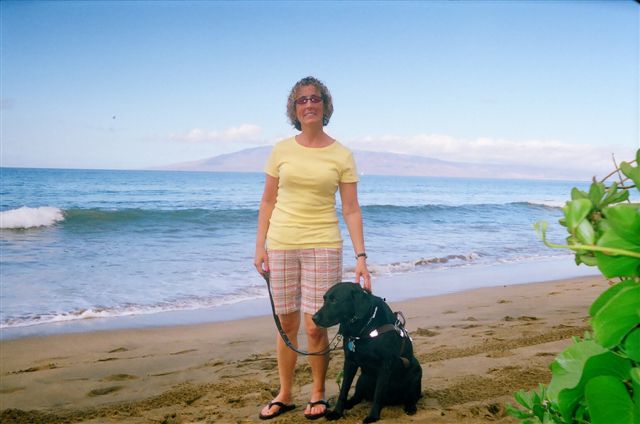
Adding to Richards, Prichard and Morgan's (2010) (re)envisioning of the tourist experience, Poria, Reichel & Brandt (2011) examination of 15 in-depth interviews of blind people’s experiences of air travel, hotels and restaurants, art museums and staff behaviour, comes a new study by Small, Darcy and Packer (2011). Building on Small & Darcy’s (2011) examination of embodiement, the study uses a combination of focus groups and in-depth interviews of 40 people with vision impairment to examine their embodied tourism experiences and what constitutes quality accessible tourism for the group. One of the interesting issues for people with vision impairments or who are Blind, are the extra structural constraints for those who travel with a guide dog. Photo 1 shows Wendy David enjoying the pleasures of Hawaii with her guide dog, which has quarantine implications depending upon the country travelling to, specific air travel requirements and a series of customer service attitudes that have included the exclusion of guide dogs from premises even though it contravenes disability discrimination legislation.  Central to Small, Darcy and Packer (2011) study is the examination of Urry’s concept of the "visual” gaze and how the visual has dominated our understanding of tourism. The abstract is provided.

Photo 1: Wendy David and guide dog enjoying the pleasures of Hawaii -  used with permission © Wendy David


Abstract
This paper reports the findings of a qualitative study that investigated the embodied tourist experiences of 40 people who are vision impaired. The study, informed by the concept of “embodied ontology”, explored the corporeal and socially constructed experience of tourism. The findings highlighted the benefit of holidays for the participants and de-centred the “visual gaze” in the tourist experience. The quality of the tourist experience related to participants’ feelings of inclusion or exclusion in terms of their access to information, experience of wayfinding, travelling with a guide dog, and the knowledge and attitudes of others. It was evident that participants needed to manage their tourist experiences closely and constantly. The paper concludes that the tourism industry and community must understand the multi-sensory nature of the tourist experience if quality accessible experiences are to be available for tourists with vision impairment. Provision of multi-sensory experiences also enhances the experiences of sighted tourists.

Highlights
►People with vision impairment have been omitted in the tourism research literature. ► The “visual gaze” constrains our understanding of the embodied nature of tourism. ► Structural constraints disable tourism environments, services and attitudes. ► The embodied nature of vision impairment requires spatial and sensory understanding. ► Experiences can be enhanced through tactility, aroma, movement and sound.

Keywords: Vision impairment; Blind; Sensory; Embodiment; Disability; Tourist experience; Management; Accessible tourism

References
Poria, Y., Reichel, A., & Brandt, Y. (2011). Blind People’s Tourism Experiences: An Exploratory Study. In D. Olis & S. Darcy (Eds.), Accessible Tourism: Concepts and Issues (pp. 149-159). Bristol, UK: Channel View Publications.
Richards, V., Pritchard, A., & Morgan, N. (2010). (Re)Envisioning tourism and visual impairment. Annals of Tourism Research, 37(4), 1097-1116. doi: DOI: 10.1016/j.annals.2010.04.011
Small, J., & Darcy, S. (2011). Understanding Tourist Experience Through Embodiment: The Contribution of Critical Tourism and Disability Studies. In D. Buhalis & S. Darcy (Eds.), Accessible Tourism: Concepts and Issues (pp. 72-96). Bristol, UK: Channel View Publications.

Saturday, February 20, 2010

The United Nations' conventions, the World Tourism Organisation and Accessible Tourism Policy


The UN human rights conventions have been in existence since 1948 (United Nations, 1948). It wasn’t until 1975 that people with disabilities were specifically identified in a declaration with the subsequent actions and declarations reinforcing that people with disabilities should enjoy the same rights of citizenship as those without disabilities (United Nations, 1975, 1976, 1993). More recently, the United Nations (2006, 2008) Convention on the Rights of People with Disabilities became a galvanizing agent for operationalising these rights within each signatory country. Yet,  countries operationalise these rights under their own legislative and policy frameworks.  Given the various UN conventions over the years, it is surprising that only 40 countries have introduced specific disability discrimination legislation (United Nations, 2009). Table 1 shows, a chronology of disability discrimination legislation for a sample of countries.

Table 1: National Disability Discrimination Legislation

Year
Country
Legislation
1990
United States
Americans with Disabilities Act
1990
China
The Law of People's Republic of China on the Protection of Disabled Persons
1992
Australia
Disability Discrimination Act
1995
United Kingdom
Disability Discrimination Act
1995
India
Persons with Disabilities (Equal Opportunities, Protection of Rights and Full Participation) Act
1996
Costa Rica
Law No. 7600 on Equality for Persons with Disabilities
1996
Hong Kong
Disability Discrimination Ordinance (1996)


Source: (UN ESCAP, 2008; United Nations, 2009)

Similarly, the UN World Tourism Organisation has been active in promoting the rights of travelers with disabilities through a series of statements (World Tourism Organization, 1985, 1991, 2005). The latest of these directly supports the UN Convention on the Rights of People with Disabilities where Article 30 includes tourism within its discussion of the cultural industries. Figure 1 shows that the WTO identify the importance of universally asccessible tourism (source: http://unwto.org/en/about/unwto ).Yet, the WTO has not deployed resources beyond these statements but has operated programs, research and development opportunities in many other areas. So where does this leave the use of such international declarations in respect to improving the material position of people with disabilities on the ground? Nation states must still implement the goodwill of these declarations through their own frameworks whereas government’s resource and regulate their implementation of the UN Convention as a way to empower people with disabilities to achieve all their rights of citizenship. However, the presence of antidiscrimination legislation does not guarantee its implementation or a change in the material position of those that it is designed to empower (Handley, 2001; Heap, Lorenzo, & Thomas, 2009).


Figure 1: Shows that the WTO identify the importance of universally asccessible tourism (source: http://unwto.org/en/about/unwto )

What research has been carried out on the implementation of human rights legislation in nation states as it relates to accessible tourism provision? First, there are other disciplines and fields of study that have carried out significant research on the impact of disability legislation generally and comparatively for countries (Burns & Gordon, 2009), the accessibility of the built environment (Imrie, 1996, 2000; Prideaux & Roulstone, 2009) and the accessibility of transportation systems (Aldred & Woodcock, 2008) . This body of research can provide major insights into how each nation state regards accessibility for its citizens. Yet, as we know people with disabilities and those who benefit from the accessible tourism provision face many tourism specific issues when they travel away from their place of residence into unfamiliar territory. These have been documented literature and I refer you back  to the blog entry on constraints

While many studies and articles refer to human rights legislation as an important reason to undertake studies on accessible tourism, very few studies analyse the relative impacts or outcomes of the human rights laws. A small but growing body of literature that examines the outcomes of human rights legislation as it impacts on accessible tourism is beginning to emerge. The most well-developed body of research is within the UK (Goodall, Pottinger, Dixon, & Russell, 2004; Miller & Kirk, 2002; Shaw, 2007; Shaw, Veitch, & Coles, 2005), the US (Davies & Beasley, 1994; Gallagher & Hull, 1996; Griffin Dolon, 2000; US Dept Justice, 2007 ; Van Horn, 2007) and Australia (Darcy & Taylor, 2009; Public Interest Advocacy Centre, 2007; Small & Darcy, 2010). These issues certainly affect other countries and there has been significant coverage of air travel disability and embodiement discrimination in the media in France, South Africa, India, Canada and Malaysia. I called for other researchers in other countries to include an analysis of the human rights implications of accessible tourism as part of their research agenda for their own citizens as well as those who travel to their countries.

References
Aldred, R., & Woodcock, J. (2008). Transport: challenging disabling environments. Local Environment: The International Journal of Justice and Sustainability, 13(6), 485–496.
Burns, K. K., & Gordon, G. L. (2009). Analyzing the Impact of Disability Legislation in Canada and the United States. Journal of Disability Policy Studies, 1044207309344562.
Darcy, S., & Taylor, T. (2009). Disability citizenship: An Australian human rights analysis of the cultural industries. Leisure Studies, 28(4), 419-441.
Davies, T. D., Jr., & Beasley, K. A. (1994). Accessible design for hospitality: ADA guidelines for planning accessible hotels, motels and other recreational facilities. New York: McGraw-Hill.
Gallagher, J. M., & Hull, A. H. (1996). Cruise ship accommodations for passengers with physical limitations due to disability or age. American Journal of Occupational Therapy, 50(8), 685-687.
Goodall, B., Pottinger, G., Dixon, T., & Russell, H. (2004). Heritage property, tourism and the UK Disability Discrimination Act. Property Management, 22(5), 345-357.
Griffin Dolon, J. (2000). Accessibility, the Americans with Disabilities Act, and the natural environment as a tourist resource. anatolia: International Journal of Tourism and Hospitality Research, 11(2), 101-110.
Handley, P. (2001). 'Caught Between a Rock and a Hard Place': Anti-discrimination legislation in the liberal state and the fate of the Australian Disability Discrimination Act. Australian Journal of Political Science, 36(3), 515-528.
Heap, M., Lorenzo, T., & Thomas, J. (2009). ‘We've moved away from disability as a health issue, it's a human rights issue’: reflecting on 10 years of the right to equality in South Africa. Disability & Society, 24(7), 857-868.
Imrie, R. (1996). Disability and the city: international perspectives. London: Paul Chapman.
Imrie, R. (2000). Disabling environments and the geography of access policies and practices. Disability & Society, 15(1), 5-24.
Miller, G. A., & Kirk, E. (2002). The Disability Discrimination Act: Time for the stick? Journal of Sustainable Tourism, 10(1), 82-88.
Prideaux, S., & Roulstone, A. (2009). Good practice for providing disabled people with reasonable access to the built environment. Built Environment, 1(1), 59-81.
Public Interest Advocacy Centre. (2007). Flight Closed: Report on the experiences of People with Disabilities in Domestic Airline Travel in Australia. Sydney: Public Interest Advocacy Centre.
Shaw, G. (2007). Disability legislation and empowerment of tourists with disability in the United Kingdom. In A. Church & T. Coles (Eds.), Tourism, Power and Space (pp. 83-100). London: Routledge.
Shaw, G., Veitch, C., & Coles, T. I. M. (2005). Access, disability, and tourism: changing responses in the United Kingdom. Tourism Review International, 8(3), 167-176.
Small, J., & Darcy, S. (2010). Chapter 4: Tourism, disability and mobility. In S. Cole & N. Morgan (Eds.), Tourism and Inequality: Problems and Prospects (in press) (pp. pp1-30). Wallingford CABI.
UN ESCAP. (2008). Disability at a glance: a Profile of 28 Countries and Areas in Asia and the Pacific (Vol. 2002,  Available from http://www.unescap.org/esid/psis/disability
United Nations. (1948). Universal Declaration of Human Rights. Geneva. www.un.org/Overview/rights.html: United Nations.
United Nations. (1975). Declaration on the rights of disabled persons. Geneva. www.unhchr.ch/html/menu3/b/72.htm: United Nations.
United Nations. (1976). The International Year of Disabled Persons 1981 (General Assembly resolution 31/123). Geneva. www.un.org/esa/socdev/enable/disiydp.htm: United Nations.
United Nations. (1993). Standard Rules on the Equalization of Opportunities for Persons with Disabilities (General Assembly resolution 48/96). Geneva: United Nations.
United Nations. (2006). Convention on the Rights of Persons with Disabilities. New York http://www.un.org/esa/socdev/enable/rights/convtexte.htm: United Nations General Assembly A/61/611 - 6 December 2006.
United Nations. (2008, 3 May). Landmark UN treaty on rights of persons with disabilities enters into force.   Retrieved 12 May, 2008, from http://www.un.org/esa/socdev/enable/rights/convtexte.htm http://www.un.org/apps/news/story.asp?NewsID=26554&Cr=disab&Cr1=
United Nations. (2009, 2 June 2009). Enable. from http://www.un.org/disabilities/
US Dept Justice. (2007 ). Common ADA Problems at Newly Constructed Lodging Facilities. Washington, DC: Civil Rights Division, Disability Rights Section.
Van Horn, L. (2007). Disability Travel In The United States: Recent Research And Findings. Paper presented at the 11th International Conference on Mobility and Transport for Elderly and Disabled Persons (TRANSED) - "Benchmarking, Evaluation and Vision for the Future". , June 18-22, 2007, at the Palais des congrès de Montréal.
World Tourism Organization. (1985). Tourism Bill of Rights and Tourist Code (WTO/034 General Assembly Sixth Ordinary Session Held at Sofia (People's Republic of Bulgaria)). Madrid, Spain: World Tourism Organization.
World Tourism Organization. (1991). Creating Tourism Opportunities for Handicapped People in the Nineties (A/RES/284(IX) (Resolution A/res/284(IX) of the General Assembly held at Buenos Aires, Argentina). Madrid, Spain: World Tourism Organization.
World Tourism Organization. (2005). Accessible Tourism for All A/RES/492(XVI). Madrid, Spain: World Tourism Organization.


Total Pageviews

Popular Posts

Labels