All abilities trek to the summit of Mount Kosciuszko - Australia's highest peak

All abilities trek to the summit of Mount Kosciuszko - Australia's highest peak
All abilities trek to the summit of Mount Kosciuszko - Australia's highest peak - © Jennifer Johnson 2008
Showing posts with label united nations. Show all posts

Sunday, March 5, 2017

United Nations World Tourism Organization develops policy and manuals on accessible tourism


For those who may not be aware the United Nations World Tourism Organization together with contributing organisations and individuals have developed and published a set of resources to assist destinations in developing accessible tourism information, marketing, products and services.

The resources draw on the best academic, industry and policy practice from around the world with impetus gained from the San Marino Declaration on Accessible Tourism and the subsequent UNWTO recommendations on accessible tourism.

Hopefully all manuals will eventually appear in English as well as Spanish.

The remainder of the page is reprinted from http://ethics.unwto.org/en/content/accessible-tourism 
=====================================
The front cover of the UNWTO manual on accessible Tourism for All showing a heritage building
UNWTO Recommendations on Accessible Tourism
The UNWTO Recommendations on Accessible Tourism for All are meant to be used as a general, basic mainstreaming framework for ensuring that people with disabilities have access to the physical environment, the transportation system, information and communications channels, as well as to a wide range of public facilities and services. 
The Recommendations incorporate the most relevant aspects of the UN Convention on the Rights of People with Disabilities of 2006 and the principles of Universal Design.
In the context of a trilateral agreement between UNWTO, ONCE and ENAT, the recommendations were adopted by UNWTO General Assembly Resolution A/RES/637(XX) of August 2013, updating the 2005 UNWTO Recommendations. 
Read the Recommendations in English Español Français

Manuals on Accessible Tourism for All
One of the most significant outcomes of a major collaboration framework between UNWTO and disabled people’s organizations (DPOs), particularly the Spanish ONCE Foundation for the Cooperation and Social Inclusion of People with Disabilities, the European Network for Accessible Tourism (ENAT), and the Spanish ACS Foundation, are the Manuals on Accessible Tourism for All.
The manuals are meant to assist tourism stakeholders in improving the accessibility of tourism destinations, facilities and services worldwide.
Manual on Accessible Tourism for All: Public-Private Partnerships and Good Practices
Full text: English  Spanish   Executive SummaryEnglish Español Français
The first tangible outcome of a fruitful collaboration between the UNWTO and the ACS Foundation features the inclusion of both cultural and natural heritage assets into the accessible tourism value chain as well as the technical knowledge necessary for making tourism infrastructures and attractions accessible to all. The English translation of the Spanish original was published in January 2015. The Publication been laid-out following the Web Content Accessibility Guidelines (WCAG) 2.0 (level AA)

Manual on Accessible Tourism for All: Principles, Tools and Good Practices 
Executive Summary (of all five Modules): English Español Français
1.Manual on Accessible Tourism for All: Principles, Tools and Good Practices,  Module I
Full text: Spanish 
UNWTO's second publication on universal accessibility has been co-produced with the Spanish ONCE Foundation for social inclusion of people with disabilities and the European Network for Accessible Tourism - ENAT. Module I is currently available in Spanish only, in a digital accessible version. It has been laid-out following the Web Content Accessibility Guidelines (WCAG) 2.0 (level AA). 

2.Manual on Accessible Tourism for All: Principles, Tools and Good Practices,  Module II
Full text: Spanish 
Module II of the Manual on Accessible Tourism for All: principles, tools and best practices suggests specific recommendations targeting the tourism sector with the aim of creating accessible tourism destinations. The proposed actions are based on the need to respect the integrity of the entire value chain of a tourist experience when implementing universal accessibility plans, and thus cover the five main areas of the same: planning and information, transportation, accessibility of the natural and built environments, shared public spaces and specific spaces. It is essential that people with disabilities and special needs complete their travel experience without any obstacles like all the other tourists. Module II is currently available in Spanish only, in a digital accessible version. It has been laid-out following the Web Content Accessibility Guidelines (WCAG) 2.0 (level AA). 

3.Manual on Accessible Tourism for All: Principles, Tools and Good Practices, Module III
Full text: Spanish
Module III of the Manual on Accessible Tourism for All: principles, tools and best practicesco-produced with the ONCE Foundation and ENAT, highlights the necessary actions that need to be undertaken in order to make the universal accessibility in tourism a reality. These actions should result from an overall policy framework and specific strategies fostering Accessible Tourism which are being discussed in this module. The policy framework should provide the basis for proper planning and development of strategic areas of intervention, such as legislation, awareness-raising and training, research, as well as marketing and management of accessible tourism. Module III is currently available in Spanish only, in a digital accessible version. It has been laid-out following the Web Content Accessibility Guidelines (WCAG) 2.0 (level AA). 

4.Manual on Accessible Tourism for All: Principles, Tools and Good Practices, Module IV
Full text: Spanish
Module IV of the Manual on Accessible Tourism for All: Principles, Tools and Best Practices, co-produced with the ONCE Foundation and ENAT, proposes a series of indicators developed for tourism destinations to assess, control, and manage their accessible tourism offer. Accompanied by a detailed methodology for their application, these indicators can serve as a practical tool not only to assess the current situation within destinations but also to consider further actions that may be required. Module IV is currently available in Spanish only, in a digital accessible version. It has been laid-out following the Web Content Accessibility Guidelines (WCAG) 2.0 (level AA). 

5.Manual on Accessible Tourism for All: Principles, Tools and Good Practices Module V  NEW!
Full text: Spanish
Module V of the Manual on Accessible Tourism for All: principles, tools and best practices, co-produced with the ONCE Foundation and ENAT, provides an overview of case studies and good practices which have proven a successful implementation of universal accessibility in different spheres of tourism, such as promotion, market research, travel agencies, transportation, accommodation, training & capacity building and destination management. The examples featured therein analyze a wide spectrum of conditions which were decisive in making accessible tourism a reality and are meant to inspire the key stakeholders to engage in similar initiatives in their respective areas of influence.  Module V is currently available in Spanish only, in a digital accessible version. It has been laid-out following the Web Content Accessibility Guidelines (WCAG) 2.0 (level AA). 

San Marino Declaration on Accessible Tourism 
The Declaration which resulted from the 1st UNWTO Conference on Accessible Tourism in Europe, held on 19-20 November 2014 in the Republic of San Marino, can be downloaded here:

Relevant UNWTO Events and Reports on Tourism and Accessibility 

Saturday, March 4, 2017

Future international standard on accessible tourism for all


Press Release

http://www2.unwto.org/sites/all/files/spacer300.gif
Madrid, Spain, 1 March 2017
PR No. 17020

Future international standard on accessible tourism for all 
From the initiative of the ONCE Foundation, the Spanish Association for Standardization (UNE) and the World Tourism Organization (UNWTO), the first working meeting for the development of an International Standard on Accessible Tourism for All was held in Madrid on 13-14 February. 
The Technical Committee TC 228, responsible for tourism and related services within the International Organization for Standardization (ISO), will develop a global and transversal international standard that will include, initially, a systematic inventory of existing standards, technical criteria, recommendations and requirements in the field of accessible tourism. In addition, recommendations and requirements will be suggested for those segments of the value chain and related activities whose international standardization in terms of accessibility is still pending.
The future standards will be called “ISO 21902 Tourism and related services—Tourism for all—Requirements and recommendations”. In terms of scope, the new standard will set clear guidelines for tourism planning and destination management.
According to Jesús Hernández, Director of Universal Accessibility and Innovation of the ONCE Foundation, the new standard will be “a lever to promote Design for All in such an important economic sector as tourism at the world level. In many cases persons with disabilities cannot exercise their rights to leisure and the enjoyment of culture and tourism. This is discrimination. In addition, from an economic point of view, tourism activity that is designed for all people represents a source of wealth creation”. 
For his part, Márcio Favilla, UNWTO Executive Director, emphasized that universal accessibility is a right and a business opportunity for destinations and companies: “Accessible tourism is the answer to everyone’s universal right to travel and discover the world. At the same time, it is an opportunity for the tourism industry to capture a global marketplace that includes millions of people with disabilities, seniors, families with young children and many others who encounter numerous barriers, both physical and cultural, when travelling.”
Javier García, Director of Standardization of the Spanish Association for Standardization (UNE), stated that “technical standards are documents available to all, which contain the consensus of all parties related to globally-accepted good practices, helping organizations to establish their criteria for action. Currently, the Spanish catalogue contains 75 standards and draft standards that establish the accessibility requirements in many areas, benefiting persons with disabilities and their families, as well as society in general”. UNE is the entity responsible for the development of technical standards in Spain and is the national representative at international and European standardization bodies.
To date, the working group established under ISO TC228 has representatives from Panama, Austria, the United Kingdom, Cyprus, Luxembourg, Portugal, Argentina, Malta, Canada, Ireland and Spain, as well as representatives of associations such as ENAT (European Network of Accessible Tourism), HOTREC (European Association of Hotels, Restaurants and Cafés), ECTAA (European Association of Tour Operators and Travel Agents), SBS (Small Business Standards, the European association representing SMEs in standardization), and ANEC (the European consumer association for standardization)
The new standard, which is expected to be approved in 2018 after reaching consensus at the ISO level and promulgated during 2019, will be applied to the different stakeholders of the tourism sector, both public and private and at different levels.

Contacts:
UNWTO Media Officer Rut Gomez Sobrino
Tel: (+34) 91 567 81 60 / rgomez@unwto.org
UNWTO Communications & Publications Programme
Tel: (+34) 91 567 8100 / Fax: +34 91 567 8218 / comm@UNWTO.org

Sunday, November 20, 2011

New Published Research from US on Motivations of people with acquired mobility disability to travel


Surprisingly few studies have examined the motivations of people with disability to travel. The Shi, Cole and Chancellor (2012) newly published article applies Crompton’s (1979) push pull model of travel motivations to examine people with acquired mobility disability’s motivation to travel. The qualitative study undertook two focus groups at the 13th Congress of The Society for Accessible Travel and Hospitality in 2009. Transcripts of the focus groups were analysed based on Crompton's model. The results identified nine push factors with five being consistent with Crompton (1979):  escape from a perceived mundane environment; exploration and evaluation of self; relaxation; enhancement of relationship with family and friends; and facilitation of social interaction. However, four other factors are unique to people with acquired mobility disabilities: independence; the desire of being in a natural environment; adventure/risk; and do it today. With respect to Crompton (1979) pull factors, novelty and education were consistent with previous work but not surprisingly the accessibility of the destination was a dominant factor. This study suggests that a broader study examining motivations of people across the spectrum of disabilities and support needs would add a level of sophistication to what is currently known about motivations to travel for this group.

Photo 1 shows two gnarly South African surfers who just happen to have disabilities. They espouse a series of motivations identified in this study - independence, desire of being a natural environment, adventure/risk and do it today. However, they haven’t waited for perfect access to a beach for wheelchair users and have instead used "Quad bikes" to assist their quest for the perfect wave. Go for it boys!

Photo 1: Dries Millard and Glenn Ward Paraplegic body boarders trekked from Saldanha to Cape Town and had many adventures along the way - photo with permission http://www.saldanhatocapetown.co.za/the-event/


Copyright © 2012 Elsevier Ltd All rights reserved.

Understanding leisure travel motivations of travelers with acquired mobility impairments

Lei Shi, Shu Cole, & H. Charles Chancellor
Department of Recreation, Park, and Tourism Studies, Indiana University, HPER 133, 1025 E 7th Street, Bloomington, IN 47405, USA

Abstract
The purpose of the study was to understand what motivated people with mobility impairments to travel frequently. Two focus groups were conducted and results were analyzed in light of Crompton’s (1979) push/pull conceptual framework exploring pleasure travel motivation...(shortened due to copyright restrictions).

Keywords: Mobility impairments; Motivation; Leisure travel

References
Crompton, J. L. (1979). Motivations for pleasure vacation. Annals of Tourism Research, 6(4), 408-424.
Shi, L., Cole, S., & Chancellor, H. C. (2012). Understanding leisure travel motivations of travelers with acquired mobility impairments. Tourism Management, 33(1), 228-231. doi: 10.1016/j.tourman.2011.02.007

Saturday, November 19, 2011

The embodied tourist experiences of people with vision impairment: Management implications beyond the visual gaze


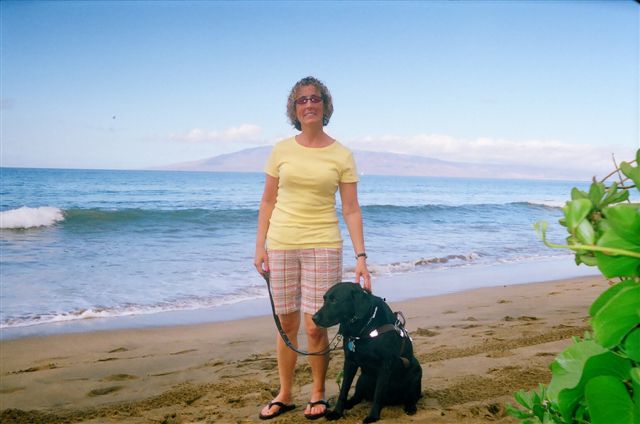
Adding to Richards, Prichard and Morgan's (2010) (re)envisioning of the tourist experience, Poria, Reichel & Brandt (2011) examination of 15 in-depth interviews of blind people’s experiences of air travel, hotels and restaurants, art museums and staff behaviour, comes a new study by Small, Darcy and Packer (2011). Building on Small & Darcy’s (2011) examination of embodiement, the study uses a combination of focus groups and in-depth interviews of 40 people with vision impairment to examine their embodied tourism experiences and what constitutes quality accessible tourism for the group. One of the interesting issues for people with vision impairments or who are Blind, are the extra structural constraints for those who travel with a guide dog. Photo 1 shows Wendy David enjoying the pleasures of Hawaii with her guide dog, which has quarantine implications depending upon the country travelling to, specific air travel requirements and a series of customer service attitudes that have included the exclusion of guide dogs from premises even though it contravenes disability discrimination legislation.  Central to Small, Darcy and Packer (2011) study is the examination of Urry’s concept of the "visual” gaze and how the visual has dominated our understanding of tourism. The abstract is provided.

Photo 1: Wendy David and guide dog enjoying the pleasures of Hawaii -  used with permission © Wendy David


Abstract
This paper reports the findings of a qualitative study that investigated the embodied tourist experiences of 40 people who are vision impaired. The study, informed by the concept of “embodied ontology”, explored the corporeal and socially constructed experience of tourism. The findings highlighted the benefit of holidays for the participants and de-centred the “visual gaze” in the tourist experience. The quality of the tourist experience related to participants’ feelings of inclusion or exclusion in terms of their access to information, experience of wayfinding, travelling with a guide dog, and the knowledge and attitudes of others. It was evident that participants needed to manage their tourist experiences closely and constantly. The paper concludes that the tourism industry and community must understand the multi-sensory nature of the tourist experience if quality accessible experiences are to be available for tourists with vision impairment. Provision of multi-sensory experiences also enhances the experiences of sighted tourists.

Highlights
►People with vision impairment have been omitted in the tourism research literature. ► The “visual gaze” constrains our understanding of the embodied nature of tourism. ► Structural constraints disable tourism environments, services and attitudes. ► The embodied nature of vision impairment requires spatial and sensory understanding. ► Experiences can be enhanced through tactility, aroma, movement and sound.

Keywords: Vision impairment; Blind; Sensory; Embodiment; Disability; Tourist experience; Management; Accessible tourism

References
Poria, Y., Reichel, A., & Brandt, Y. (2011). Blind People’s Tourism Experiences: An Exploratory Study. In D. Olis & S. Darcy (Eds.), Accessible Tourism: Concepts and Issues (pp. 149-159). Bristol, UK: Channel View Publications.
Richards, V., Pritchard, A., & Morgan, N. (2010). (Re)Envisioning tourism and visual impairment. Annals of Tourism Research, 37(4), 1097-1116. doi: DOI: 10.1016/j.annals.2010.04.011
Small, J., & Darcy, S. (2011). Understanding Tourist Experience Through Embodiment: The Contribution of Critical Tourism and Disability Studies. In D. Buhalis & S. Darcy (Eds.), Accessible Tourism: Concepts and Issues (pp. 72-96). Bristol, UK: Channel View Publications.

Friday, July 8, 2011

World Report on Disability - The Travel Chain


The World Health Organization (2011) has produced an extensive research report on disability, which reviews evidence about the situation of people with disabilities around the world. It draws together the most recent sources to present a comprehensive overview of the major areas that affect the lives of people with disability. The report consists of 10 chapters including:
  • Introduction
  • Understanding Disability
  • Disability - the global picture
  • Genera health care
  • Rehabilitation
  • Assistance and support
  • Enabling environments
  • Education
  • Work and Employment
  • Recommendations

Interestingly, addresses many of the key concepts discussed in the blog including constraints and barriers to participation, universal design and market dynamics but the report does not mention tourism specifically. It does, however, draw attention to United Nations’ (2006) Convention on the Rights of People with Disabilities and how the articles relate to the importance of participation in all areas of citizenship. While it could be argued that the key chapters discussed in the report cumulatively provide a guide for developing accessible destinations, there is no doubt that the overriding priority of the report in ensuring that all people with disability have accessible environments, services and attitudes in their place of residence. Of course, once this has been completed for local residents, then the same local areas become accessible to tourists with disability visiting the areas.

With regard to travel, the report discusses the concept of the "travel chain" that is defined as
The “travel chain” refers to all elements that make up a journey, from starting point to destination – including the pedestrian access, the vehicles, and the transfer points. If any link is inaccessible, the entire trip becomes difficult (81). Many mass transit providers, particularly in developing countries, have implemented accessibility only partially, for example by providing a limited number of accessible vehicles on each route, making improvements only to the main stations, and providing access only on new lines. Without accessibility throughout the travel chain, the job is incomplete. Inaccessible links require taking an indirect route, creating the barrier of longer travel times. The goal must be for people to have access to all vehicles and the full service area, as well as the pedestrian environment (82). But progressive realization may be the most practical short-term response (WHO 2011, p.179).

Photo 1: Blog Author Simon Darcy boarding low floor accessible bus that forms an important part of the "travel chain" since their introduction in many countries since the late 1990s (© Fiona Darcy 2000)

Photo 1 shows a low floor accessible bus that is one part of a "travel chain" that also needs to be supported by for example accessible timetables, continuous pathways, tactile ground surface indicators and disability awareness trained bus drivers to name a few. In recognising the inherent pragmatism required to ensure the travel chain, this report together with the World Health Organization (2007) Global Age Friendly Cities, provides an impetus for nations and city states to meaningfully address the disability and ageing issues through creating sustainable approaches to these issues as part of addressing disability citizenship across all areas of social participation. The World Health Organization documents can be used to provide a foundation for providing a global understanding within local contexts and to draw the attention of those who are resisting the addressing of these issues. The document concludes by asking three questions that need to be addressed in a policy context: What do we know about people with disabilities?; What are the disabling barriers? And. How are the lives of people with disabilities affected?. In conclusion, the report makes nine recommendations:
·        enable access to all mainstream policies, systems and services;
·        invest in specific programs and services for people with disabilities;
·        adopt a National disability strategy and plan of action;
·        involve people with disabilities;
·        improved human resource capacity;
·        provide adequate funding and improve affordability;
·        increased public awareness and understanding of disability;
·        improve disability data collection; and
·        strengthen and support research on disability.

Interestingly in my own first major report, Anxiety to Access (Darcy, 1998), these recommendations are not dissimilar and provide a sound blueprint for improving travel and tourism industry approaches to disability, access and accessible tourism.

References  


Saturday, February 20, 2010

The United Nations' conventions, the World Tourism Organisation and Accessible Tourism Policy


The UN human rights conventions have been in existence since 1948 (United Nations, 1948). It wasn’t until 1975 that people with disabilities were specifically identified in a declaration with the subsequent actions and declarations reinforcing that people with disabilities should enjoy the same rights of citizenship as those without disabilities (United Nations, 1975, 1976, 1993). More recently, the United Nations (2006, 2008) Convention on the Rights of People with Disabilities became a galvanizing agent for operationalising these rights within each signatory country. Yet,  countries operationalise these rights under their own legislative and policy frameworks.  Given the various UN conventions over the years, it is surprising that only 40 countries have introduced specific disability discrimination legislation (United Nations, 2009). Table 1 shows, a chronology of disability discrimination legislation for a sample of countries.

Table 1: National Disability Discrimination Legislation

Year
Country
Legislation
1990
United States
Americans with Disabilities Act
1990
China
The Law of People's Republic of China on the Protection of Disabled Persons
1992
Australia
Disability Discrimination Act
1995
United Kingdom
Disability Discrimination Act
1995
India
Persons with Disabilities (Equal Opportunities, Protection of Rights and Full Participation) Act
1996
Costa Rica
Law No. 7600 on Equality for Persons with Disabilities
1996
Hong Kong
Disability Discrimination Ordinance (1996)


Source: (UN ESCAP, 2008; United Nations, 2009)

Similarly, the UN World Tourism Organisation has been active in promoting the rights of travelers with disabilities through a series of statements (World Tourism Organization, 1985, 1991, 2005). The latest of these directly supports the UN Convention on the Rights of People with Disabilities where Article 30 includes tourism within its discussion of the cultural industries. Figure 1 shows that the WTO identify the importance of universally asccessible tourism (source: http://unwto.org/en/about/unwto ).Yet, the WTO has not deployed resources beyond these statements but has operated programs, research and development opportunities in many other areas. So where does this leave the use of such international declarations in respect to improving the material position of people with disabilities on the ground? Nation states must still implement the goodwill of these declarations through their own frameworks whereas government’s resource and regulate their implementation of the UN Convention as a way to empower people with disabilities to achieve all their rights of citizenship. However, the presence of antidiscrimination legislation does not guarantee its implementation or a change in the material position of those that it is designed to empower (Handley, 2001; Heap, Lorenzo, & Thomas, 2009).


Figure 1: Shows that the WTO identify the importance of universally asccessible tourism (source: http://unwto.org/en/about/unwto )

What research has been carried out on the implementation of human rights legislation in nation states as it relates to accessible tourism provision? First, there are other disciplines and fields of study that have carried out significant research on the impact of disability legislation generally and comparatively for countries (Burns & Gordon, 2009), the accessibility of the built environment (Imrie, 1996, 2000; Prideaux & Roulstone, 2009) and the accessibility of transportation systems (Aldred & Woodcock, 2008) . This body of research can provide major insights into how each nation state regards accessibility for its citizens. Yet, as we know people with disabilities and those who benefit from the accessible tourism provision face many tourism specific issues when they travel away from their place of residence into unfamiliar territory. These have been documented literature and I refer you back  to the blog entry on constraints

While many studies and articles refer to human rights legislation as an important reason to undertake studies on accessible tourism, very few studies analyse the relative impacts or outcomes of the human rights laws. A small but growing body of literature that examines the outcomes of human rights legislation as it impacts on accessible tourism is beginning to emerge. The most well-developed body of research is within the UK (Goodall, Pottinger, Dixon, & Russell, 2004; Miller & Kirk, 2002; Shaw, 2007; Shaw, Veitch, & Coles, 2005), the US (Davies & Beasley, 1994; Gallagher & Hull, 1996; Griffin Dolon, 2000; US Dept Justice, 2007 ; Van Horn, 2007) and Australia (Darcy & Taylor, 2009; Public Interest Advocacy Centre, 2007; Small & Darcy, 2010). These issues certainly affect other countries and there has been significant coverage of air travel disability and embodiement discrimination in the media in France, South Africa, India, Canada and Malaysia. I called for other researchers in other countries to include an analysis of the human rights implications of accessible tourism as part of their research agenda for their own citizens as well as those who travel to their countries.

References
Aldred, R., & Woodcock, J. (2008). Transport: challenging disabling environments. Local Environment: The International Journal of Justice and Sustainability, 13(6), 485–496.
Burns, K. K., & Gordon, G. L. (2009). Analyzing the Impact of Disability Legislation in Canada and the United States. Journal of Disability Policy Studies, 1044207309344562.
Darcy, S., & Taylor, T. (2009). Disability citizenship: An Australian human rights analysis of the cultural industries. Leisure Studies, 28(4), 419-441.
Davies, T. D., Jr., & Beasley, K. A. (1994). Accessible design for hospitality: ADA guidelines for planning accessible hotels, motels and other recreational facilities. New York: McGraw-Hill.
Gallagher, J. M., & Hull, A. H. (1996). Cruise ship accommodations for passengers with physical limitations due to disability or age. American Journal of Occupational Therapy, 50(8), 685-687.
Goodall, B., Pottinger, G., Dixon, T., & Russell, H. (2004). Heritage property, tourism and the UK Disability Discrimination Act. Property Management, 22(5), 345-357.
Griffin Dolon, J. (2000). Accessibility, the Americans with Disabilities Act, and the natural environment as a tourist resource. anatolia: International Journal of Tourism and Hospitality Research, 11(2), 101-110.
Handley, P. (2001). 'Caught Between a Rock and a Hard Place': Anti-discrimination legislation in the liberal state and the fate of the Australian Disability Discrimination Act. Australian Journal of Political Science, 36(3), 515-528.
Heap, M., Lorenzo, T., & Thomas, J. (2009). ‘We've moved away from disability as a health issue, it's a human rights issue’: reflecting on 10 years of the right to equality in South Africa. Disability & Society, 24(7), 857-868.
Imrie, R. (1996). Disability and the city: international perspectives. London: Paul Chapman.
Imrie, R. (2000). Disabling environments and the geography of access policies and practices. Disability & Society, 15(1), 5-24.
Miller, G. A., & Kirk, E. (2002). The Disability Discrimination Act: Time for the stick? Journal of Sustainable Tourism, 10(1), 82-88.
Prideaux, S., & Roulstone, A. (2009). Good practice for providing disabled people with reasonable access to the built environment. Built Environment, 1(1), 59-81.
Public Interest Advocacy Centre. (2007). Flight Closed: Report on the experiences of People with Disabilities in Domestic Airline Travel in Australia. Sydney: Public Interest Advocacy Centre.
Shaw, G. (2007). Disability legislation and empowerment of tourists with disability in the United Kingdom. In A. Church & T. Coles (Eds.), Tourism, Power and Space (pp. 83-100). London: Routledge.
Shaw, G., Veitch, C., & Coles, T. I. M. (2005). Access, disability, and tourism: changing responses in the United Kingdom. Tourism Review International, 8(3), 167-176.
Small, J., & Darcy, S. (2010). Chapter 4: Tourism, disability and mobility. In S. Cole & N. Morgan (Eds.), Tourism and Inequality: Problems and Prospects (in press) (pp. pp1-30). Wallingford CABI.
UN ESCAP. (2008). Disability at a glance: a Profile of 28 Countries and Areas in Asia and the Pacific (Vol. 2002,  Available from http://www.unescap.org/esid/psis/disability
United Nations. (1948). Universal Declaration of Human Rights. Geneva. www.un.org/Overview/rights.html: United Nations.
United Nations. (1975). Declaration on the rights of disabled persons. Geneva. www.unhchr.ch/html/menu3/b/72.htm: United Nations.
United Nations. (1976). The International Year of Disabled Persons 1981 (General Assembly resolution 31/123). Geneva. www.un.org/esa/socdev/enable/disiydp.htm: United Nations.
United Nations. (1993). Standard Rules on the Equalization of Opportunities for Persons with Disabilities (General Assembly resolution 48/96). Geneva: United Nations.
United Nations. (2006). Convention on the Rights of Persons with Disabilities. New York http://www.un.org/esa/socdev/enable/rights/convtexte.htm: United Nations General Assembly A/61/611 - 6 December 2006.
United Nations. (2008, 3 May). Landmark UN treaty on rights of persons with disabilities enters into force.   Retrieved 12 May, 2008, from http://www.un.org/esa/socdev/enable/rights/convtexte.htm http://www.un.org/apps/news/story.asp?NewsID=26554&Cr=disab&Cr1=
United Nations. (2009, 2 June 2009). Enable. from http://www.un.org/disabilities/
US Dept Justice. (2007 ). Common ADA Problems at Newly Constructed Lodging Facilities. Washington, DC: Civil Rights Division, Disability Rights Section.
Van Horn, L. (2007). Disability Travel In The United States: Recent Research And Findings. Paper presented at the 11th International Conference on Mobility and Transport for Elderly and Disabled Persons (TRANSED) - "Benchmarking, Evaluation and Vision for the Future". , June 18-22, 2007, at the Palais des congrès de Montréal.
World Tourism Organization. (1985). Tourism Bill of Rights and Tourist Code (WTO/034 General Assembly Sixth Ordinary Session Held at Sofia (People's Republic of Bulgaria)). Madrid, Spain: World Tourism Organization.
World Tourism Organization. (1991). Creating Tourism Opportunities for Handicapped People in the Nineties (A/RES/284(IX) (Resolution A/res/284(IX) of the General Assembly held at Buenos Aires, Argentina). Madrid, Spain: World Tourism Organization.
World Tourism Organization. (2005). Accessible Tourism for All A/RES/492(XVI). Madrid, Spain: World Tourism Organization.


Total Pageviews

Popular Posts

Labels