All abilities trek to the summit of Mount Kosciuszko - Australia's highest peak

All abilities trek to the summit of Mount Kosciuszko - Australia's highest peak
All abilities trek to the summit of Mount Kosciuszko - Australia's highest peak - © Jennifer Johnson 2008
Showing posts with label China. Show all posts

Sunday, August 28, 2016

Asia Pacific Network on Accessible Tourism to get country chapters


Reprinted from http://bit.ly/2boJZ6w

The Asia Pacific Network on Accessible Tourism (APNAT) will soon see the establishment of country chapters, which would help champion barrier-free travel for all people with disabilities in the region.  This move was agreed upon at the recently concluded 5th International Conference on Accessible Tourism.  APNAT itself was formed after recommendations from participants who attended the first South-east Asia Conference on Accessible Tourism in 2012 (SEACAT).   Sia Siew Chin, protem committee chairman of APNAT, said: “Through APNAT, we would like to be able to reach out to governments, people in the tourism industry and service providers to provide for the access needs of everyone in society, in particular people with disabilities.”   Saowalak Thongkuay, regional coordinator for Abilis Foundation Mekong, said: “APNAT gives us a strong and collective voice to negotiate with governments to include accessible tourism into their development agenda.
It is hoped that all links in the tourism chain will become accessible.  Speaking at the conference,  Annagrazia Laura, president of European Network for Accessible Tourism (ENAT), stressed that providing barrier-free environment means that from arrival to departure, visitors must be guaranteed an unbroken and seamless chain of accessibility.  “If just one link in the chain is broken, such as inaccessible monuments and tourist attractions, the holiday experience will be spoilt” said Laura.
Joseph Kwan, chair, International Commission on Technology & Accessibility, Rehabilitation International also attended the conference.  “Once governments realise that people with disabilities and the senior market are a sizable population with disposable incomes to spend and can contribute significantly to foreign exchange earnings, employment generation and social inclusion, they will be more willing to act, to create barrier-free travel for all” said Kwan.   Kwan stressed the importance of governments to do audits on the current status of tourism accessibility in order to develop policies and plans regarding accessibility and human rights.
Follow on Twitter: @EUaccesstourism
Photo 1: Hong Kong MTR system accessibility © Fiona Darcy 2010

Sunday, February 10, 2013

AIR TRAVEL AND DISABILITY - ONGOING DILEMMAS, DISCRIMINATION AND LOSS OF DIGNITY IN NATIONAL AND INTERNATIONAL MOBILITY


Over the last three years a number of papers have been published that contribute to understanding one of the most basic links in the travel “trip chain" (World Health Organization & World Bank, 2011) for people with disability - airline travel. Air travel is the lifeblood of contemporary tourism that has been democratised through the advent of low-cost travel (Doganis, 2005). Yet, media coverage of national and international air travel experiences highlight the adverse flight experiences of people with disabilities are ongoing and a global problem. Two recent examples from Europe (European Disability Forum, 2011) and New Zealand (The Dominion Post, 2011) highlights some of the issues that people with mobility and vision impairments. What these incidents highlight is critical service failure by airlines that is not ad hoc but characterised by systematic failure within their service blueprint (Shostack, 1993).

Over the coming week I will present the abstracts of articles that examine disability, air travel and the accessible tourism. The first provides an overview of the flight experiences of people with disabilities in Israel involving people with mobility and vision disabilities (Poria, Reichel, & Brandt, 2010). The second involves the physical infrastructure required to provide a seamless "trip chain" for people with disability in air travel in Taiwan (Chang & Chen, 2012). The third examines the resultant effect that disabling practices have on the embodiment of people with disability through phenomenology or essence of experience in Australia (Darcy, 2012). Lastly, a chapter from a book on accessible tourism examines the impact that low-cost airlines may have on the critical service elements of the air travel experience drawing examples across the Asia-Pacific (Darcy & Ravinder, 2012).

While these articles identified a number of serious issues that have resulted in lack of accessibility, physical injury, loss of dignity and discriminatory service attitude, air travel can be an enjoyable experience. On a recent trip to Italy I had nothing but an extraordinary level of service at both Milan and Rome International airports facilitated by a dedicated service support group provided across all airlines for people with disabilities. Photo 1 shows my service team who provided me from arriving at the check-in counter to being seated on the plane a continuous service experience. This service is provided no matter what airline I would have been travelling on. I liken the experience to being serviced by a Formula 1 pit crew, totally professional, courteous and the highest levels of service provision. Fantastico!

Photo 1: Author Simon Darcy with the ADR Assistance team on the light rail transferring to the boarding gate (© Fiona Darcy 2012 é)


What I subsequently learnt from my colleague Ivor Ambrose from the European Network For Accessible Tourism was that for all airports with over 100,000 pasengers per year, this was a requirement brought in by EU REGULATION (EC) No 1107/2006  which came into force in 2007. As Ivor states “Gradually the implementation of this Regulation is working and improving... although the way it is carried out varies from country to country, as you might expect, according to training practices etc. But the good thing is that all airlines are covered by it - for all incoming and outgoing flights in the European Union”.

Well done Europe!

The rest of the world has a lot to learn. On the same trip where I had an awesome experience travelling from Italy to Hong Kong and then to Australia, my experiences in Hong Kong and Australia have always been ad hoc depending upon the individuals on for the airlines that I am travelling with. I've had everything from first-class transfer experience right through to being dropped in the transfer process. These types of experiences and take the gloss off what should be a wonderful travel experience.

References
Buhalis, D., & Darcy, S. (Eds.). (2011). Accessible Tourism: Concepts and Issues. Bristol, UK: Channel View Publications.


Sunday, November 20, 2011

New Published Research from US on Motivations of people with acquired mobility disability to travel


Surprisingly few studies have examined the motivations of people with disability to travel. The Shi, Cole and Chancellor (2012) newly published article applies Crompton’s (1979) push pull model of travel motivations to examine people with acquired mobility disability’s motivation to travel. The qualitative study undertook two focus groups at the 13th Congress of The Society for Accessible Travel and Hospitality in 2009. Transcripts of the focus groups were analysed based on Crompton's model. The results identified nine push factors with five being consistent with Crompton (1979):  escape from a perceived mundane environment; exploration and evaluation of self; relaxation; enhancement of relationship with family and friends; and facilitation of social interaction. However, four other factors are unique to people with acquired mobility disabilities: independence; the desire of being in a natural environment; adventure/risk; and do it today. With respect to Crompton (1979) pull factors, novelty and education were consistent with previous work but not surprisingly the accessibility of the destination was a dominant factor. This study suggests that a broader study examining motivations of people across the spectrum of disabilities and support needs would add a level of sophistication to what is currently known about motivations to travel for this group.

Photo 1 shows two gnarly South African surfers who just happen to have disabilities. They espouse a series of motivations identified in this study - independence, desire of being a natural environment, adventure/risk and do it today. However, they haven’t waited for perfect access to a beach for wheelchair users and have instead used "Quad bikes" to assist their quest for the perfect wave. Go for it boys!

Photo 1: Dries Millard and Glenn Ward Paraplegic body boarders trekked from Saldanha to Cape Town and had many adventures along the way - photo with permission http://www.saldanhatocapetown.co.za/the-event/


Copyright © 2012 Elsevier Ltd All rights reserved.

Understanding leisure travel motivations of travelers with acquired mobility impairments

Lei Shi, Shu Cole, & H. Charles Chancellor
Department of Recreation, Park, and Tourism Studies, Indiana University, HPER 133, 1025 E 7th Street, Bloomington, IN 47405, USA

Abstract
The purpose of the study was to understand what motivated people with mobility impairments to travel frequently. Two focus groups were conducted and results were analyzed in light of Crompton’s (1979) push/pull conceptual framework exploring pleasure travel motivation...(shortened due to copyright restrictions).

Keywords: Mobility impairments; Motivation; Leisure travel

References
Crompton, J. L. (1979). Motivations for pleasure vacation. Annals of Tourism Research, 6(4), 408-424.
Shi, L., Cole, S., & Chancellor, H. C. (2012). Understanding leisure travel motivations of travelers with acquired mobility impairments. Tourism Management, 33(1), 228-231. doi: 10.1016/j.tourman.2011.02.007

Saturday, November 19, 2011

The embodied tourist experiences of people with vision impairment: Management implications beyond the visual gaze


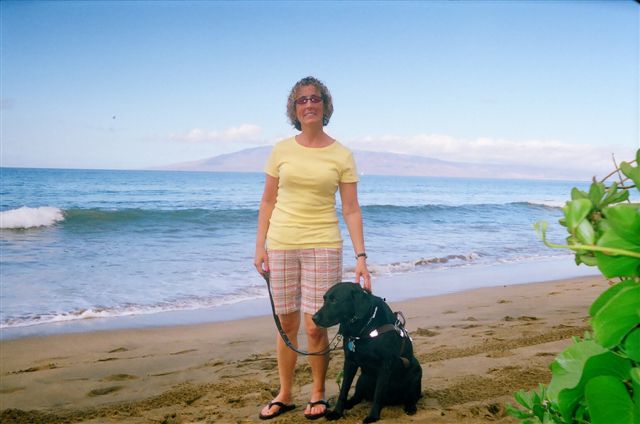
Adding to Richards, Prichard and Morgan's (2010) (re)envisioning of the tourist experience, Poria, Reichel & Brandt (2011) examination of 15 in-depth interviews of blind people’s experiences of air travel, hotels and restaurants, art museums and staff behaviour, comes a new study by Small, Darcy and Packer (2011). Building on Small & Darcy’s (2011) examination of embodiement, the study uses a combination of focus groups and in-depth interviews of 40 people with vision impairment to examine their embodied tourism experiences and what constitutes quality accessible tourism for the group. One of the interesting issues for people with vision impairments or who are Blind, are the extra structural constraints for those who travel with a guide dog. Photo 1 shows Wendy David enjoying the pleasures of Hawaii with her guide dog, which has quarantine implications depending upon the country travelling to, specific air travel requirements and a series of customer service attitudes that have included the exclusion of guide dogs from premises even though it contravenes disability discrimination legislation.  Central to Small, Darcy and Packer (2011) study is the examination of Urry’s concept of the "visual” gaze and how the visual has dominated our understanding of tourism. The abstract is provided.

Photo 1: Wendy David and guide dog enjoying the pleasures of Hawaii -  used with permission © Wendy David


Abstract
This paper reports the findings of a qualitative study that investigated the embodied tourist experiences of 40 people who are vision impaired. The study, informed by the concept of “embodied ontology”, explored the corporeal and socially constructed experience of tourism. The findings highlighted the benefit of holidays for the participants and de-centred the “visual gaze” in the tourist experience. The quality of the tourist experience related to participants’ feelings of inclusion or exclusion in terms of their access to information, experience of wayfinding, travelling with a guide dog, and the knowledge and attitudes of others. It was evident that participants needed to manage their tourist experiences closely and constantly. The paper concludes that the tourism industry and community must understand the multi-sensory nature of the tourist experience if quality accessible experiences are to be available for tourists with vision impairment. Provision of multi-sensory experiences also enhances the experiences of sighted tourists.

Highlights
►People with vision impairment have been omitted in the tourism research literature. ► The “visual gaze” constrains our understanding of the embodied nature of tourism. ► Structural constraints disable tourism environments, services and attitudes. ► The embodied nature of vision impairment requires spatial and sensory understanding. ► Experiences can be enhanced through tactility, aroma, movement and sound.

Keywords: Vision impairment; Blind; Sensory; Embodiment; Disability; Tourist experience; Management; Accessible tourism

References
Poria, Y., Reichel, A., & Brandt, Y. (2011). Blind People’s Tourism Experiences: An Exploratory Study. In D. Olis & S. Darcy (Eds.), Accessible Tourism: Concepts and Issues (pp. 149-159). Bristol, UK: Channel View Publications.
Richards, V., Pritchard, A., & Morgan, N. (2010). (Re)Envisioning tourism and visual impairment. Annals of Tourism Research, 37(4), 1097-1116. doi: DOI: 10.1016/j.annals.2010.04.011
Small, J., & Darcy, S. (2011). Understanding Tourist Experience Through Embodiment: The Contribution of Critical Tourism and Disability Studies. In D. Buhalis & S. Darcy (Eds.), Accessible Tourism: Concepts and Issues (pp. 72-96). Bristol, UK: Channel View Publications.

Wednesday, July 27, 2011

New Research Article based on Korean PwD: Influences of travel constraints on the people with disabilities' intention to travel: An application of Seligman's helplessness theory


Full Reference
Lee, B. K., Agarwal, S., & Kim, H. J. Influences of travel constraints on the people with disabilities' intention to travel: An application of Seligman's helplessness theory. Tourism Management, In Press, Corrected Proof. doi: 10.1016/j.tourman.2011.06.011


Lee, Agarwal & Kim's (2011) new research article based on Korean people with disability draws on leisure constraint theory and Seligman's helplessness theory to test a model for a person with disabilities' intention to travel. The article adds to the body of literature on leisure constraint theory discussed in an earlier blog entry. The research design used a structured self-administered questionnaire that included 30 constraint items, helplessness items, intention to travel and a demographic profile. The data was analysed using corrected item-total correlations for each construct and then subjected to series of principal component analyses prior to verifying the overall research fit of the model and hypothesis tests using Amos 7.0.  


The results suggest that there were no significant influence on travel intention by the three subdimensions of constraints. However, intrinsic and environmental constraints were statistically significant in their association with learned helplessness. Not surprisingly learned helplessness was found to have a negative influence on intention to travel. 

Yet, the question must be asked is whether the framing of the research on the theory of learned helplessness provides a contemporary focus for disability related research given the theory's focus on the  lack of "abilities" of people with disability rather than questioning the hostile nature of tourism environments and service attitudes. The recent research highlighted on the blog with respect to embodiment (Fullager, 2011; Poria, Reichel, & Brandt, 2011; Richards, Pritchard, & Morgan, 2010; Small & Darcy, 2010, 2011) attitudes towards disability (Bizjak, Knezevic, & Cvetreznik, 2011; Daruwalla & Darcy, 2005) previous constraints research (Daniels, Drogin Rodgers, & Wiggins, 2005; Darcy, 1998; Turco, Stumbo, & Garncarz, 1998) and the recent World Report on Disability (World Health Organization & World Bank, 2011) challenges framing research from medical or deficit based psychological perspectives. Research framed from these perspectives places the emphasis on people with disability as "deficient" and neglects the importance of the social construction of the political, social, economic, built environment and attitudes towards disability. What do others think?

Photo 1 depicts the real environmental constraints faced by people with mobility disability in negotiating ecotourism experiences.

Photo 1: Sharon Myers - intrepid wheelchair traveller negotiating environmental constraints in the jungles of  Peru with the interactive assistance of local guides (Courtesy Sharon Myers http://www.onaroll.org/)


References


Sunday, May 23, 2010

TRANSED Accessible Public Transport and Tourism Conference, Hong Kong China 2-4 June 2010


One of the great experiences of working within universities, academia and the international research environment is the opportunity to attend conferences, share ideas and network with people from all over the world. One such opportunity is the TRANSED 2010 – 12th International Conference on Mobility and Transport for Elderly and Disabled Person to be held in Hong Kong, China 2-4 June  2010. The conference has stream on accessible tourism research and policy that brings together perspectives from all over the world. I am lucky enough to be a plenary speaker and I am looking forward to the conference as a first time visitor to Hong Kong and experiencing the delights of one of Asia’s great cities. The conference incorporates a series of opportunities to undertake field visits to a variety of accessible transport and tourism offerings and I will be availing myself of these opportunities. As a person with high support needs, I will also report on my experiences as a traveler with disabilities to Hong Kong. It is excellent to see that the Hong Kong Tourism Board (2010) at least has a page on Accessible Hong Kong.

In continuing from Rafael de Castro's (2010) research, Hong Kong is a city where east meets west in so many ways yet there has been very little examination in the literature of cross-cultural accessible tourism issues. In disability studies more generally, there is a recognition that disability has a cultural construct that must be factored into the way that Western disability studies theory is applied in non-Western systems. For example the work of Miles (1982, 2000, 2001), has critiqued the different value systems between eastern and western philosophies and the implications that this has for policy implementation. There has been research completed on accessible tourism in an Asian context (Bi, Card, & Cole, 2007; McKercher, Packer, Yau, & Lam, 2003; Packer, McKercher, & Yau, 2007; Yau, McKercher, & Packer, 2004) but interestingly this work has not discussed cross-cultural considerations within accessible tourism research.

As a western traveller to Hong Kong, I will report back on my observations of cross-cultural considerations that I experience as well those of my fellow travellers. If you like a personal ethnography or more correctly a heuristic inquiry that draws on the researchers experience of the phenomenon and the essential experience of others who also experience the phenomenon (Patton, 1990, p. 71).

Photo 1: Hong Kong Tourism Board website page image


References
Bi, Y., Card, J. A., & Cole, S. T. (2007). Accessibility and Attitudinal Barriers Encountered by Chinese Travellers with Physical Disabilities. Int. J. Tourism Res, 9, 205-216.
de Castro, R. T. (2010). Accessibility of Tourists with Special Needs to Air Transport Unpublished Masters, Federal University of Rio de Janeiro, Rio de Janeiro.
Hong Kong Tourism Board. (2010). Accessible Hong Kong.   Retrieved 23 May, 2010, from http://www.discoverhongkong.com/eng/trip-planner/hongkong-disabled-traveller.html
McKercher, B., Packer, T., Yau, M. K., & Lam, P. (2003). Travel agents as facilitators or inhibitors of travel: perceptions of people with disabilities. Tourism Management, 24(4), 465-474.
Miles, M. (1982). Why Asia Rejects Western Disability Advice. International Rehabilitation Review, 4th Quarter, www.pcs.mb.ca/~ccd/disbookl.html.
Miles, M. (2000). Disability on a Different Model: glimpses of an Asian heritage. Disability & Society, 15(4), 603-618.
Miles, M. (2001). ICIDH Meets Postmodernism, or Incredulity toward Meta-Terminology. Disability World E-Zine (March/April), 2001(7), www.disabilityworld.org/03-04_01/resources/icidh.shtml.
Packer, T. L., McKercher, B., & Yau, M. (2007). Understanding the complex interplay between tourism, disability and environmental contexts. Disability & Rehabilitation, 29(4), 281-292.
Patton, M. Q. (1990). Qualitative Evaluation and Research Methods. Newbury Park, CA: Sage.
Yau, M. K.-s., McKercher, B., & Packer, T. L. (2004). Traveling with a disability: More than an Access Issue. Annals of Tourism Research, 31(4), 946-960.

Total Pageviews

Popular Posts

Labels