All abilities trek to the summit of Mount Kosciuszko - Australia's highest peak

All abilities trek to the summit of Mount Kosciuszko - Australia's highest peak
All abilities trek to the summit of Mount Kosciuszko - Australia's highest peak - © Jennifer Johnson 2008
Showing posts with label experiences. Show all posts

Monday, May 16, 2016

Australia - New South Wales Ministerial Forum On Accessible Tourism Strategy Development


On Wednesday 11 May 2016 a New South Wales Ministerial Forum on Accessible Tourism was held at NSW Parliament House in the Strangers Room. Building upon the work by NSW Family and Community Services (FACS) on inclusive communities over the last two years, the Ministerial Forum was held to reflect on past approaches and future opportunities with the impending NDIS for accessible tourism in NSW. Organised by NSW FACS and facilitated by the University of Technology Sydney’s Institute for Public Policy and Governance, the forum was opened by the Minister for Disability Services and Multiculturalism the Honourable John Ajacka. The format for the day included two forums. The first forum was chaired by Donna Rygate the CEO of Local Government NSW with the purpose of reflecting on past initiatives that had worked well. With the background of the NSW Disability Inclusion Act 2014, Donna outlined the opportunities and potential for developing inclusive communities and accessible tourism at the local government level. She stressed the importance that an inclusive community is also a great community to visit as a tourist. The panel consisted of Martin Heng, the accessible travel manager and editorial advisor for Lonely Planet, Dr Helen Margarita Smith - the bush walking program office of the National Parks Association of NSW, and Sean Willenberg – Disability Inclusion Officer, NSW Business Chamber. The overriding outcome of the first forum was the importance of information provision and information systems so that consumers can make an informed choice about tourism product offerings. This was also supported through the discussion with the audience that people with disabilities and others with access needs want great accessible destination experiences and don't travel hundreds or thousands of miles to stay in hotels/other forms of accommodation. The second panel was chaired by Prof Simon Darcy, UTS Business School who presented recent European research undertaken by the EU and the UN World Tourism Organisation. This research work reinforced a great deal of similar findings from the US, the UK and Australasia (see references), with Prof Darcy concluding that the time for research was over and a knowledge base existed for industry action to improve the tourism citizenship of people living in NSW or visiting it from other states or overseas. The other members on the panel were Geoff Buckley - ex-head of Tourism Australia and Managing Director of New Earth Tourism, Andrew Bowring -Business Head of Zomato, and Jenny Spinak, Access Manager of the Sydney Opera House. Discussions on this panel examined the opportunities for engaging an industry led supply side digital platforms across travel information, accommodation, attractions, restaurants/bars and the share economy. Jenny Spinak also shared experiences of the importance of driving cultural change with internal and external stakeholders of organisations and provided examples of the successful transition of the Sydney Opera House to an organisation embracing inclusion and receiving a multitude of benefits including increased patronage, corporate social responsibility outcomes and opportunities for sponsorship. After each session lively discussions were held with the approximately 50 people in attendance from the tourism industry, disability advocacy and government sectors. The outcome of the forum is to produce an action plan for NSW to facilitate accessible tourism opportunities across the state including rural and remote areas. The Institute for Public Policy and Governance provided background papers and will be working on an action plan agenda arising from the meeting. For further information please contact Ivan Pavkovic Ivan.Pavkovic@uts.edu.au

Photo 1. Bill Forrester of Travability posing a question for Donna Rygate of the NSW Local Government and Shires Association

References
Buhalis, D., & Darcy, S. (Eds.). (2011). Accessible Tourism: Concepts and Issues. Bristol, UK: Channel View Publications.
Buhalis, D., Darcy, S., & Ambrose, I. (Eds.). (2012). Best Practice in Accessible Tourism: Inclusion, Disability, Ageing Population and Tourism. Bristol, UK: Channel View Publications.
Dwyer, L., & Darcy, S. (2011). Chapter 14 - Economic Contribution of Tourists with Disabilities: An Australian Approach and Methodology. In D. Buhalis & S. Darcy (Eds.), Accessible Tourism: Concepts and Issues (pp. 213-239). Bristol, UK: Channel View Publications.
GFK, University of Surrey, Neumann Consult, & Pro A Solutions. (2015). Economic Impact and Travel Patterns of Accessible Tourism: European Commission in conjunction with GFK - University of Surrey - Neumann Consulting - Pro A Solutions.
Michopoulou, E., Darcy, S., Ambrose, I., & Buhalis, D. (2015). Accessible tourism futures: the world we dream to live in and the opportunities we hope to have. Journal of Tourism Futures, 1(3), 179-188.
Open Doors Organization. (2015). Research among Adults with Disabilities: Travel and Hospitality (USA). Chicago: Open Doors Organization.
UNWTO. (2015a). Manual on Accessible Tourism for All: Principles, Tools and Good Practices - Module 1   Retrieved from http://www.e-unwto.org/doi/book/10.18111/9789284416486
UNWTO. (2015b). Manual on Accessible Tourism for All: Principles, Tools and Good Practices - Module 2   Retrieved from http://www.e-unwto.org/doi/abs/10.18111/9789284416509
UNWTO. (2015c). Manual on Accessible Tourism for All: Principles, Tools and Good Practices - Module 3   Retrieved from http://www.e-unwto.org/doi/book/10.18111/9789284416523
UNWTO. (2015d). Manual on Accessible Tourism for All: Principles, Tools and Good Practices - Module 4   Retrieved from http://www.e-unwto.org/doi/abs/10.18111/9789284416547
UNWTO. (2015e). Manual on Accessible Tourism for All: Principles, Tools and Good Practices - Module 5   Retrieved from http://www.e-unwto.org/doi/pdf/10.18111/9789284416585
UNWTO. (2015f). Manual on Accessible Tourism for All: Public-private Partnerships and Good Practices   Retrieved from http://www.e-unwto.org/doi/pdf/10.18111/9789284416585

Saturday, October 27, 2012

(Dis)Embodied Air Travel Experiences: Disability, Discrimination and the Affect of a Discontinuous Air Travel Chain


Simon Darcy
University of Technology, Sydney, Australia
Address for correspondence: Simon Darcy, Associate Professor, UTS Business School, University of Technology, Sydney, P.O. Box 222 Lindfield NSW 2070, Australia. E-mail: simon.darcy@uts.edu.au

Abstract
This article presents an investigation of the embodied air travel experiences of people with disability. The study was informed by human rights frameworks, social approaches to disability and critical tourism. The research design included a review of newspaper articles, human rights complaint cases, open-ended responses to a survey on the tourism experiences of people with disabilities and semistructured in-depth interviews. The findings revealed that the air travel practices routinely contravened disability discrimination legislation and identified a series of socially constructed constraints across the air travel chain from the preplanning of trips through to disembarking after a flight. What emerged from these experiences was that the embodied individuals became (dis)embodied at each stage of the air travel chain. The inequitable, inaccessible, undignified and dependent practices resulted in heightened anxiety, increased helplessness and, in some cases, humiliation to which they were not subjected in their everyday lives.

Keywords: air travel; travel chain; disability; embodiment; human rights; citizenship; lived experience; social model

The genesis of this article came from ongoing media coverage over the last two decades of the air travel experiences of people with disability (PwD) — a global phenomenon not restricted to western or eastern practices or the developed or developing world. Two recent examples from Europe (European Disability Forum, 2011) and New Zealand (The Dominion Post, 2011) identified that the issue is not just a case of service failure but one of disability discrimination. Disability discrimination occurs when PwD are treated less fairly than people without a disability before the law. The newspaper articles highlight the multidimensional outcome for the individuals involved — discriminatory practices had the effect of constraining their citizenship. The media examples link the theoretical developments in the study of disability, tourism and the growing body of knowledge on accessible tourism. The issue falls within the United Nations Convention On the Rights of Persons with Disabilities (CRPWD), which is underpinned by social approaches to disability (Kayess & French, 2008). The article takes up the challenge posed by disability studies academics (Shakespeare & Watson, 2001; Thomas, 2004) to incorporate a more complex understanding of embodiment than the current dichotomous social model understanding of impairment and disability (as discussed later). To this end, critical theory in tourism has also incorporated embodiment as core to its approach and it is argued that the social model of disability and critical tourism bodies of knowledge provide an opportunity to move beyond identifying constraints to seek transformative outcomes for tourists with disabilities.


To read more please see either
or

Epilogue - the Italian experience
Yet, the air travel situation does not need to be as problematic as shown in this research. Good quality customer service training with a dedicated team approach by airlines at individual airports is one strategy that can be adopted. This type of approach values travellers with disability by treating them in an equitable, dignified and independent way. I was the recipient of such a service experience at the Leonardo da Vinci Fiumicino International Airport, Rome. As one should expect from a country with a history of valuing customer service and a Formula One racing car pedigree, this service for wheelchair users was first rate and like a well oiled pitstop crew. It was an incredibly empowering experience where the travel trip chain was continuous and with out critical incident. Photo 1 shows the customer service team escorting me to the boarding gate on an accessible light rail system.

Photo 1: The author Simon Darcy with the excellent customer service staff at Rome airport on a wheelchair accessible light rail system moving to the boarding gate (Photo with permission © 2012 Fiona Darcy)


When referencing the paper please quote
Darcy, S. (2012). (Dis)Embodied Air Travel Experiences: Disability, Discrimination and the Affect of a Discontinuous Air Travel Chain. Journal of Hospitality and Tourism Management, 19(e8 August), 1-11.

References
Buhalis, D., & Darcy, S. (Eds.). (2011). Accessible Tourism: Concepts and Issues. Bristol, UK: Channel View Publications.
Kayess, R., & French, P. (2008). Out of Darkness into Light? Introducing the Convention on the Rights of Persons with Disabilities. Human Rights Law Review, 8(1), 1-34.


Wednesday, December 7, 2011

Research is only good if it brings about improved access and accessible experiences - Lessons from Dunedin, New Zealand


This blog is dedicated to showcasing research evidence for accessible tourism. However, the overall aim is for the research to inform industry and government to improve accessible tourism experiences for people with disabilities. To this end we must all seek to influence the tourism policy agenda through presenting research based evidence and advocating for changes to practice where there has been a noted deficiency from the perspective of people with disabilities, suppliers or government regulators/coordinators.


I am currently at a research conference in Dunedin in New Zealand where any travel experience for a power wheelchair using quadriplegic with high support needs has its travel trip chain logistics that need to be organised before the rigours of an academic conference can be considered. Information planning, accommodation, air transport, ground transport, equipment hire, attendant services and medical supplies are just some of the considerations with organising an accessible trip. Luckily I had an insider's perspective at the destination to assist me with my travel planning through the University of Otago's Donna-Rose McKay who is the Manager of Disability Information & Support who was able to suggest a good quality accessible accommodation at the University of Otago - Executive Business Apartments. Further, Donna-Rose suggested I contact John Marrable, InformationConsultant at the Dunedin DisabilityInformation Service who provided contacts for hiring a patient lifter. The trip was finally confirmed once a direct flight from Sydney was negotiated with the only carrier providing direct service, my wife Fiona and my attendant Matt were ready to go.


Dunedin is located on the Otago Peninsula which is known for its ecotourism, historic architectural, cultural heritage and local cafe/bar experiences. Dunedin has much to offer the tourist looking for accessible experiences but finding travel planning information was not easy. Yet, local authorities are keen to improve on current practice and I met with the local disability information service, interested Dunedin Council representatives and local media. The following story - Benefits Seen in Accessible Tourism - appeared in the Otago Daily Times on 7 December 2011


http://www.odt.co.nz/news/dunedin/189720/benefits-seen-accessible-tourism


What became evident was that while the urban town centre offered a good range of accessible opportunities for residents and tourists alike, the same could not be said for day trip operators in the region. Quite simply, outside of the excellent Taieri Gorge Railway we could not locate a single day tour operator who could provide wheelchair access to any of the standard tours offered to other tourists. This is an extraordinary situation in a country that prides itself on its clean green image but obviously not one that is socially inclusive or sustainable. Accessible coaches and minibuses are not costly accessible tourism infrastructure and the Dunedin city bus fleet boasts an excellent fleet of low floor accessible buses. So what is the problem with the local tour operators? 


Photo 1: Simon Darcy boarding with the historic Taieri Gorge Railway carriage © Fiona Darcy 2011.


This situation has a significant cost disincentive for tourists with disabilities and seniors with access needs. For example, the magnificent Royal Albatross Colony at Taiaroa Head is a must see experience that has just made the Lonely Planet's 1000 Ultimate Sights, a standard tour to the colony with cost $95 per person. However, without access provision, the only option was to hire a Dunedin Taxi wheelchair accessible vehicle that cost $240 for the three-hour hire plus the $40 for the Royal Albatross Centre's Albatross Classic tour.


Do the figures - that is a $185 cost imposition on tourists with disabilities to have the same quality of experience as other tourists!


The other thing that tourists with disabilities miss out on by taking the "segregated" tourist experience is they don't get to mix socially with all the other tourists. This is something that all other tourists take for granted but is often lost where integrated day tour operations are not available. This in itself can significantly reduce the overall experience of the destination.


Sadly, this lack of accessibility to day trip operations is not isolated to New Zealand but is just as prevalent in Australia where "charter operations" have been excluded from the Disability Discrimination Act and the subsequent Disability Standards for Accessible Public Transport. This situation is currently being tested in the Federal Court of Australia where Julia Haraksin - a person with a disability - has challenged this exclusionary practice and hopefully this situation in Australia will be remedied in the near future. However, New Zealand does not have similar disability discrimination legislation and relies on the New Zealand Disability Strategy, which lacks opportunities for New Zealanders with disabilities to challenge discriminatory practices. 


While all this may seem daunting and overly critical, those of us who want to see improvements in accessible tourism experiences know the benefits of tourism are as important for people with disabilities as to the rest of the population. 


Photo 2: Simon Darcy enjoying time out from every day life, a spectacular view and a soaring Northern Royal Albatross some of the intangible social psychological benefits of tourism for all people © Fiona Darcy 2011.
Dunedin and the Otago Peninsula have much to offer people with disabilities and seniors with access needs, which could be made far more accessible through some basic improvements in information provision. However, a much broader commitment to the principles of accessible tourism and the desire of local tourism operators to provide accessible experiences for people with mobility, hearing, vision, intellectual, mental health and other disabilities is required. Given the increasing numbers of people with disabilities and seniors with access needs destinations need to make provisions in order to provide a competitive advantage in an increasingly competitive international tourism market (see Buhalis & Darcy 2011 and Buhalis, Darcy and Ambrose 2012).


References


  1. Buhalis, D., & Darcy, S. (Eds.). (2011). Accessible Tourism: Concepts and Issues. Bristol, UK: Channel View Publications.
  2. Buhalis, D., Darcy, S., & Ambrose, I. (Eds.). (2012). Best Practice in Accessible Tourism: Inclusion, Disability, Ageing Population and Tourism. Bristol, UK: Channel View Publications.
  3. Gibb, J. (2011, 7 December). Benefits seen in accessible tourism, Otago Daily Times. Retrieved from http://www.odt.co.nz/news/dunedin/189720/benefits-seen-accessible-tourism


Saturday, November 19, 2011

The embodied tourist experiences of people with vision impairment: Management implications beyond the visual gaze


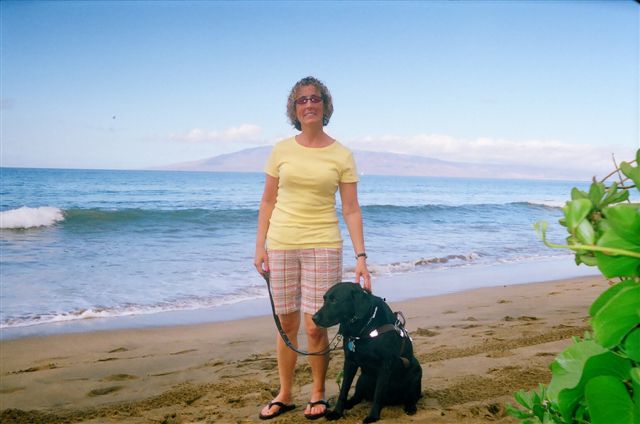
Adding to Richards, Prichard and Morgan's (2010) (re)envisioning of the tourist experience, Poria, Reichel & Brandt (2011) examination of 15 in-depth interviews of blind people’s experiences of air travel, hotels and restaurants, art museums and staff behaviour, comes a new study by Small, Darcy and Packer (2011). Building on Small & Darcy’s (2011) examination of embodiement, the study uses a combination of focus groups and in-depth interviews of 40 people with vision impairment to examine their embodied tourism experiences and what constitutes quality accessible tourism for the group. One of the interesting issues for people with vision impairments or who are Blind, are the extra structural constraints for those who travel with a guide dog. Photo 1 shows Wendy David enjoying the pleasures of Hawaii with her guide dog, which has quarantine implications depending upon the country travelling to, specific air travel requirements and a series of customer service attitudes that have included the exclusion of guide dogs from premises even though it contravenes disability discrimination legislation.  Central to Small, Darcy and Packer (2011) study is the examination of Urry’s concept of the "visual” gaze and how the visual has dominated our understanding of tourism. The abstract is provided.

Photo 1: Wendy David and guide dog enjoying the pleasures of Hawaii -  used with permission © Wendy David


Abstract
This paper reports the findings of a qualitative study that investigated the embodied tourist experiences of 40 people who are vision impaired. The study, informed by the concept of “embodied ontology”, explored the corporeal and socially constructed experience of tourism. The findings highlighted the benefit of holidays for the participants and de-centred the “visual gaze” in the tourist experience. The quality of the tourist experience related to participants’ feelings of inclusion or exclusion in terms of their access to information, experience of wayfinding, travelling with a guide dog, and the knowledge and attitudes of others. It was evident that participants needed to manage their tourist experiences closely and constantly. The paper concludes that the tourism industry and community must understand the multi-sensory nature of the tourist experience if quality accessible experiences are to be available for tourists with vision impairment. Provision of multi-sensory experiences also enhances the experiences of sighted tourists.

Highlights
►People with vision impairment have been omitted in the tourism research literature. ► The “visual gaze” constrains our understanding of the embodied nature of tourism. ► Structural constraints disable tourism environments, services and attitudes. ► The embodied nature of vision impairment requires spatial and sensory understanding. ► Experiences can be enhanced through tactility, aroma, movement and sound.

Keywords: Vision impairment; Blind; Sensory; Embodiment; Disability; Tourist experience; Management; Accessible tourism

References
Poria, Y., Reichel, A., & Brandt, Y. (2011). Blind People’s Tourism Experiences: An Exploratory Study. In D. Olis & S. Darcy (Eds.), Accessible Tourism: Concepts and Issues (pp. 149-159). Bristol, UK: Channel View Publications.
Richards, V., Pritchard, A., & Morgan, N. (2010). (Re)Envisioning tourism and visual impairment. Annals of Tourism Research, 37(4), 1097-1116. doi: DOI: 10.1016/j.annals.2010.04.011
Small, J., & Darcy, S. (2011). Understanding Tourist Experience Through Embodiment: The Contribution of Critical Tourism and Disability Studies. In D. Buhalis & S. Darcy (Eds.), Accessible Tourism: Concepts and Issues (pp. 72-96). Bristol, UK: Channel View Publications.

Wednesday, July 13, 2011

National Tourism Dialogue and Communiqué on Accessible Tourism


The National Information Communication Awareness Network for the arts, sport, recreation and tourism (a.k.a. NICAN) recently held a National Tourism Dialogue that brought together stakeholders with an interest in the area disability, access and inclusive or accessible tourism http://www.nican.com.au/news/communique-national-tourism-dialogue

The Dialogue was opened by Sen Jan McLucas the current Parliamentary Secretary for Disabilities and Carers where she issued a media release http://www.janmclucas.fahcsia.gov.au/mediareleases/2011/Pages/increase_access_tourism_20062011.aspx and the text of her opening speech http://www.janmclucas.com.au/index.php?option=com_content&view=article&id=87:nican-national-dialogue-on-tourism&catid=4:speeches&Itemid=17

The day adopted a participatory action research approach (Denzin & Lincoln, 2003; Goodley & Lawthom, 2005; Kitchin, 2000; Taylor, 1999) and a background paper on Setting a Research Agenda for Accessible Tourism (Darcy, 2006) was circulated as a starting point for the participants. Research can be a foundation for policy development and change particularly where industry groups demand a business case. Historically disability, access and accessible tourism have been challenged by industry groups as they do not believe that people with disability are a market segment or believe that they are a low yield group or that provision for accessible accommodation does not provide a reasonable return on investment (Australian Hotels Association & Tourism and Transport Forum, 2010). To counter these arguments, two presentations were incorporated within the agenda to provide a research base  from nationally collected government statistics,  and to challenge market myths and stereotypes (Dwyer & Darcy, 2011; Forrester, 2011). The afternoon was then devoted to a stakeholder brainstorming session aimed at coming to a group consensus for a call to action to action to improve the tourism opportunities for the group through leveraging industry engagement. Photo 1 is the group present at Parliament house with a number of other speakers joining by teleconference - Sheila King, Access for All Alliance Inc.,  Associate Prof Simon Darcy, UTS Business School.


Photo 1 - National Tourism Dialogue Group Photo plus others who joined by teleconference.


The agenda for the day was:
National Dialogue
Stakeholders in Disability Tourism 
Monday 20 June 2011
9:30am – 3:00pm
Parliament House, Canberra 

AGENDA

9:30     Welcome and introductions (Patron Annette Ellis)
a.     Apologies
b.     Brief introductions (all)
c.      Scene setting and purpose of forum (CEO NICAN Suzanne Bain-Doniohue/Marketing Manager NICAN Craig Wallace)

10:00  Formal opening and keynote
     Current directions in disability & the importance of access tourism
                Senator the Hon. Jan McLucas, Parliamentary Secretary for Disabilities and Carers

Morning tea [Group photograph]


10:30  
The Case for Accessible Tourism
a.     The value of disability tourism - what the research tells us?
(Ass. Professor Simon Darcy, UTS Business School - University of Technology, Sydney)
 (Bill Forrester, Travability)
b.     Other sources and gaps in our knowledge (all)

12:30 Lunch

1:30    Taking action (brainstorm of all stakeholders)
a.     What do we want to happen?
b.     Who do we need onside to make it happen?
c.      What could we do to make it happen?
d.     What are the barriers to getting there? 

2:30     Next steps
a.     Possible joint communiqué (draft with papers)
b.     Recap key outcomes & agreements (Annette Ellis)

3:30     Close

For inquiries please contact Craig Wallace at Nican on (02) 6241 1220 / 0451 199 750

The communiqué from the National Dialogue is now reproduced for your convenience and can be accessed from http://www.nican.com.au/news/communique-national-tourism-dialogue
National Dialogue
Stakeholders in accessible and inclusive tourism 
Wednesday 22 June 2011

Parliament House, Canberra 


COMMUNIQUÉ
Inclusive and Accessible Tourism – an opportunity for Australia

A National Dialogue of key stakeholders in inclusive and accessible tourism was opened on Monday 20 June by Senator the Hon Jan McLucas, Parliamentary Secretary for Disabilities and Carers at Parliament House, Canberra.  The Dialogue, hosted by Nican and chaired by Annette Ellis, National Patron and former Shadow Minister for Disability and Carers, has agreed on a call to action for the tourism industry, government and the Australian community:

Tourism by people who have a disability or who are ageing is an opportunity for Australian Tourism to seize the competitive advantage in a tight market. It is also a great way to demonstrate corporate social responsibility.  The time is right for action as Australia’s baby boomers retire.

Key stakeholders including researchers, tourism operators and referral providers have joined forces, with the support of the Australian Government, to build awareness about the opportunities and to address barriers to tourism by these groups. 

Together, we believe that there is a growing understanding of the potential of the tourism market for people with disability, including seniors, which goes hand-in-hand with boosting visitor numbers and strengthening our place as a top draw tourism destination for people around the world. 

We recognise that access to leisure and recreation, including taking a holiday, is an important part of living an ordinary life and helps realise the United Nations Convention on the Rights of People with a Disability and the National Disability Strategy. 

Ultimately, this will help to build a more welcoming and inclusive society, where individuals and families with a disability have choices and no longer feel shut out.

There are significant advantages to developing better tourism products, services and experiences to people with disability as well as information about opportunities, venues and services. 

This is good business sense and is also consistent with rights, access and corporate social responsibility. 

With the right planning this can be a real win for both people with disability and the tourism industry. 

Now is the time to promote the business case for disability tourism where:   

·        Some 88 per cent of people with disability take a holiday each year which accounts for some 8.2 million overnight trips.
·        The average travel group size for people with disability is 2.8 people for a domestic overnight trip and 3.4 for a day trip.
·        There is a myth that the inclusive tourism market does not spend because of economic circumstance.
·        People with disability travel on a level comparable with the general population for domestic overnight and day trips.
·        The total tourism expenditure attributable to people with disability is $8bn per year or 11 per cent of overall tourism expenditure (Dwyer & Darcy, 2011).

The business case is clear and draws on landmark research from Associate Professor Simon Darcy, with the University of Technology’s Business School, who presented at the session. 

We welcome the Government's commitment in the area of travel and tourism through the National Disability Strategy as well as work on Access to Premises and Transport Standards, access to airlines and cinema access. 

More could be done including an inclusive/accessible tourism category within a mainstream tourism award; a marketing strategy; a practical information guide; a National Forum with Tourism operators and further work to refresh and promote the business case for inclusive and accessible tourism, especially with industry.

We commend these ideas to government and each of us is committed to moving from commitment to action.

We are excited by the opportunity to deepen the understanding of the importance and potential of inclusive and accessible tourism for all Australians.  We will continue to work together and promote the benefits across the tourism industry, agencies of governments at all levels, tourism promoters, and the Australian community.

Issued by:
Australia For All Alliance Inc
Greatvenue
Disabled Motorists Association
Disability Information and Resource Centre
Nican
IDEAS
Travability
Leadership plus (formerly Inclusive Leisure Vic) 

Media contact: Craig Wallace, Marketing Manager, Nican – 0451 199 750


References  


Friday, July 8, 2011

World Report on Disability - The Travel Chain


The World Health Organization (2011) has produced an extensive research report on disability, which reviews evidence about the situation of people with disabilities around the world. It draws together the most recent sources to present a comprehensive overview of the major areas that affect the lives of people with disability. The report consists of 10 chapters including:
  • Introduction
  • Understanding Disability
  • Disability - the global picture
  • Genera health care
  • Rehabilitation
  • Assistance and support
  • Enabling environments
  • Education
  • Work and Employment
  • Recommendations

Interestingly, addresses many of the key concepts discussed in the blog including constraints and barriers to participation, universal design and market dynamics but the report does not mention tourism specifically. It does, however, draw attention to United Nations’ (2006) Convention on the Rights of People with Disabilities and how the articles relate to the importance of participation in all areas of citizenship. While it could be argued that the key chapters discussed in the report cumulatively provide a guide for developing accessible destinations, there is no doubt that the overriding priority of the report in ensuring that all people with disability have accessible environments, services and attitudes in their place of residence. Of course, once this has been completed for local residents, then the same local areas become accessible to tourists with disability visiting the areas.

With regard to travel, the report discusses the concept of the "travel chain" that is defined as
The “travel chain” refers to all elements that make up a journey, from starting point to destination – including the pedestrian access, the vehicles, and the transfer points. If any link is inaccessible, the entire trip becomes difficult (81). Many mass transit providers, particularly in developing countries, have implemented accessibility only partially, for example by providing a limited number of accessible vehicles on each route, making improvements only to the main stations, and providing access only on new lines. Without accessibility throughout the travel chain, the job is incomplete. Inaccessible links require taking an indirect route, creating the barrier of longer travel times. The goal must be for people to have access to all vehicles and the full service area, as well as the pedestrian environment (82). But progressive realization may be the most practical short-term response (WHO 2011, p.179).

Photo 1: Blog Author Simon Darcy boarding low floor accessible bus that forms an important part of the "travel chain" since their introduction in many countries since the late 1990s (© Fiona Darcy 2000)

Photo 1 shows a low floor accessible bus that is one part of a "travel chain" that also needs to be supported by for example accessible timetables, continuous pathways, tactile ground surface indicators and disability awareness trained bus drivers to name a few. In recognising the inherent pragmatism required to ensure the travel chain, this report together with the World Health Organization (2007) Global Age Friendly Cities, provides an impetus for nations and city states to meaningfully address the disability and ageing issues through creating sustainable approaches to these issues as part of addressing disability citizenship across all areas of social participation. The World Health Organization documents can be used to provide a foundation for providing a global understanding within local contexts and to draw the attention of those who are resisting the addressing of these issues. The document concludes by asking three questions that need to be addressed in a policy context: What do we know about people with disabilities?; What are the disabling barriers? And. How are the lives of people with disabilities affected?. In conclusion, the report makes nine recommendations:
·        enable access to all mainstream policies, systems and services;
·        invest in specific programs and services for people with disabilities;
·        adopt a National disability strategy and plan of action;
·        involve people with disabilities;
·        improved human resource capacity;
·        provide adequate funding and improve affordability;
·        increased public awareness and understanding of disability;
·        improve disability data collection; and
·        strengthen and support research on disability.

Interestingly in my own first major report, Anxiety to Access (Darcy, 1998), these recommendations are not dissimilar and provide a sound blueprint for improving travel and tourism industry approaches to disability, access and accessible tourism.

References  


Total Pageviews

Popular Posts

Labels