All abilities trek to the summit of Mount Kosciuszko - Australia's highest peak

All abilities trek to the summit of Mount Kosciuszko - Australia's highest peak
All abilities trek to the summit of Mount Kosciuszko - Australia's highest peak - © Jennifer Johnson 2008
Showing posts with label push pull factors. Show all posts

Sunday, November 20, 2011

New Published Research from US on Motivations of people with acquired mobility disability to travel


Surprisingly few studies have examined the motivations of people with disability to travel. The Shi, Cole and Chancellor (2012) newly published article applies Crompton’s (1979) push pull model of travel motivations to examine people with acquired mobility disability’s motivation to travel. The qualitative study undertook two focus groups at the 13th Congress of The Society for Accessible Travel and Hospitality in 2009. Transcripts of the focus groups were analysed based on Crompton's model. The results identified nine push factors with five being consistent with Crompton (1979):  escape from a perceived mundane environment; exploration and evaluation of self; relaxation; enhancement of relationship with family and friends; and facilitation of social interaction. However, four other factors are unique to people with acquired mobility disabilities: independence; the desire of being in a natural environment; adventure/risk; and do it today. With respect to Crompton (1979) pull factors, novelty and education were consistent with previous work but not surprisingly the accessibility of the destination was a dominant factor. This study suggests that a broader study examining motivations of people across the spectrum of disabilities and support needs would add a level of sophistication to what is currently known about motivations to travel for this group.

Photo 1 shows two gnarly South African surfers who just happen to have disabilities. They espouse a series of motivations identified in this study - independence, desire of being a natural environment, adventure/risk and do it today. However, they haven’t waited for perfect access to a beach for wheelchair users and have instead used "Quad bikes" to assist their quest for the perfect wave. Go for it boys!

Photo 1: Dries Millard and Glenn Ward Paraplegic body boarders trekked from Saldanha to Cape Town and had many adventures along the way - photo with permission http://www.saldanhatocapetown.co.za/the-event/


Copyright © 2012 Elsevier Ltd All rights reserved.

Understanding leisure travel motivations of travelers with acquired mobility impairments

Lei Shi, Shu Cole, & H. Charles Chancellor
Department of Recreation, Park, and Tourism Studies, Indiana University, HPER 133, 1025 E 7th Street, Bloomington, IN 47405, USA

Abstract
The purpose of the study was to understand what motivated people with mobility impairments to travel frequently. Two focus groups were conducted and results were analyzed in light of Crompton’s (1979) push/pull conceptual framework exploring pleasure travel motivation...(shortened due to copyright restrictions).

Keywords: Mobility impairments; Motivation; Leisure travel

References
Crompton, J. L. (1979). Motivations for pleasure vacation. Annals of Tourism Research, 6(4), 408-424.
Shi, L., Cole, S., & Chancellor, H. C. (2012). Understanding leisure travel motivations of travelers with acquired mobility impairments. Tourism Management, 33(1), 228-231. doi: 10.1016/j.tourman.2011.02.007

Saturday, November 19, 2011

The embodied tourist experiences of people with vision impairment: Management implications beyond the visual gaze


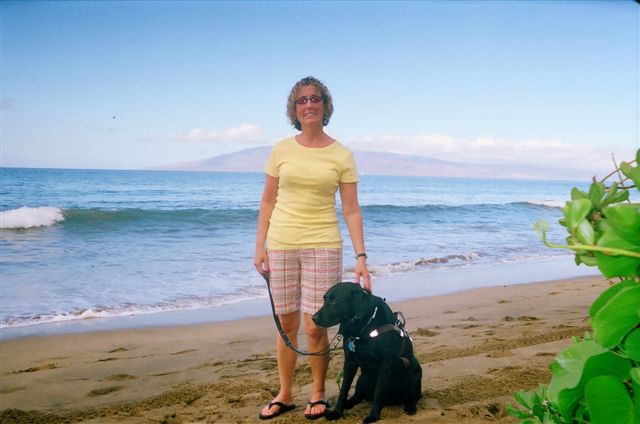
Adding to Richards, Prichard and Morgan's (2010) (re)envisioning of the tourist experience, Poria, Reichel & Brandt (2011) examination of 15 in-depth interviews of blind people’s experiences of air travel, hotels and restaurants, art museums and staff behaviour, comes a new study by Small, Darcy and Packer (2011). Building on Small & Darcy’s (2011) examination of embodiement, the study uses a combination of focus groups and in-depth interviews of 40 people with vision impairment to examine their embodied tourism experiences and what constitutes quality accessible tourism for the group. One of the interesting issues for people with vision impairments or who are Blind, are the extra structural constraints for those who travel with a guide dog. Photo 1 shows Wendy David enjoying the pleasures of Hawaii with her guide dog, which has quarantine implications depending upon the country travelling to, specific air travel requirements and a series of customer service attitudes that have included the exclusion of guide dogs from premises even though it contravenes disability discrimination legislation.  Central to Small, Darcy and Packer (2011) study is the examination of Urry’s concept of the "visual” gaze and how the visual has dominated our understanding of tourism. The abstract is provided.

Photo 1: Wendy David and guide dog enjoying the pleasures of Hawaii -  used with permission © Wendy David


Abstract
This paper reports the findings of a qualitative study that investigated the embodied tourist experiences of 40 people who are vision impaired. The study, informed by the concept of “embodied ontology”, explored the corporeal and socially constructed experience of tourism. The findings highlighted the benefit of holidays for the participants and de-centred the “visual gaze” in the tourist experience. The quality of the tourist experience related to participants’ feelings of inclusion or exclusion in terms of their access to information, experience of wayfinding, travelling with a guide dog, and the knowledge and attitudes of others. It was evident that participants needed to manage their tourist experiences closely and constantly. The paper concludes that the tourism industry and community must understand the multi-sensory nature of the tourist experience if quality accessible experiences are to be available for tourists with vision impairment. Provision of multi-sensory experiences also enhances the experiences of sighted tourists.

Highlights
►People with vision impairment have been omitted in the tourism research literature. ► The “visual gaze” constrains our understanding of the embodied nature of tourism. ► Structural constraints disable tourism environments, services and attitudes. ► The embodied nature of vision impairment requires spatial and sensory understanding. ► Experiences can be enhanced through tactility, aroma, movement and sound.

Keywords: Vision impairment; Blind; Sensory; Embodiment; Disability; Tourist experience; Management; Accessible tourism

References
Poria, Y., Reichel, A., & Brandt, Y. (2011). Blind People’s Tourism Experiences: An Exploratory Study. In D. Olis & S. Darcy (Eds.), Accessible Tourism: Concepts and Issues (pp. 149-159). Bristol, UK: Channel View Publications.
Richards, V., Pritchard, A., & Morgan, N. (2010). (Re)Envisioning tourism and visual impairment. Annals of Tourism Research, 37(4), 1097-1116. doi: DOI: 10.1016/j.annals.2010.04.011
Small, J., & Darcy, S. (2011). Understanding Tourist Experience Through Embodiment: The Contribution of Critical Tourism and Disability Studies. In D. Buhalis & S. Darcy (Eds.), Accessible Tourism: Concepts and Issues (pp. 72-96). Bristol, UK: Channel View Publications.

Wednesday, July 13, 2011

National Tourism Dialogue and Communiqué on Accessible Tourism


The National Information Communication Awareness Network for the arts, sport, recreation and tourism (a.k.a. NICAN) recently held a National Tourism Dialogue that brought together stakeholders with an interest in the area disability, access and inclusive or accessible tourism http://www.nican.com.au/news/communique-national-tourism-dialogue

The Dialogue was opened by Sen Jan McLucas the current Parliamentary Secretary for Disabilities and Carers where she issued a media release http://www.janmclucas.fahcsia.gov.au/mediareleases/2011/Pages/increase_access_tourism_20062011.aspx and the text of her opening speech http://www.janmclucas.com.au/index.php?option=com_content&view=article&id=87:nican-national-dialogue-on-tourism&catid=4:speeches&Itemid=17

The day adopted a participatory action research approach (Denzin & Lincoln, 2003; Goodley & Lawthom, 2005; Kitchin, 2000; Taylor, 1999) and a background paper on Setting a Research Agenda for Accessible Tourism (Darcy, 2006) was circulated as a starting point for the participants. Research can be a foundation for policy development and change particularly where industry groups demand a business case. Historically disability, access and accessible tourism have been challenged by industry groups as they do not believe that people with disability are a market segment or believe that they are a low yield group or that provision for accessible accommodation does not provide a reasonable return on investment (Australian Hotels Association & Tourism and Transport Forum, 2010). To counter these arguments, two presentations were incorporated within the agenda to provide a research base  from nationally collected government statistics,  and to challenge market myths and stereotypes (Dwyer & Darcy, 2011; Forrester, 2011). The afternoon was then devoted to a stakeholder brainstorming session aimed at coming to a group consensus for a call to action to action to improve the tourism opportunities for the group through leveraging industry engagement. Photo 1 is the group present at Parliament house with a number of other speakers joining by teleconference - Sheila King, Access for All Alliance Inc.,  Associate Prof Simon Darcy, UTS Business School.


Photo 1 - National Tourism Dialogue Group Photo plus others who joined by teleconference.


The agenda for the day was:
National Dialogue
Stakeholders in Disability Tourism 
Monday 20 June 2011
9:30am – 3:00pm
Parliament House, Canberra 

AGENDA

9:30     Welcome and introductions (Patron Annette Ellis)
a.     Apologies
b.     Brief introductions (all)
c.      Scene setting and purpose of forum (CEO NICAN Suzanne Bain-Doniohue/Marketing Manager NICAN Craig Wallace)

10:00  Formal opening and keynote
     Current directions in disability & the importance of access tourism
                Senator the Hon. Jan McLucas, Parliamentary Secretary for Disabilities and Carers

Morning tea [Group photograph]


10:30  
The Case for Accessible Tourism
a.     The value of disability tourism - what the research tells us?
(Ass. Professor Simon Darcy, UTS Business School - University of Technology, Sydney)
 (Bill Forrester, Travability)
b.     Other sources and gaps in our knowledge (all)

12:30 Lunch

1:30    Taking action (brainstorm of all stakeholders)
a.     What do we want to happen?
b.     Who do we need onside to make it happen?
c.      What could we do to make it happen?
d.     What are the barriers to getting there? 

2:30     Next steps
a.     Possible joint communiqué (draft with papers)
b.     Recap key outcomes & agreements (Annette Ellis)

3:30     Close

For inquiries please contact Craig Wallace at Nican on (02) 6241 1220 / 0451 199 750

The communiqué from the National Dialogue is now reproduced for your convenience and can be accessed from http://www.nican.com.au/news/communique-national-tourism-dialogue
National Dialogue
Stakeholders in accessible and inclusive tourism 
Wednesday 22 June 2011

Parliament House, Canberra 


COMMUNIQUÉ
Inclusive and Accessible Tourism – an opportunity for Australia

A National Dialogue of key stakeholders in inclusive and accessible tourism was opened on Monday 20 June by Senator the Hon Jan McLucas, Parliamentary Secretary for Disabilities and Carers at Parliament House, Canberra.  The Dialogue, hosted by Nican and chaired by Annette Ellis, National Patron and former Shadow Minister for Disability and Carers, has agreed on a call to action for the tourism industry, government and the Australian community:

Tourism by people who have a disability or who are ageing is an opportunity for Australian Tourism to seize the competitive advantage in a tight market. It is also a great way to demonstrate corporate social responsibility.  The time is right for action as Australia’s baby boomers retire.

Key stakeholders including researchers, tourism operators and referral providers have joined forces, with the support of the Australian Government, to build awareness about the opportunities and to address barriers to tourism by these groups. 

Together, we believe that there is a growing understanding of the potential of the tourism market for people with disability, including seniors, which goes hand-in-hand with boosting visitor numbers and strengthening our place as a top draw tourism destination for people around the world. 

We recognise that access to leisure and recreation, including taking a holiday, is an important part of living an ordinary life and helps realise the United Nations Convention on the Rights of People with a Disability and the National Disability Strategy. 

Ultimately, this will help to build a more welcoming and inclusive society, where individuals and families with a disability have choices and no longer feel shut out.

There are significant advantages to developing better tourism products, services and experiences to people with disability as well as information about opportunities, venues and services. 

This is good business sense and is also consistent with rights, access and corporate social responsibility. 

With the right planning this can be a real win for both people with disability and the tourism industry. 

Now is the time to promote the business case for disability tourism where:   

·        Some 88 per cent of people with disability take a holiday each year which accounts for some 8.2 million overnight trips.
·        The average travel group size for people with disability is 2.8 people for a domestic overnight trip and 3.4 for a day trip.
·        There is a myth that the inclusive tourism market does not spend because of economic circumstance.
·        People with disability travel on a level comparable with the general population for domestic overnight and day trips.
·        The total tourism expenditure attributable to people with disability is $8bn per year or 11 per cent of overall tourism expenditure (Dwyer & Darcy, 2011).

The business case is clear and draws on landmark research from Associate Professor Simon Darcy, with the University of Technology’s Business School, who presented at the session. 

We welcome the Government's commitment in the area of travel and tourism through the National Disability Strategy as well as work on Access to Premises and Transport Standards, access to airlines and cinema access. 

More could be done including an inclusive/accessible tourism category within a mainstream tourism award; a marketing strategy; a practical information guide; a National Forum with Tourism operators and further work to refresh and promote the business case for inclusive and accessible tourism, especially with industry.

We commend these ideas to government and each of us is committed to moving from commitment to action.

We are excited by the opportunity to deepen the understanding of the importance and potential of inclusive and accessible tourism for all Australians.  We will continue to work together and promote the benefits across the tourism industry, agencies of governments at all levels, tourism promoters, and the Australian community.

Issued by:
Australia For All Alliance Inc
Greatvenue
Disabled Motorists Association
Disability Information and Resource Centre
Nican
IDEAS
Travability
Leadership plus (formerly Inclusive Leisure Vic) 

Media contact: Craig Wallace, Marketing Manager, Nican – 0451 199 750


References  


Total Pageviews

Popular Posts

Labels