All abilities trek to the summit of Mount Kosciuszko - Australia's highest peak

All abilities trek to the summit of Mount Kosciuszko - Australia's highest peak
All abilities trek to the summit of Mount Kosciuszko - Australia's highest peak - © Jennifer Johnson 2008
Showing posts with label Sydney. Show all posts

Tuesday, September 27, 2016

World Tourism Day - Accessible Tourism for All: what is it all about and do we really need it?

27 September 2016


Even temporary overlays can include universally design features. Photo by Tracey Dickson at the Rio 2016 Olympic and Paralympic games and provided for use to UTS Business School.

It is World Tourism Day on Tuesday, September 27, and this year the focus will be Accessible Tourism for All.

The UN World Tourism Organisation has chosen this focus because people with disability are still poorly accommodated by the tourism industry globally, despite the World Health Organisation estimating that 1 billion people live with some form of disability.
“This makes accessible tourism not only an issue of equality and human rights but an economic one. People with disability and seniors with access needs are already making a significant economic contribution to tourism, but it has the potential to double through understanding how to accommodate and market to this group,” says Professor Simon Darcy of UTS Business School, an expert in tourism and a power wheelchair user himself.
A recent European Union study has shown that the market already accounts for a gross value added economic contribution of €150 billion annually.
Previous Australian government tourism figures identified approximately 10% of domestic overnight stays as having an access component worth some $4.8 billion to the economy.

"People with disability
are still poorly accommodated
by the tourism industry globally."

Recent research published by Professor Darcy and Spanish collaborators sought to identify the key components that contribute towards accessible tourism ‘destination competitiveness and sustainability’.
This research was only possible because national and regional data was available for both countries that provided an evidence base.
While global tourism data is available longitudinally, due to the 10% economic contribution of the sector, few nations have included disability and access modules within their data collection.
However, UNWTO has invested considerable resources in producing a set of best practice reports on improving accessible tourism experiences for people with mobility, vision, hearing and learning disabilities. Each of these groups has different access requirements to be inclusive of their access needs and embodiments.
By incorporating the access needs and embodied understandings within destination development and marketing, precincts, cities and nations are creating a competitive advantage in the attraction of tourists in a globally competitive industry.
For example, people with vision impairment experience tourism environments without the ‘tourist gaze’ and require product development to take into account their other senses.
Research on vision impairment and tourism has shown the importance for considering wayfinding, soundscapes, aroma and tactility to enhance this group’s experiences of destination environments.

"By incorporating access needs and embodied understandings
within destination development and marketing...
nations are creating a competitive advantage."

The ‘competitiveness’ of destinations such as Sydney, Barcelona, London, Hong Kong and Rio brands can be enhanced or tarnished by their approaches to these markets. Arguably, Spain with Barcelona as the prime example, has led the way with their commitment and product/service development of accessible destination experiences.
The UNWTO is ‘responsible for the promotion of responsible, sustainable and universally accessible tourism’. While rarely discussed together, sustainability and universally accessible tourism are philosophically linked as part of sustainable development goals.
Universally accessible tourism is founded on the core elements of ‘universal design’ that is fundamental to developing both an equality of tourism experiences and the market potential of this group.
Universal design, also known as inclusive design, goes beyond accessibility and compliance with legislation to produce buildings, products and environments that are inherently accessible to everyone. Universal design has been defined as:
‘...the design of products and environments to be usable by all people, to the greatest extent possible, without the need for adaptation or specialized design. The intent of the universal design concept is to simplify life for everyone by making products, communications, and the built environment more usable by more people at little or no extra cost. The universal design concept targets all people of all ages, sizes and abilities’.
Applying the principles of Universal Design provides a foundation for local communities and tourism destinations to be more effective, efficient and sustainable.
In Europe it has been estimated that less than 10% of tourism suppliers offer universally designed tourism products and services.
The outcome of adopting universal design principles includes a broader market base, increased occupancy out of season, and an enhanced market brand.
In a recent keynote address to the 2nd Australian Universal Design Conference, Professor Darcy identified spaces and places including the Barangaroo redevelopment, the Goods Line adjacent to the ABC and UTS Business School, and the Sydney Olympic Park as examples that include elements of universal design.

"...universal design is fundamental
to developing an equality of tourism experiences
and the market potential of this group."

What makes implementing universal design for accessible tourism purposes that much more complex is the movement of people locally, regionally, nationally and internationally so that all elements of the ‘travel chain’ link together seamlessly.
This incorporates the elements of information provision, planning, transport, accommodation, attractions and all forms of miscellaneous service provision across accessible tourism supply chain.
The UNWTO has produced a booklet for World Tourism Day highlighting aspects of the accessible tourism supply chain.

Professor Darcy's current research includes examining the outcomes of accessibility of major events and recently looked at the Paralympics and Rio’s accessibility in these articles:
'Grotesque spectacle'? Rio has a long way to go to become more accessible
‘A brief history of the Paralympic Games: from post-WWII rehabilitation to mega sport event’

Reprinted from
http://www.uts.edu.au/about/uts-business-school/management/news/world-tourism-day-accessible-tourism-all-what-it-all-about

Tuesday, March 18, 2014

Olympic and Paralympic Games in Brazil: learning from Barcelona and Sydney

New Published Research linking legacy and new tourism segments to the success of large events in Brazil

This is research that explores how legacy and the new tourism segments; senior tourism and accessible tourism, can provide business opportunities for the tourism industry in Brazil prior to the 2014 FIFA World Cup and 2016 Olympic Games.

Published in Spanish, with abstracts in Portuguese and English


Copyright © 2014 RAE publicação. All rights reserved.

JUEGOS OLÍMPICOS Y PARALÍMPICOS EN BRASIL: APRENDIENDO DE BARCELONA Y SIDNEY
Jogos olímpicos e paraolímpicos no Brasil: aprendendo com Barcelona e Sidney

Olympic and Paralympic Games in Brazil: learning from Barcelona and Sydney


Domínguez, Trinidad;
Darcy, Simon;
Alén, Elisa


Resumen
Entre 2014 y 2016, Brasil será sede de numerosos eventos, donde se destaca la celebración de las Olimpiadas en Rio de Janeiro. La industria del turismo será una de las grandes beneficiadas, teniendo como objetivo duplicar el número de turistas, 10 millones en 2016, y generar oportunidades de negocios. Esta investigación plantea el análisis de dicha meta a través de dos elementos vinculados a las Olimpíadas, el legado y la apertura a nuevos segmentos de turistas, concretamente el turismo sénior y el accesible. Se llevará a cabo un análisis de contenido de la bibliografía existente sobre Río 2016 para determinar el estado del arte, y posteriormente se realizará un estudio de caso de las Olimpíadas de Barcelona y Sídney, con el objetivo de obtener las claves del éxito de su legado y la repercusión a nivel turístico. Esto posibilitará identificar los pasos a seguir por Brasil para alcanzar su objetivo turístico.


Resumo
Entre 2014 e 2016, o Brasil será sede de inúmeros eventos, onde se destaca a celebração das Olimpíadas no Rio de Janeiro. A indústria do turismo será uma das grandes beneficiadas, tendo como objetivo duplicar o número de turistas, 10 milhões em 2016, e gerar oportunidades de negócios. Esta investigação propõe a análise desta meta através de dois elementos vinculados às Olimpíadas, o legado e a abertura para novos segmentos de turistas, de forma concreta o turismo sênior e o acessível. Uma análise de conteúdo será realizada sobre a bibliografia existente sobre Rio 2016 para determinar o estado da arte, e posteriormente será realizado um estudo de caso das Olimpíadas de Barcelona e Sidney, com o objetivo de obter as chaves do sucesso de seu legado e a repercussão a nível turístico. Isto possibilitará identificar os passos a seguir no Brasil para alcançar seu objetivo turístico.


Abstract
Between 2014 and 2016, Brazil will host a number of large events, where the Olympics of Rio de Janeiro are the most noteworthy. The tourism industry will be one of the beneficiaries. It has established an objective to bring 10 million tourists in 2016, doubling overseas arrivals. This can create many business opportunities for the industry. This paper analyzes this goal by examining two key factors linked to the Olympics, legacy and new tourism segments, in particular, seniors and accessible tourism. A study using content analysis of the bibliography about Rio 2016 will be applied to determine the current body of knowledge. Following this, a case study will be drawn upon the Barcelona and Sydney Games to establish the key elements of the legacy and their tourist outcomes. The findings will establish the main factors required to meet Brazil’s tourist objectives.

Photo 1: Sydney 2000 Paralympic Games Opening Ceremony © Fiona Darcy 2000


Keywords: Olympic and Paralympic Games of Rio de Janeiro, Barcelona and Sydney, legacy, accessible tourism and senior tourism
Full reference:

Domínguez, T., Darcy, S., & Alén, E. (2014). W). Juegos Olímpicos y Paralímpicos en Brasil: aprendiendo de Barcelona y Sidney. RAE-Revista de Administração de Empresas, 54(2), 222-231.

http://rae.fgv.br/sites/rae.fgv.br/files/artigos/9505.pdf

For further information on the paper please contact:
Trinidad Domínguez Vila
Faculty of Business Sciences and Tourism
As Lagoas s/n,
32004 Ourense, Spain
trinidad@uvigo.es

Saturday, March 23, 2013

Landmark Federal Court Case Places Coach Operators in Australia On Notice For People with Mobility Disabilities


A recent Federal Court action has placed the Australian bus and coach operators on notice that long or short haul routes must have access for people with mobility disability. The action by Julia Haraksin against Murrays Australia Ltd played out over its three-year battle in the court system. Her perseverance is to be noted and congratulated. However, the case once again highlights the weakness of the system that places the onus of proof of disability discrimination on individuals with disability. Having a case heard in the Federal Court is a significant personal financial risk to the individual as the Federal Court is a "cost jurisdiction" where even if you win you may still have some costs awarded against you. While this does not occur very often, and that there are opportunities to have cost limits placed on what an individual may risk, this system is unnecessarily biased towards organisations with the financial resources to be able to ignore the mediation processes through the complaint case mechanisms set up under the Disability Discrimination Act and force people to either risk their personal assets or walk away from many situations that are blatantly direct discrimination under the law. Of course, that is not even take into account the emotional energy and sacrifice that individuals make in taking a Federal Court action. What makes this case more frustrating is that the right to access public transport and generally was tested in three separate court actions in three states of Australia in the lead up to the Sydney 2000 Olympic and Paralympic Games (Darcy, 2003). Why did this Federal court action need to go ahead? Figure 1 shows the author boarding an accessible coach in Victoria in 1998, hardly revolutionary for some bus and coach companies.

Figure 1: Simon Darcy preparing to board an accessible coach in Melbourne, Victoria Australia in 1998


While the organisation that assisted Julia, the Public Interest Advocacy Centre are to be congratulated for their many efforts and success, it is time that we have a vision for the system to either place the onus on organisations to prove that they are not discriminating against people with disability or have a sufficiently funded government statutory authority or non-profit sector to take public interest cases on behalf of people with disability. As Darcy & Taylor (2009) highlight in their paper at on a human rights analysis of the leisure, sport, recreation, the arts and tourism sectors described under the UN Convention On the Rights of Person's With Disabilities as "cultural life" under Article 30, there are the more examples of serial complaint cases being undertaken by individuals with disabilities involving the same circumstances and sectors year in year out. One such area is hotel accommodation that has proved problematic with possibly hundreds of complaint cases being launched without any systematic change by the hotel and accommodation sector. Yet, the hotel accommodation sector had been lobbying at the federal level to have the proportion/number of accessible rooms reduced in new developments. Darcy (2010; 2011) outlines the significant issues that people with disability face trying to source and make an informed decision about the hotel accommodation for their needs. Will this be the next Federal court case?

For further information on the Haraksin v Murray Australia Ltd please see http://www.piac.asn.au/news/2013/03/are-bus-companies-meeting-disability-standards 

References
  1. Darcy, S. (2003). The politics of disability and access: The Sydney 2000 Games experience. Disability & Society, 18(6), 737-757.
  2. Darcy, S., & Taylor, T. (2009). Disability citizenship: An Australian human rights analysis of the cultural industries. Leisure Studies, 28(4), 419-441.
  3. Darcy, S. (2010). Inherent complexity: Disability, accessible tourism and accommodation information preferences. Tourism Management, 31(6), 816-826.
  4. Darcy, S. (2011). Developing sustainable approaches to accessible accommodation information provision: A foundation for strategic knowledge management. Tourism Recreation Research, 36(2), 141-157.
A media release about the case http://ymlp.com/zx0FiH 

Thursday, October 11, 2012

New Research Article: Sources of tourist information used by Deaf people. Case study: the Polish Deaf community


Very little research has been carried out on accessible tourism and people who are Deaf. People reading the blog entry may be wondering why I am using Deaf capital D? The reason is that people who are Deaf do not regard themselves as having a disability but as being part of a cultural group that is bound together by their language, sign language (Corker & French, 1999). Photo 1 shows an Auslan (Australian sign language) interpreted tour of the NSW Art Gallery in Sydney, Australia as identified on the Sydney for All website.

Photo 1: Auslan (Australian sign language) interpreted tour of the Art Gallery of New South Wales, Sydney Australia. (Photo courtesy of Art Gallery of New South Wales)


A new article by Alina Zajadacz from Poland has sought to redress this gap through examining the sources of tourist information used by Deaf people. This study was longitudinal from 2004 to 2010 and surveyed 292 Deaf people comparing them to 1780 people with hearing. The findings present a breakdown of the information sources used with the discussion focusing on the need for involvement by Deaf people in the development of tourist information. An abstract of the study can be found at http://www.tandfonline.com/doi/abs/10.1080/13683500.2012.725713


References
Corker, M., & French, S. (Eds.). (1999). Disability Discourse. Buckingham: Open University Press.
Zajadacz, A. (2012). Sources of tourist information used by Deaf people. Case study: the Polish Deaf community. Current Issues in Tourism, 1-21. doi: 10.1080/13683500.2012.725713  http://www.tandfonline.com/doi/abs/10.1080/13683500.2012.725713


Wednesday, April 25, 2012

English Tourism Awards recognise accessible tourism and the spillover effect from the London 2012 Olympics and Paralympics

The English tourism awards have identified the exceptional performance being made in accessible tourism over the last few years. In particular, they identify the University of Leeds Access for All developments that have provided the infrastructure for the Canadian Paralympic wheelchair rugby team to stay, train and enjoy the accessible and inclusive environment.


This type of initiative builds on the excellent work of the Vancouver 2010 Olympic and Paralympic Games Legacy Now Program that specifically identified accessible tourism as one of the targeted outcomes of games planning and execution. One outcome has been the integration of accessible tourism within the Tourism Vancouver website. The website goes on to integrate a series of accessible tourism resources. Unfortunately the same cannot be said for Tourism Australia's website that has stripped all reference to accessible tourism over the last 18 months except to suggest two other organisations to contact - http://www.australia.com/plan/before-you-go/useful-tips.aspx.


 accessible vancouver
Photo 1: Tourism Vancouver welcoming tourists with disability Source: http://www.tourismvancouver.com/vancouver/accessible-vancouver/


London 2012 Olympic and Paralympic Games organisers have certainly sought to build upon the Beijing 2008 games, which provided an excellent accessible games experience but not necessarily an ongoing legacy of access or accessible tourism. London's approach to legacy has been at the forefront of their discussions from the involvement of youth through to the integration of disability in all aspects of the Olympics and Paralympics. Of course, legacy is a consideration that is best judged long after the games is finished and let's hope London seize their opportunity and create a lasting legacy of accessibility long into the future.

http://www.london2012.com/legacy-after-the-games

Academically legacy has only been the subject of substantive research over the last decade. A major paper on conceptualising and measuring mega-sport event legacies is Preuss' (2007) "Cube" conceptualisation that examines planned/unplanned, negative/positive, and tangible/intangible dimensions of legacy. Preuss' conceptualisations drew on the major event legacy literature but without reference to Paralympic or disability related major events. In developing the conceptualisation of legacies for major events, Dickson, Benson & Blackman (2011) extended Preuss' conceptualisation through considering Olympic and Paralympic legacy by including timeframe together with planning, tangibility, spread of impact and magnitude of the effect. These conceptualisations were then measured by the components of economics, sports participation, infrastructure, environmental, urban renewal, transport and volunteer/social capital using a radar or spiders web graphic. The inclusion of the fledgeling Paralympic legacy literature has provided another dimension to the social legacies of mega sporting events. The Paralympic legacy literature has recently been supplemented through the publication of Legg & Gilbert's (2011) book aptly titled Paralympic Legacies.

References
Dickson, T. J., Benson, A. M., & Blackman, D. A. (2011). Developing a framework for evaluating Olympic and Paralympic legacies. Journal of Sport & Tourism, 16(4), 285-302.

Legg, D., & Gilbert, K. (Eds.). (2011). Paralympic Legacies. Champaign, IL USA: Commonground Publishing.


Preuss, H. (2007). The conceptualisation and measurement of mega sport event legacies. Journal of Sport & Tourism, 12(3), 207-228. 


Sunday, November 20, 2011

New Published Research from US on Motivations of people with acquired mobility disability to travel


Surprisingly few studies have examined the motivations of people with disability to travel. The Shi, Cole and Chancellor (2012) newly published article applies Crompton’s (1979) push pull model of travel motivations to examine people with acquired mobility disability’s motivation to travel. The qualitative study undertook two focus groups at the 13th Congress of The Society for Accessible Travel and Hospitality in 2009. Transcripts of the focus groups were analysed based on Crompton's model. The results identified nine push factors with five being consistent with Crompton (1979):  escape from a perceived mundane environment; exploration and evaluation of self; relaxation; enhancement of relationship with family and friends; and facilitation of social interaction. However, four other factors are unique to people with acquired mobility disabilities: independence; the desire of being in a natural environment; adventure/risk; and do it today. With respect to Crompton (1979) pull factors, novelty and education were consistent with previous work but not surprisingly the accessibility of the destination was a dominant factor. This study suggests that a broader study examining motivations of people across the spectrum of disabilities and support needs would add a level of sophistication to what is currently known about motivations to travel for this group.

Photo 1 shows two gnarly South African surfers who just happen to have disabilities. They espouse a series of motivations identified in this study - independence, desire of being a natural environment, adventure/risk and do it today. However, they haven’t waited for perfect access to a beach for wheelchair users and have instead used "Quad bikes" to assist their quest for the perfect wave. Go for it boys!

Photo 1: Dries Millard and Glenn Ward Paraplegic body boarders trekked from Saldanha to Cape Town and had many adventures along the way - photo with permission http://www.saldanhatocapetown.co.za/the-event/


Copyright © 2012 Elsevier Ltd All rights reserved.

Understanding leisure travel motivations of travelers with acquired mobility impairments

Lei Shi, Shu Cole, & H. Charles Chancellor
Department of Recreation, Park, and Tourism Studies, Indiana University, HPER 133, 1025 E 7th Street, Bloomington, IN 47405, USA

Abstract
The purpose of the study was to understand what motivated people with mobility impairments to travel frequently. Two focus groups were conducted and results were analyzed in light of Crompton’s (1979) push/pull conceptual framework exploring pleasure travel motivation...(shortened due to copyright restrictions).

Keywords: Mobility impairments; Motivation; Leisure travel

References
Crompton, J. L. (1979). Motivations for pleasure vacation. Annals of Tourism Research, 6(4), 408-424.
Shi, L., Cole, S., & Chancellor, H. C. (2012). Understanding leisure travel motivations of travelers with acquired mobility impairments. Tourism Management, 33(1), 228-231. doi: 10.1016/j.tourman.2011.02.007

Saturday, November 19, 2011

The embodied tourist experiences of people with vision impairment: Management implications beyond the visual gaze


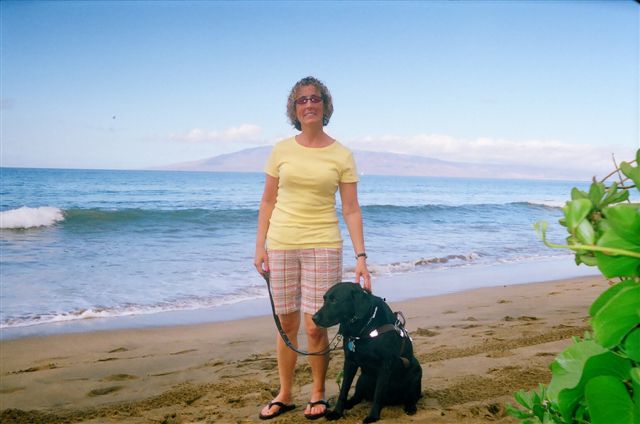
Adding to Richards, Prichard and Morgan's (2010) (re)envisioning of the tourist experience, Poria, Reichel & Brandt (2011) examination of 15 in-depth interviews of blind people’s experiences of air travel, hotels and restaurants, art museums and staff behaviour, comes a new study by Small, Darcy and Packer (2011). Building on Small & Darcy’s (2011) examination of embodiement, the study uses a combination of focus groups and in-depth interviews of 40 people with vision impairment to examine their embodied tourism experiences and what constitutes quality accessible tourism for the group. One of the interesting issues for people with vision impairments or who are Blind, are the extra structural constraints for those who travel with a guide dog. Photo 1 shows Wendy David enjoying the pleasures of Hawaii with her guide dog, which has quarantine implications depending upon the country travelling to, specific air travel requirements and a series of customer service attitudes that have included the exclusion of guide dogs from premises even though it contravenes disability discrimination legislation.  Central to Small, Darcy and Packer (2011) study is the examination of Urry’s concept of the "visual” gaze and how the visual has dominated our understanding of tourism. The abstract is provided.

Photo 1: Wendy David and guide dog enjoying the pleasures of Hawaii -  used with permission © Wendy David


Abstract
This paper reports the findings of a qualitative study that investigated the embodied tourist experiences of 40 people who are vision impaired. The study, informed by the concept of “embodied ontology”, explored the corporeal and socially constructed experience of tourism. The findings highlighted the benefit of holidays for the participants and de-centred the “visual gaze” in the tourist experience. The quality of the tourist experience related to participants’ feelings of inclusion or exclusion in terms of their access to information, experience of wayfinding, travelling with a guide dog, and the knowledge and attitudes of others. It was evident that participants needed to manage their tourist experiences closely and constantly. The paper concludes that the tourism industry and community must understand the multi-sensory nature of the tourist experience if quality accessible experiences are to be available for tourists with vision impairment. Provision of multi-sensory experiences also enhances the experiences of sighted tourists.

Highlights
►People with vision impairment have been omitted in the tourism research literature. ► The “visual gaze” constrains our understanding of the embodied nature of tourism. ► Structural constraints disable tourism environments, services and attitudes. ► The embodied nature of vision impairment requires spatial and sensory understanding. ► Experiences can be enhanced through tactility, aroma, movement and sound.

Keywords: Vision impairment; Blind; Sensory; Embodiment; Disability; Tourist experience; Management; Accessible tourism

References
Poria, Y., Reichel, A., & Brandt, Y. (2011). Blind People’s Tourism Experiences: An Exploratory Study. In D. Olis & S. Darcy (Eds.), Accessible Tourism: Concepts and Issues (pp. 149-159). Bristol, UK: Channel View Publications.
Richards, V., Pritchard, A., & Morgan, N. (2010). (Re)Envisioning tourism and visual impairment. Annals of Tourism Research, 37(4), 1097-1116. doi: DOI: 10.1016/j.annals.2010.04.011
Small, J., & Darcy, S. (2011). Understanding Tourist Experience Through Embodiment: The Contribution of Critical Tourism and Disability Studies. In D. Buhalis & S. Darcy (Eds.), Accessible Tourism: Concepts and Issues (pp. 72-96). Bristol, UK: Channel View Publications.

Saturday, June 25, 2011

Rio de Janeiro 2016 Olympic and Paralympic Games - a foundation for destination development


Previous posts on the blog have examined the possible contribution of Olympic and Paralympic games to accessible tourism development. In particular, the recent Vancouver 2010 Winter Olympic and Paralympic Games identified tourism and accessible tourism as one of five identified disability legacies (2010 Legacies Now, 2010a, 2010b). There is a growing body of literature on the specifics of Paralympic legacy, which is being brought together in an edited collection by Legg and Gilbert in The Paralympic Games: Legacy and Regeneration (2011).

A media release from the International Paralympic Committee identifies the tremendous spotlight that an international mega event can bring to host cities and countries (International Paralympic Committee, 2011). Disability and access are part of the operational partnership between the International Olympic Committee and the International Paralympic Committee that host cities are required to address. There is a very strong Australian connection between the Sydney 2000 Olympic and Paralympic Games and the International Paralympic Committee in what was described as the Benchmark Games (Cashman & Darcy, 2008). Photo 1 shows one of the lasting legacies of the Sydney Games, the inclusions for mobility and vision sports spectator facilities at the Sydney Olympic Stadium (now ANZ Stadium), Sydney Olympic Park.

Photo 1: Accessible seats & tactile ground surface indicators at  ANZ Stadium (© Fiona Darcy 2000)

As the media release identifies the delegation included the Vice President Greg Hartung, who at the time of the Sydney Games was the President of the Australian Paralympic Committee, and the CEO of the IPC Xavier Gonzales, who at the time of the Sydney Games was the Sydney Paralympic Organising Committee’s General Manager Sport and Games Operations. The international spotlight the IPC focuses on the host city offers an opportunity to leverage the games into an opportunity for an accessible destination of the future. We already know from previous entries that some excellent work is being done in Brazil on the accessibility of airports through the Masters by research project of Rafael Teixeira de Castro.

There are a number of groups who are working towards this goal through the Rio 2016 Olympic and Paralympic specialist groups involving people with disability and tourism. A very active group of professionals can be found on LinkedIn through subgroup forums. The importance of the strategic planning for the Rio 2016 Games, the integration of disability and access, and the future leverage for accessible tourism is needed now to make sure that it moves beyond potential to a reality after 2016. I wish Rio the best in these endeavours.

International Paralympic committee media release 16 June 2011
IPC Complete Week of Meetings in Rio, Brazil

An International Paralympic Committee (IPC) delegation including Vice President Greg Hartung, Chief Executive Officer Xavier Gonzalez and Paralympic Games Senior Manager Thanos Kostopoulos has concluded a week of activity in the Brazilian capital of Rio de Janeiro to see how preparations are going for the 2016 Paralympic Games.

Hartung is a member of the International Olympic Committee's (IOC) Co-ordination Commission for the Rio 2016 Games which met for second time in Rio to observe the progress made so far.

This included meetings with government officials, venue tours and updates from the Organizing Committee's in different areas. The Co-ordination Commission was also updated on preparations for the Paralympic Games.

Following the conclusion of the IOC's Co-ordination Commission, the IPC held an Executive Project Review with Rio 2016 on Friday 10 June.

The Organizing Committee presented to the IPC their plans on different areas including Rio 2016 organizational structure and its focus on the planning of the Paralympic Games. Sport and venues updates were also given after the inclusion of two new sports (Para-Triathlon and Para-Canoe) in the Paralympic Sport programme as well as the progress on the development of the Rio 2016 Paralympic Games emblem which will be launched later this year.

Another important part of the visit was the progress reports from all levels of Government which made clear of the intention to leave a long and lasting legacy for people with an impairment in Rio after the Games.

Xavier Gonzalez said: "A lot of progress has been made since the last time we met which is extremely encouraging and I'd like to thank Rio 2016 President Carlos Nuzman and his team for their continued hard work. 

"One area which we are particularly excited about is the launch of the Paralympic Games emblem.

"The emblem will gain national and international exposure and will be the symbol of the event. It needs to have the right look and feel for the Games and feature the Agitos, the symbol of the Paralympic Movement. We are confident the final design will achieve this."

The Rio 2016 Paralympic Games will take place 7-18 September 2016 and will consist of 22 sporting events. For further information, please visit www.rio2016.com

References


Monday, June 21, 2010

Sydney for All adds Darling Harbour Precinct's Accessible Destination Experiences

As discussed in previous blog entries, the concept of quality accessible tourism experiences has gained little attention in the literature with most work concentrating on “access” as literally stopping at getting in the door. Access to the physical premise or alternative information provision should be the starting point for developing truly accessible destination experiences across including mobility, vision, hearing and cognitive dimensions of access. Understanding accessible destination experiences also needs to incorporate the level of support needs of the individual whether they are independent in their tourism interactions through to those who have very high support needs and require one on one assistance 24 hours a day. These conceptual foundations have been brought together in a forthcoming chapter that develops a more complex understanding of disability, tourism and accessible tourism (Darcy, Ambrose, Buhalis, & Schweinsberg, 2010).

Quality accessible tourism experiences were at the centre of a Sustainable Tourism Cooperative Research Centre project on Visitor Accessibility in Urban Centres (Darcy et al., 2008). The outcome of the project was the development of the Sydney for All Web portal that brought together good quality accessible tourism experiences across mobility, hearing, vision and cognitive dimensions of access across the continuum of support needs. Business 21C undertook a short video to encapsulate the philosophy of the project and to examine what makes for quality accessible tourism experiences. The video can be viewed at the following website http://www.business21c.com.au/2010/04/accessible-tourism-linking-demographic-change-and-social-sustainability-to-business-success . The work also encapsulated outdoor environments including national parks, Sydney Harbour and open space areas within the Sydney central business district including the Royal Botanic Gardens. A more detailed examination of presenting outdoor access information has been outlined in an article for the Australasian Parks and Leisure Journal that focused on the Sydney Harbour National Park North Head Look Out (Darcy, Cameron, Dwyer, & Taylor, 2008).

Photo 1: Stop Press - Sydney for All wins World Leisure Organisation's 2010 Innovation Prize IN

The Sydney for All project has now been extended through a grant from the City of Sydney to include the Darling Harbour Tourism Precinct. This work has been carried out by Bruce Cameron, Director Easy Access Australia, and sought to provide a series of additional accessible destination experiences within this precinct. To this end, the following providers have been highlighted as providing high quality accessible destination experiences:
  • The Chinese Gardens of Friendship;
  • IMAX theatre;
  • Australian National Maritime Museum; and
  • Powerhouse Museum.
Within each of these providers, there are a series of mobility, vision, hearing and cognitive activities that can be undertaken across the continuum of support needs. Part of the project includes a built in research loop that both quantitatively and qualitatively assesses the experiences that individuals have in undertaking these destination experiences. Sydney for All has received a 2009 Vision Australia’s Making a Difference Award for W3C compliance for website accessibility for people with vision impairments or those who use screen readers, has received a highly commended award from Uniquest for innovative social media development and a University of Technology Sydney human rights award for social media development.

Photo 2: Bruce Cameron completing access audits for the Darling Harbour precinct (©  2010 Patty Mazza)


References
Darcy, S., Ambrose, I., Buhalis, D., & Schweinsberg, S. (2010). Chapter 20 - A call towards universal approaches to accessible tourism. In D. Buhalis & S. Darcy (Eds.), Accessible Tourism: Concepts and Issues (pp. 320-340). Bristol, UK: Channel View Publications.
Darcy, S., Cameron, B., Dwyer, L., & Taylor, T. (2008). Research Note: Understanding accessible spaces and places: www.sydneyforall.com Web portal and the North Head Lookout Case Study. [refereed research note]. Australasian Parks and Leisure, 11(3 Spring), 28-34.
Darcy, S., Cameron, B., Dwyer, L., Taylor, T., Wong, E., & Thomson, A. (2008). Visitor accessibility in urban centres (pp. 75).  Retrieved from http://www.crctourism.com.au/BookShop/BookDetail.aspx?d=626


Total Pageviews

Popular Posts

Labels