All abilities trek to the summit of Mount Kosciuszko - Australia's highest peak

All abilities trek to the summit of Mount Kosciuszko - Australia's highest peak
All abilities trek to the summit of Mount Kosciuszko - Australia's highest peak - © Jennifer Johnson 2008
Showing posts with label embodiment. Show all posts

Saturday, August 16, 2014

Research article - Interconnecting mobilities on tour: tourists with vision impairment partnered with sighted tourists - Tourism Geographies -

Taylor & Francis Online :: Interconnecting mobilities on tour: tourists with vision impairment partnered with sighted tourists - Tourism Geographies -


An excellent article by Dr Jennie Small exploring a specialist tourism company who matches people with vision impairment with sighted guides.


Abstract

While there has been a developing interest in mobilities amongst tourism scholars, the notion of immobilities has often been ignored. Yet, there are many people who do not participate in tourism or, if they do, only experience partial mobility. This study focussed on a tour to Italy byTraveleyes, a company which provides holiday opportunities for people with vision impairment as well as for sighted tourists who act as guides for those with impairment. The research examined the experiences of both tourist groups and the intersection of their mobilities. The methods of study were autoethnography and questionnaire survey. The findings suggested that mobilities were facilitated in the partnership. For those with vision impairment, facilitation of mobility allowed them to enjoy some of the rights to citizenship and quality of life experienced by those who are sighted while the sighted guides learned new ways of mobility. At the same time, mobilities could also be constrained by the personality, interests and motivation of the sighted guide or the person with vision impairment. At times, different tour members had control over mobility and thus control over space; power was relational. Social barriers that affected the experience, combined with the evident embodiment of the tourist experience, suggested the appropriateness of ‘embodied ontology’ as a means for understanding the experience for tourists with vision impairment and their sighted guides.
Photo 1: City of Sydney Braille street signs 2016 Source 
    Keywords: 
  • vision impairment
  • sighted guide
  • mobilities
  • immobilities
  • embodiment
  • walking
  • tourist experience

  • Jennie Small is a senior lecturer in tourism management at the University of Technology, Sydney. Her specific teaching and research interest is tourist behaviour from a critical tourism approach, focusing on equity and social justice issues in tourism. Her research publications relate to embodiment, gender, disability (vision impairment), obesity, age and the life course.


Saturday, November 19, 2011

The embodied tourist experiences of people with vision impairment: Management implications beyond the visual gaze


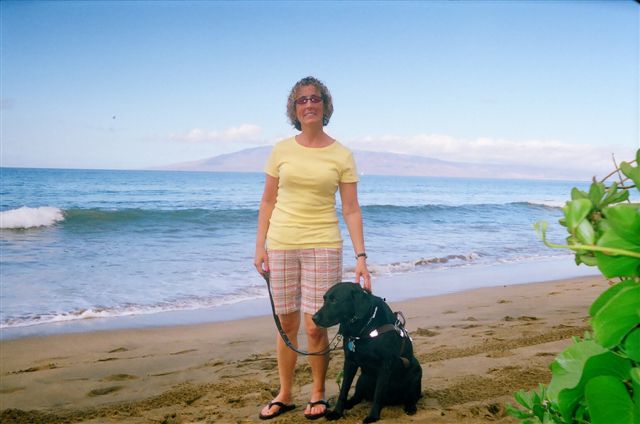
Adding to Richards, Prichard and Morgan's (2010) (re)envisioning of the tourist experience, Poria, Reichel & Brandt (2011) examination of 15 in-depth interviews of blind people’s experiences of air travel, hotels and restaurants, art museums and staff behaviour, comes a new study by Small, Darcy and Packer (2011). Building on Small & Darcy’s (2011) examination of embodiement, the study uses a combination of focus groups and in-depth interviews of 40 people with vision impairment to examine their embodied tourism experiences and what constitutes quality accessible tourism for the group. One of the interesting issues for people with vision impairments or who are Blind, are the extra structural constraints for those who travel with a guide dog. Photo 1 shows Wendy David enjoying the pleasures of Hawaii with her guide dog, which has quarantine implications depending upon the country travelling to, specific air travel requirements and a series of customer service attitudes that have included the exclusion of guide dogs from premises even though it contravenes disability discrimination legislation.  Central to Small, Darcy and Packer (2011) study is the examination of Urry’s concept of the "visual” gaze and how the visual has dominated our understanding of tourism. The abstract is provided.

Photo 1: Wendy David and guide dog enjoying the pleasures of Hawaii -  used with permission © Wendy David


Abstract
This paper reports the findings of a qualitative study that investigated the embodied tourist experiences of 40 people who are vision impaired. The study, informed by the concept of “embodied ontology”, explored the corporeal and socially constructed experience of tourism. The findings highlighted the benefit of holidays for the participants and de-centred the “visual gaze” in the tourist experience. The quality of the tourist experience related to participants’ feelings of inclusion or exclusion in terms of their access to information, experience of wayfinding, travelling with a guide dog, and the knowledge and attitudes of others. It was evident that participants needed to manage their tourist experiences closely and constantly. The paper concludes that the tourism industry and community must understand the multi-sensory nature of the tourist experience if quality accessible experiences are to be available for tourists with vision impairment. Provision of multi-sensory experiences also enhances the experiences of sighted tourists.

Highlights
►People with vision impairment have been omitted in the tourism research literature. ► The “visual gaze” constrains our understanding of the embodied nature of tourism. ► Structural constraints disable tourism environments, services and attitudes. ► The embodied nature of vision impairment requires spatial and sensory understanding. ► Experiences can be enhanced through tactility, aroma, movement and sound.

Keywords: Vision impairment; Blind; Sensory; Embodiment; Disability; Tourist experience; Management; Accessible tourism

References
Poria, Y., Reichel, A., & Brandt, Y. (2011). Blind People’s Tourism Experiences: An Exploratory Study. In D. Olis & S. Darcy (Eds.), Accessible Tourism: Concepts and Issues (pp. 149-159). Bristol, UK: Channel View Publications.
Richards, V., Pritchard, A., & Morgan, N. (2010). (Re)Envisioning tourism and visual impairment. Annals of Tourism Research, 37(4), 1097-1116. doi: DOI: 10.1016/j.annals.2010.04.011
Small, J., & Darcy, S. (2011). Understanding Tourist Experience Through Embodiment: The Contribution of Critical Tourism and Disability Studies. In D. Buhalis & S. Darcy (Eds.), Accessible Tourism: Concepts and Issues (pp. 72-96). Bristol, UK: Channel View Publications.

Wednesday, July 13, 2011

National Tourism Dialogue and Communiqué on Accessible Tourism


The National Information Communication Awareness Network for the arts, sport, recreation and tourism (a.k.a. NICAN) recently held a National Tourism Dialogue that brought together stakeholders with an interest in the area disability, access and inclusive or accessible tourism http://www.nican.com.au/news/communique-national-tourism-dialogue

The Dialogue was opened by Sen Jan McLucas the current Parliamentary Secretary for Disabilities and Carers where she issued a media release http://www.janmclucas.fahcsia.gov.au/mediareleases/2011/Pages/increase_access_tourism_20062011.aspx and the text of her opening speech http://www.janmclucas.com.au/index.php?option=com_content&view=article&id=87:nican-national-dialogue-on-tourism&catid=4:speeches&Itemid=17

The day adopted a participatory action research approach (Denzin & Lincoln, 2003; Goodley & Lawthom, 2005; Kitchin, 2000; Taylor, 1999) and a background paper on Setting a Research Agenda for Accessible Tourism (Darcy, 2006) was circulated as a starting point for the participants. Research can be a foundation for policy development and change particularly where industry groups demand a business case. Historically disability, access and accessible tourism have been challenged by industry groups as they do not believe that people with disability are a market segment or believe that they are a low yield group or that provision for accessible accommodation does not provide a reasonable return on investment (Australian Hotels Association & Tourism and Transport Forum, 2010). To counter these arguments, two presentations were incorporated within the agenda to provide a research base  from nationally collected government statistics,  and to challenge market myths and stereotypes (Dwyer & Darcy, 2011; Forrester, 2011). The afternoon was then devoted to a stakeholder brainstorming session aimed at coming to a group consensus for a call to action to action to improve the tourism opportunities for the group through leveraging industry engagement. Photo 1 is the group present at Parliament house with a number of other speakers joining by teleconference - Sheila King, Access for All Alliance Inc.,  Associate Prof Simon Darcy, UTS Business School.


Photo 1 - National Tourism Dialogue Group Photo plus others who joined by teleconference.


The agenda for the day was:
National Dialogue
Stakeholders in Disability Tourism 
Monday 20 June 2011
9:30am – 3:00pm
Parliament House, Canberra 

AGENDA

9:30     Welcome and introductions (Patron Annette Ellis)
a.     Apologies
b.     Brief introductions (all)
c.      Scene setting and purpose of forum (CEO NICAN Suzanne Bain-Doniohue/Marketing Manager NICAN Craig Wallace)

10:00  Formal opening and keynote
     Current directions in disability & the importance of access tourism
                Senator the Hon. Jan McLucas, Parliamentary Secretary for Disabilities and Carers

Morning tea [Group photograph]


10:30  
The Case for Accessible Tourism
a.     The value of disability tourism - what the research tells us?
(Ass. Professor Simon Darcy, UTS Business School - University of Technology, Sydney)
 (Bill Forrester, Travability)
b.     Other sources and gaps in our knowledge (all)

12:30 Lunch

1:30    Taking action (brainstorm of all stakeholders)
a.     What do we want to happen?
b.     Who do we need onside to make it happen?
c.      What could we do to make it happen?
d.     What are the barriers to getting there? 

2:30     Next steps
a.     Possible joint communiqué (draft with papers)
b.     Recap key outcomes & agreements (Annette Ellis)

3:30     Close

For inquiries please contact Craig Wallace at Nican on (02) 6241 1220 / 0451 199 750

The communiqué from the National Dialogue is now reproduced for your convenience and can be accessed from http://www.nican.com.au/news/communique-national-tourism-dialogue
National Dialogue
Stakeholders in accessible and inclusive tourism 
Wednesday 22 June 2011

Parliament House, Canberra 


COMMUNIQUÉ
Inclusive and Accessible Tourism – an opportunity for Australia

A National Dialogue of key stakeholders in inclusive and accessible tourism was opened on Monday 20 June by Senator the Hon Jan McLucas, Parliamentary Secretary for Disabilities and Carers at Parliament House, Canberra.  The Dialogue, hosted by Nican and chaired by Annette Ellis, National Patron and former Shadow Minister for Disability and Carers, has agreed on a call to action for the tourism industry, government and the Australian community:

Tourism by people who have a disability or who are ageing is an opportunity for Australian Tourism to seize the competitive advantage in a tight market. It is also a great way to demonstrate corporate social responsibility.  The time is right for action as Australia’s baby boomers retire.

Key stakeholders including researchers, tourism operators and referral providers have joined forces, with the support of the Australian Government, to build awareness about the opportunities and to address barriers to tourism by these groups. 

Together, we believe that there is a growing understanding of the potential of the tourism market for people with disability, including seniors, which goes hand-in-hand with boosting visitor numbers and strengthening our place as a top draw tourism destination for people around the world. 

We recognise that access to leisure and recreation, including taking a holiday, is an important part of living an ordinary life and helps realise the United Nations Convention on the Rights of People with a Disability and the National Disability Strategy. 

Ultimately, this will help to build a more welcoming and inclusive society, where individuals and families with a disability have choices and no longer feel shut out.

There are significant advantages to developing better tourism products, services and experiences to people with disability as well as information about opportunities, venues and services. 

This is good business sense and is also consistent with rights, access and corporate social responsibility. 

With the right planning this can be a real win for both people with disability and the tourism industry. 

Now is the time to promote the business case for disability tourism where:   

·        Some 88 per cent of people with disability take a holiday each year which accounts for some 8.2 million overnight trips.
·        The average travel group size for people with disability is 2.8 people for a domestic overnight trip and 3.4 for a day trip.
·        There is a myth that the inclusive tourism market does not spend because of economic circumstance.
·        People with disability travel on a level comparable with the general population for domestic overnight and day trips.
·        The total tourism expenditure attributable to people with disability is $8bn per year or 11 per cent of overall tourism expenditure (Dwyer & Darcy, 2011).

The business case is clear and draws on landmark research from Associate Professor Simon Darcy, with the University of Technology’s Business School, who presented at the session. 

We welcome the Government's commitment in the area of travel and tourism through the National Disability Strategy as well as work on Access to Premises and Transport Standards, access to airlines and cinema access. 

More could be done including an inclusive/accessible tourism category within a mainstream tourism award; a marketing strategy; a practical information guide; a National Forum with Tourism operators and further work to refresh and promote the business case for inclusive and accessible tourism, especially with industry.

We commend these ideas to government and each of us is committed to moving from commitment to action.

We are excited by the opportunity to deepen the understanding of the importance and potential of inclusive and accessible tourism for all Australians.  We will continue to work together and promote the benefits across the tourism industry, agencies of governments at all levels, tourism promoters, and the Australian community.

Issued by:
Australia For All Alliance Inc
Greatvenue
Disabled Motorists Association
Disability Information and Resource Centre
Nican
IDEAS
Travability
Leadership plus (formerly Inclusive Leisure Vic) 

Media contact: Craig Wallace, Marketing Manager, Nican – 0451 199 750


References  


Friday, July 8, 2011

World Report on Disability - The Travel Chain


The World Health Organization (2011) has produced an extensive research report on disability, which reviews evidence about the situation of people with disabilities around the world. It draws together the most recent sources to present a comprehensive overview of the major areas that affect the lives of people with disability. The report consists of 10 chapters including:
  • Introduction
  • Understanding Disability
  • Disability - the global picture
  • Genera health care
  • Rehabilitation
  • Assistance and support
  • Enabling environments
  • Education
  • Work and Employment
  • Recommendations

Interestingly, addresses many of the key concepts discussed in the blog including constraints and barriers to participation, universal design and market dynamics but the report does not mention tourism specifically. It does, however, draw attention to United Nations’ (2006) Convention on the Rights of People with Disabilities and how the articles relate to the importance of participation in all areas of citizenship. While it could be argued that the key chapters discussed in the report cumulatively provide a guide for developing accessible destinations, there is no doubt that the overriding priority of the report in ensuring that all people with disability have accessible environments, services and attitudes in their place of residence. Of course, once this has been completed for local residents, then the same local areas become accessible to tourists with disability visiting the areas.

With regard to travel, the report discusses the concept of the "travel chain" that is defined as
The “travel chain” refers to all elements that make up a journey, from starting point to destination – including the pedestrian access, the vehicles, and the transfer points. If any link is inaccessible, the entire trip becomes difficult (81). Many mass transit providers, particularly in developing countries, have implemented accessibility only partially, for example by providing a limited number of accessible vehicles on each route, making improvements only to the main stations, and providing access only on new lines. Without accessibility throughout the travel chain, the job is incomplete. Inaccessible links require taking an indirect route, creating the barrier of longer travel times. The goal must be for people to have access to all vehicles and the full service area, as well as the pedestrian environment (82). But progressive realization may be the most practical short-term response (WHO 2011, p.179).

Photo 1: Blog Author Simon Darcy boarding low floor accessible bus that forms an important part of the "travel chain" since their introduction in many countries since the late 1990s (© Fiona Darcy 2000)

Photo 1 shows a low floor accessible bus that is one part of a "travel chain" that also needs to be supported by for example accessible timetables, continuous pathways, tactile ground surface indicators and disability awareness trained bus drivers to name a few. In recognising the inherent pragmatism required to ensure the travel chain, this report together with the World Health Organization (2007) Global Age Friendly Cities, provides an impetus for nations and city states to meaningfully address the disability and ageing issues through creating sustainable approaches to these issues as part of addressing disability citizenship across all areas of social participation. The World Health Organization documents can be used to provide a foundation for providing a global understanding within local contexts and to draw the attention of those who are resisting the addressing of these issues. The document concludes by asking three questions that need to be addressed in a policy context: What do we know about people with disabilities?; What are the disabling barriers? And. How are the lives of people with disabilities affected?. In conclusion, the report makes nine recommendations:
·        enable access to all mainstream policies, systems and services;
·        invest in specific programs and services for people with disabilities;
·        adopt a National disability strategy and plan of action;
·        involve people with disabilities;
·        improved human resource capacity;
·        provide adequate funding and improve affordability;
·        increased public awareness and understanding of disability;
·        improve disability data collection; and
·        strengthen and support research on disability.

Interestingly in my own first major report, Anxiety to Access (Darcy, 1998), these recommendations are not dissimilar and provide a sound blueprint for improving travel and tourism industry approaches to disability, access and accessible tourism.

References  


Wednesday, July 6, 2011

Embodiment in the disabling built-environment: an experience of daily life in Thailand

In another excellent contribution by a recently completed Ph.D. and Architecture Lecturer, Antika Sawadsri (2010) (Photo 1), we are provided with a compelling examination of the embodied challenges of a disabling built environment on a person's daily life in Thailand. In drawing on the rich body of knowledge from the geographies of disability (see Gleeson, 1999), the thesis creates a compelling understanding of social rather than medicalised approaches to understanding disabling environments and the impact upon an individual's citizenship. An abstract of an article is provided with permission from the author.

Photo 1: The researcher - Antika Sawadsri


Abstract
The approach to the inaccessibility of the built environment for disabled people in academic research has been heavily focused on legislating for access requirements and providing technical solutions. The spatial experiences of disabled people tend to be disregarded or taken as a peripheral form of knowledge. This article draws on an in-depth study of the lived experience of one wheelchair-using volunteer. It reveals that the majority of the physical and psychological difficulties encountered by disabled people are the result of inaccessible environments rather than their impairment. There is a need to understand the built environments of disabled people by regarding different forms of negotiating with a disabling environment, acquiring capital, the social agency of disabled people as well as attitudes towards them and discriminatory constructions.


Keywords: Spatial experience, disabling environment, lived experience, disabled people, agency for change


One of the strengths of the research was an understanding of how Turn, the individual the thesis is based on, negotiates accessibility to challenge the disabling nature of their local environments. One such example, was where upon discussing the access challenges that the Turn was facing, the local neighbours collaboratively got together to remove parts of the disabling streetscape to provide a continuous pathway. Photo 1 is an example from the thesis of Turn's ongoing process of negotiation that is indicative of people with disability's continual negotiation of accessibility on a daily basis.

Photo 2 The place where the street hump in Tum's village was removed on her behalf by neighbours

I am conscious that a great deal of the research and literature on accessible tourism is only from the English-speaking world and I implore readers of this blog to encourage researchers from non-English-speaking countries to submit English language abstracts so that we can promote their research and get a better cross-cultural understanding of the embodied nature of disabling environments. Congratulations Antika!

Readers can contact Antika on antika@gmail.com
Lecturer, School of Architecture
King Mongkut’s Institute of Technology Ladkrabang, Thailand

References


Sunday, July 3, 2011

Attitudes within accessible tourism research - tourism, customer service and hospitality


As outlined in the blog entry on leisure constraint theory, Smith’s (1987) the seminal work identified attitudinal barriers as a central constraint to accessible tourism. Darcy and Buhalis (2011) extend constraints through an understanding of social model approaches to disability, where 'hostile social attitudes’ are identified together with the disabling environments as foundation considerations for understanding the lived experience of people with disability. A great deal of research has been undertaken in the area of behaviour and attitudes towards disability across many industry sectors (Antonak & Livneh, 2000; Finkelstein, 1980). The importance of attitudes within accessible tourism is central to a customer service orientated industry (Buhalis & Darcy, 2011).

This is certainly borne out in the hotel accommodation sector, where Darcy (2010) identifies that across all disability groups a 'can-do customer service attitude’ is valued as part of the top five considerations for staying at a particular hotel. Within interviews for this research, it was suggested that while some hotel accommodation may not provide the level of access that a person requires, if the customer service attitude is right then adjustments to rooms are possible to make them workable for the individuals involved. As Darcy’s research suggests, good environmental design shown in Photo 1 needs to be reinforced through staff training about inclusive practices for people with disability to create a welcoming and hospitable service environment.

Photo 1: Height adjusted table provided for workshop participants - hotel staff provided a range of adjustments to ensure the smooth running of a disability related workshop at a major Sydney hotel  - Participants and research team from left to right: Peter Simpson, Greg Killeen, Bruce Cameron, Simon Darcy, George Laszuk, Glenn Bennett  & Emma Wong (© Fiona Darcy 2007)
Yet, as Groschl’s (2007) study concluded that in a review of human resource polices and practices in Canadian hotels identified no best human resource management practices regarding disability. Groschl further suggested that manager perceptions of people with disability were coloured by an industry discourse of aesthetics and self-presentation that adversely affected people with disability's chances of employment. This reinforced previous research that suggested that tourism marketing managers 'camouflaged' their true attitudes towards people with disability to provide a politically correct organisational response (G. A. Ross, 1994). This type of discrimination was further reinforced by a study on the ethics of treatment of people with disability by students studying tourism and hospitality (G. F. Ross, 2004).

The importance of a well structured measures to assess attitude toward and the delivery of disability awareness training across industry sectors is well established (Antonak & Livneh, 2000; Chan, Livneh, Pruett, Wang, & Zheng, 2009; Finkelstein, 1980). Daruwalla & Darcy (2005) study of tourism and hospitality students, and employees of a tourism marketing organisation examined the affect of disability awareness training on personal and societal attitudes towards disability. Their study suggested that personal attitudes were much harder to change than societal attitudes. Further, there is a greater impact to training when the intervention involves people with disability that could be considered the peer of those being trained. However, the effect of the training dissipates with time unless reinforced through workplace practices.

A new contribution to this area is the work of the Bizjak, Knezevic, & Cvetreznik (2011) titled Attitude change towards guests with disabilities: Reflections From Tourism Students. The paper identifies that no tourism based curriculum within Slovenia includes modules on people with disabilities as tourists. The method they employed involved designing an experiment to test whether attitudes towards disabilities could be changed through education interventions. They used a semantic differential scale to measure the changes in student attitude towards people with disability through a short education program and sessions about people with disability.

Abstract: (restricted to 10% of abstract due to copyright)…In our experiment, it was shown that the process of changing perception of tourism students towards people with disabilities was relatively simple…a range of topics on the disabled have the potential to improve attitudes of students towards people with disabilities as tourists.

Keywords: people with disabilities, tourism education, semantic differential, attitude change. 2010 Elsevier Ltd. All rights reserved.


References


Total Pageviews

Popular Posts

Labels